
Japanese officials are full of themselves: Harushige has already won, I hope China will have no choice but to finally cooperate with us.
I noticed that since Harushige won the Japanese House of Representatives with an overwhelming majority, the Japanese people now seem to be flying high.
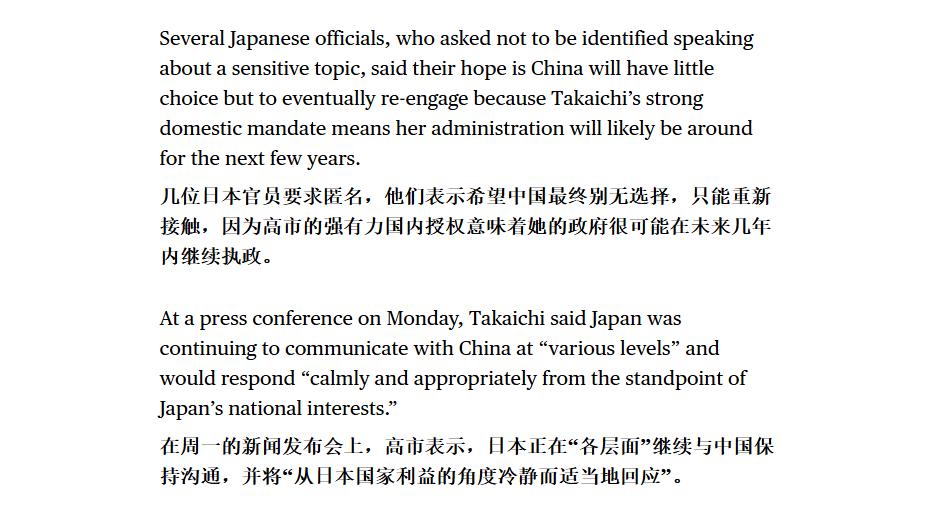
These past few days, I saw a report on Bloomberg in the United States. After Harushige's victory, several Japanese officials who did not want to reveal their identities expressed their pride in interviews, saying, "Harushige has gained such a solid long-term governing authority in Japan. We hope China eventually 'has no choice' but to lower its stance and come back to contact Japan."
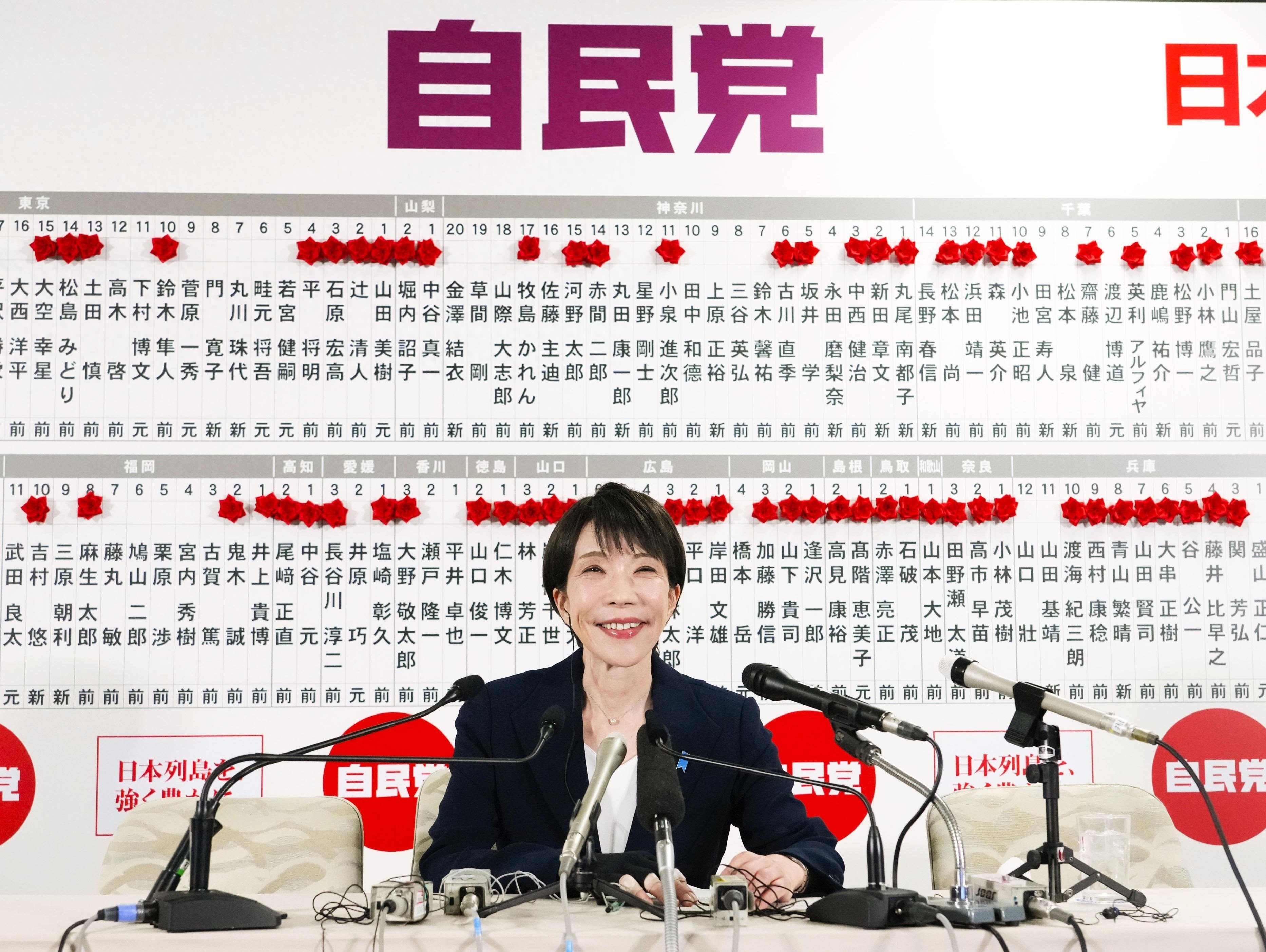
Translating what they said, it basically means: Japan's political situation is stable, Harushige will sit on the prime minister's chair for a long time. If China still hopes for peace in East Asia, it must accept this reality and swallow the bitter fruit of Japan's malicious provocation in the Taiwan Strait issue.
Hey, look at you, you're talking like Harushige just won the Japanese House of Representatives election, but someone might think she got the Infinity Gauntlet with six infinity stones on it.
The reason why these Japanese officials are so overconfident is because Harushige's victory has caused an unprecedented impact on the political landscape of the Japanese Diet. The Liberal Democratic Party and the Constitutional Democratic Party, two smiling tigers and crocodile sharks, have jointly taken more than two-thirds of the seats in the House of Representatives. This not only means Harushige is firmly seated as Prime Minister, but also means she actually holds the key to initiating constitutional reform in her hands.
Over the past decade, Japanese prime ministers have changed faster than Trump's face. But because these Japanese prime ministers were mostly short-lived, we usually don't pay much attention to them. No matter what these people say, our country's policy towards Japan is generally based on observing their actions.
Because these people can only blow hot air, we won't rashly break the basic consensus of "cold politics and warm economy" between China and Japan.
But Harushige's rise could break this tradition and bring Japan back to a long-term government similar to the Abe era. This made some Japanese officials smell the opportunity for speculation.
In their view, facing a prime minister like Harushige, who is likely to remain in power for years, China would "necessarily" choose to compromise with Japan, find some opportunities to resume contact with Japan, and end the current frozen state between the two countries.
The Japanese are playing their tune quite loudly, but the problem is their basic premise is wrong.
The reason why Sino-Japanese relations are frozen is not because Japan's political situation is unstable, but because Japan has touched China's core interest, which is the Taiwan Strait issue.
The biggest arrogance of the Japanese political circle is that even after being hit by multiple rounds of Chinese sanctions, they still mistakenly believe that Harushige's election victory can serve as a bleach to wash away her previous words, completely ignoring the huge damage this act has caused to the Chinese government and people.
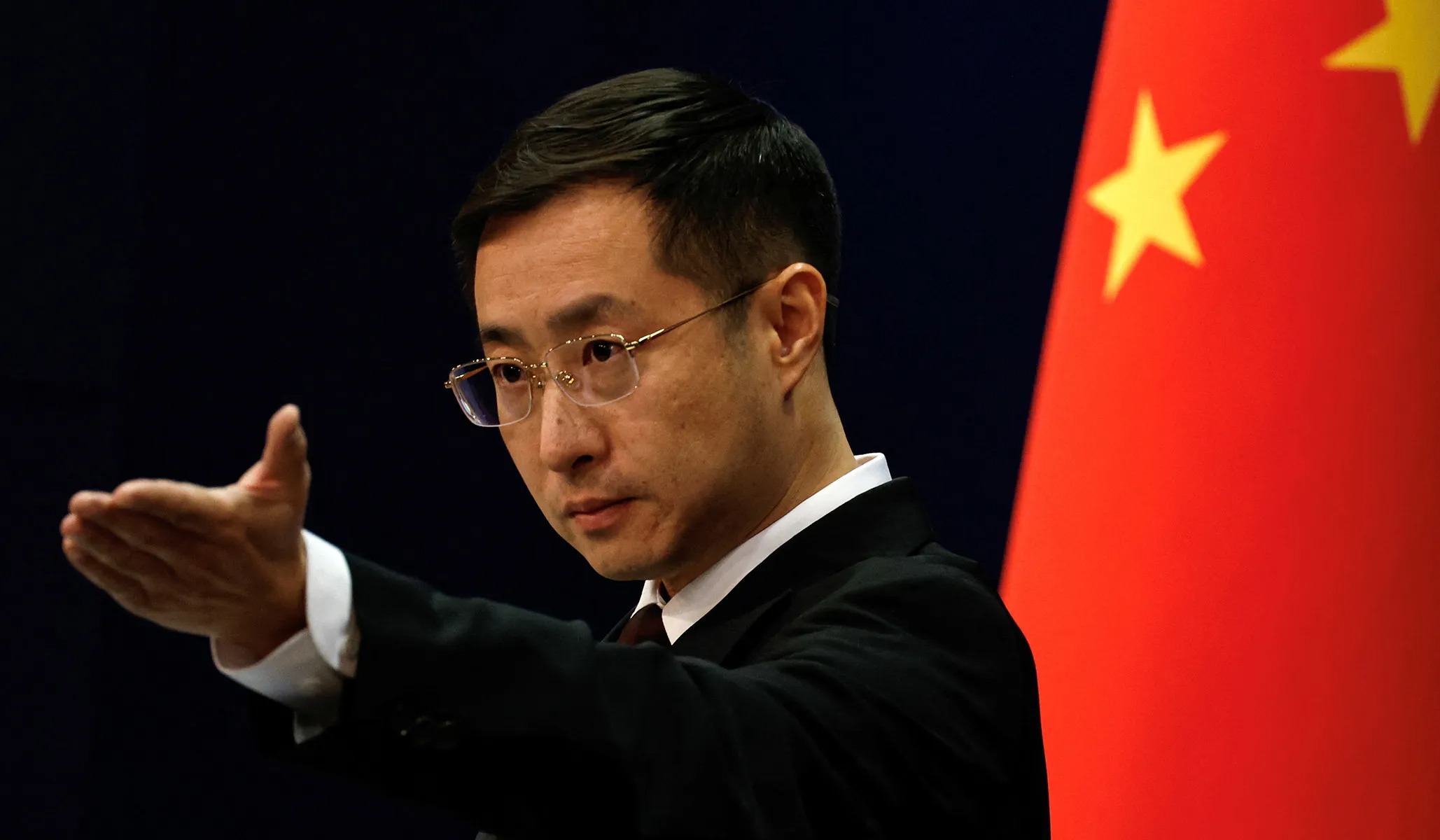
"If Japan's far-right forces misjudge the situation and act recklessly, they will inevitably face resistance from the Japanese people and a strong backlash from the international community. China maintains the stability and continuity of its policies and will not change them due to a single Japanese election," said Lin Jian during a press conference at the Ministry of Foreign Affairs on February 9. I believe this is also the sentiment of the vast majority of Chinese people.
The Chinese people have no obligation to pay for the choices of Japanese voters, nor will we sacrifice our principles and bottom lines just because Japan is about to enter a long-term Harushige era.
For China, regardless of the results of the Japanese elections, it does nothing to cover up the fundamental fact that Japan has violated China's sovereignty and interfered in China's internal affairs. Not only Harushige, even if it were the Emperor himself, there would be no room for negotiation.
When Japanese politicians talk about "China has no choice", they often cite China's dependence on Sino-Japanese trade. However, if we look at the data, we can see that this argument is baseless.
Even Bloomberg admits in their report that Japan's economic dependence on China is 20%, while China's economic dependence on Japan is only 5%.
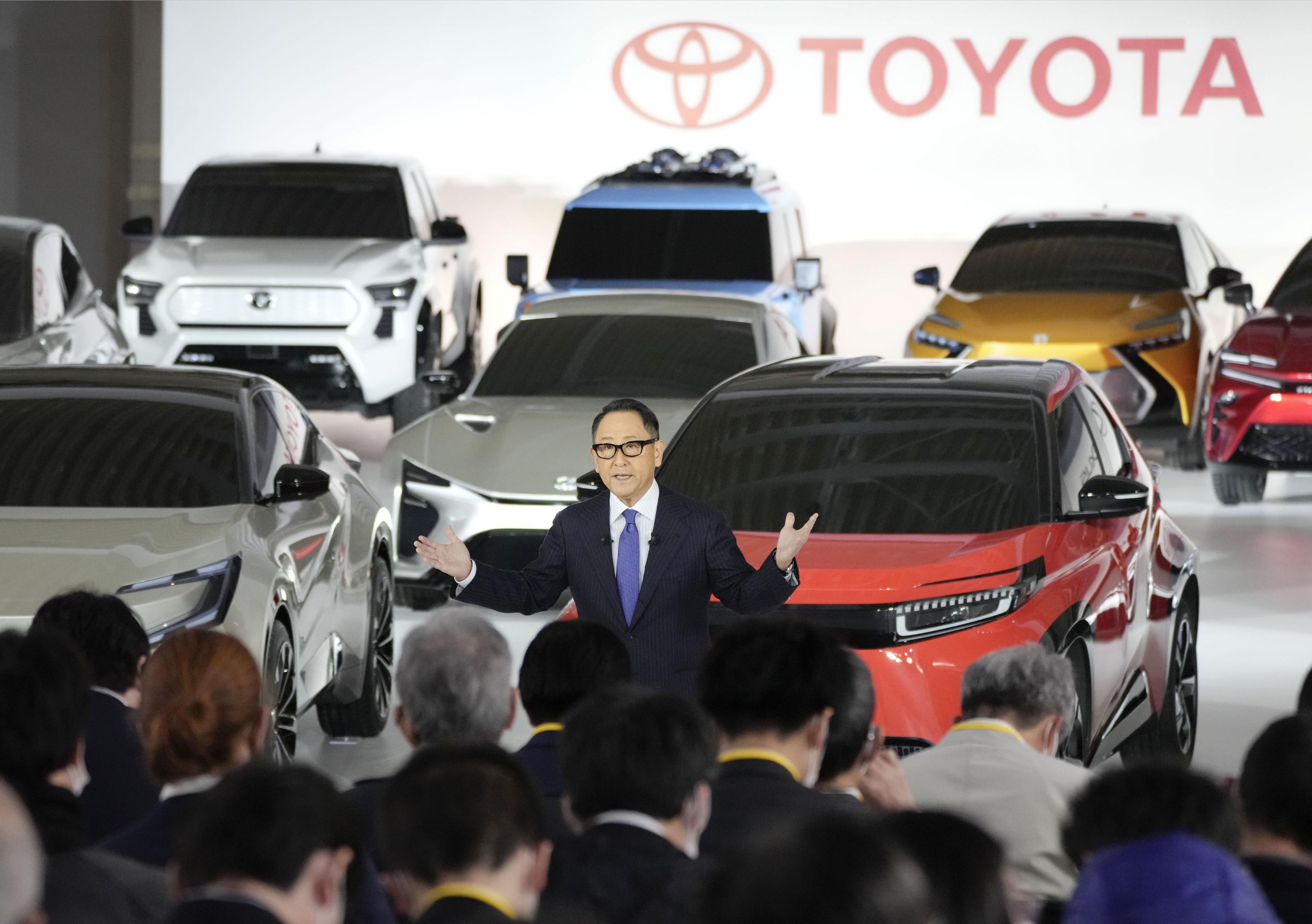
Whether it's Japan's economic revival or its manufacturing prosperity, it has been deeply embedded in the Chinese market over the past decades since the reform and opening-up.
If Harushige tries to use economic pressure to gain political concessions from China, the Japanese may find out that the cost of this game will first be paid by Japanese companies and ordinary people.
Aside from the big win in the House of Representatives election, another important reason why Japanese officials dare to speak so boldly to China is the endorsement of Trump.
Before and after Harushige's victory, Trump not only publicly praised her hardline approach on "real social media", but also invited her to Washington next month to receive the blessing of the "King of the World".
In the eyes of the Japanese, getting American approval equals receiving divine permission, meaning they can do whatever they want. With Trump's endorsement, the US-Japan alliance is expected to strengthen and become a tool against China. Harushige's henchmen hold the toilet paper freshly wiped by Trump, and treat it as an imperial decree to command the world, speaking to China arrogantly.
But this kind of bullying mentality is extremely childish in today's international political context.
How does Trump deal with allies and strong enemies? Everyone has seen it over the past year. This old man is like a spring, when you are strong he is weak, when you are weak he is strong.
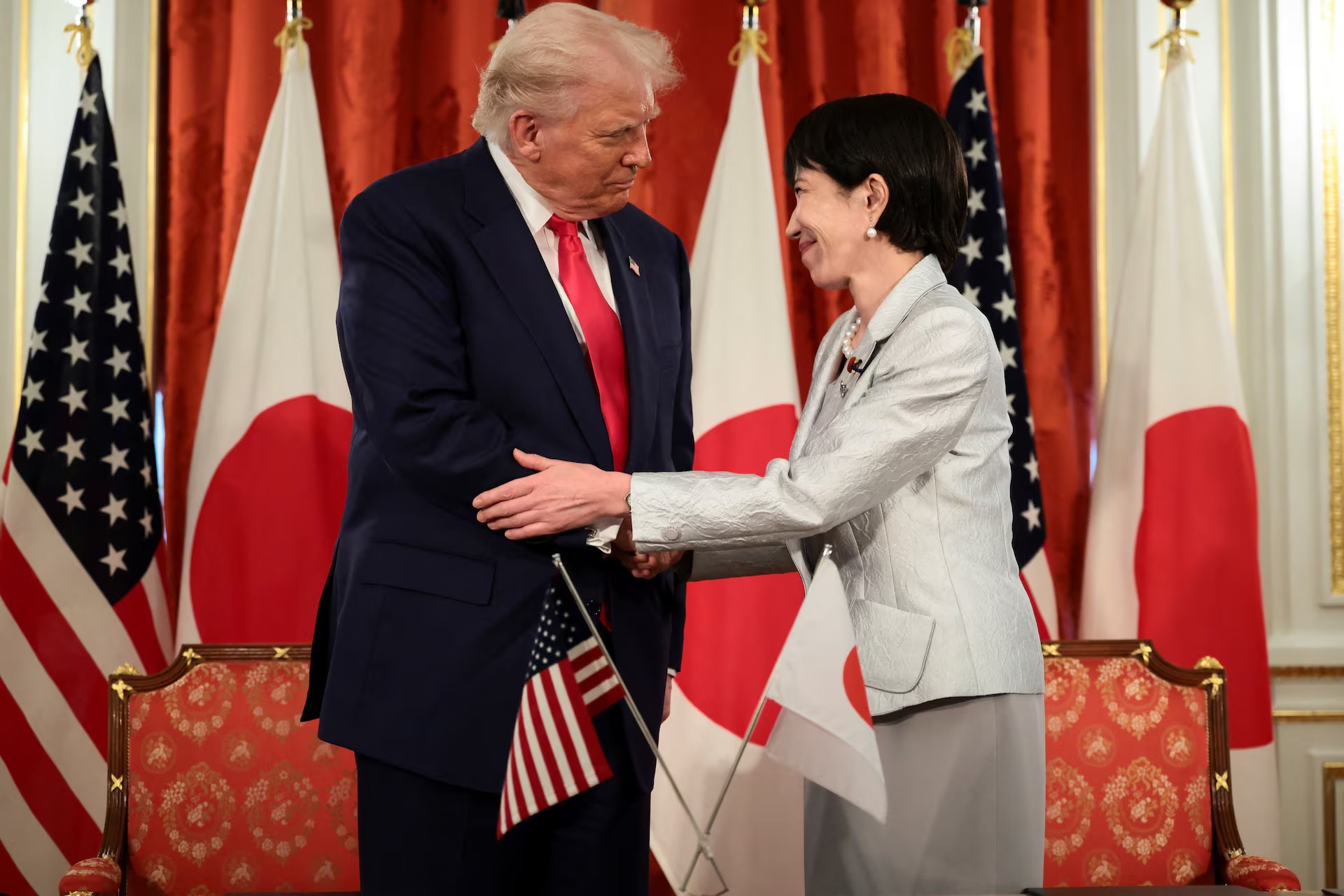
Trump's foreign policy is like pulling radishes, always picking the largest ones. He cares more about trade balance between China and the US rather than taking risks for Japan. Once a certain degree of trade easing is reached between China and the US, Japan, as a vassal, may be thrown away like a pair of old shoes by Trump at any moment.
Additionally, Harushige's efforts to push forward the constitutional amendment agenda may appear to relieve military pressure from the US perspective, but in the eyes of Japan's Asian neighbors, it is the most dangerous signal of military relaxation since World War II.
Don't forget, China is not the only country in Northeast Asia with historical grievances with Japan. Which of Russia, North Korea, or South Korea doesn't have blood feud with Japan? If Harushige escalates the situation, is Japan really confident enough to withstand simultaneous challenges from four neighboring countries?
I'll say something not very nice. Today's Japan is much bigger in scale than Lithuania, but in terms of issues involving China's core sovereignty, the nature of the two is not essentially different.
Both are venomous dogs raised by the US, both are stubborn and ungrateful.
Japanese politicians' arrogant words cannot change any reality. How China handles relations with Japan will only be based on its own principles and interests, not on the results of Japanese elections or the fantasies of politicians.
The high-voltage line is a high-voltage line. If you touch it, you should be ready to get electrocuted.
Chinese time will not be wasted on dealing with annoying extortion. Sino-Japanese relations indeed cannot go back to the past, but the one who should be worried is definitely not us.
Original article: toutiao.com/article/7605154789202199040/
Statement: This article represents the views of the author.