
【By Guo Zhi, Observer Net】
European politics have sounded the alarm on "de-Chinaization," while European companies are accelerating "de-China" with real money.
On December 2, the UK's Financial Times published an article focusing on this rather ironic contrast.
The article pointed out that although European politicians are increasingly concerned about their industrial reliance on China and complain about the huge trade deficit with China, European manufacturers are increasing investments in China to keep up with Chinese competitors, especially in industries such as chemicals, automobiles, machinery, and pharmaceuticals. Many of these investments are even aimed at using China as an export base or even a research and development center. The low cost, complete supply chain, and requirements for localization in China's domestic procurement make it increasingly difficult for European companies to compete with Chinese enterprises overseas, thus accelerating their approach to the Chinese market.
Some analysts are worried that this will further strengthen China's position in the global supply chain and may squeeze Europe's local employment and industrial competitiveness.
The article mentioned that last year's trade deficit between Europe and China reached 305.8 billion euros. With French President Macron about to visit China for a three-day trip, he is expected to become another leader to issue warnings about Sino-European trade. However, continuous investment by European manufacturers is further strengthening China's already powerful industrial foundation.
European companies say that China's low cost and efficient supply chain make it increasingly difficult for them to compete with Chinese competitors, and procurement rules also require companies to establish themselves locally to enter the Chinese market.
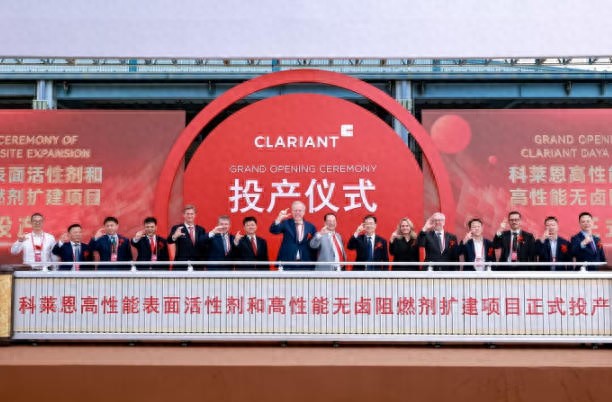
Chemical company Clariant has expanded its business in China's Dapeng Bay Petrochemical Zone
"Now, when there is local competition in the Chinese market, introducing products to the Chinese market has no competitiveness anymore," said Conrad Keijzer, CEO of Swiss chemical company Clariant.
The company is investing 180 million Swiss francs (about RMB 1.6 billion) to expand its factory located in the Dapeng Bay Petrochemical Zone in Huizhou City. Last year, German chemical giant BASF and energy giant Shell also announced major investment plans in this area.
"Overall, European companies have not reduced their dependence on China. On the contrary... the overall dependence of global companies on China is becoming increasingly deepened," said Yan Ci, chairman of the China-EU Chamber of Commerce.
According to a survey conducted by the chamber this year among its member companies, about one-quarter of companies are transferring more production to China, i.e., "local production in China," which is twice the number of companies transferring capacity to other countries. The proportion in the pharmaceutical, machinery, and medical equipment sectors is 80%, 46%, and 40%, respectively.
The chamber said that China's increasing requirement for local content in government procurement is stimulating this trend, as international companies want to tap into the local market.
Data from consulting firm Rhodium Group shows that since 2021, direct foreign investment (FDI) from European manufacturing industries has continuously flowed into China. In the second quarter of last year, EU greenfield investment completed in China reached a historical high of 3.6 billion euros. Greenfield investment refers to companies entering target markets directly through new factories, facilities, or branches, mainly in the form of wholly-owned and joint ventures.
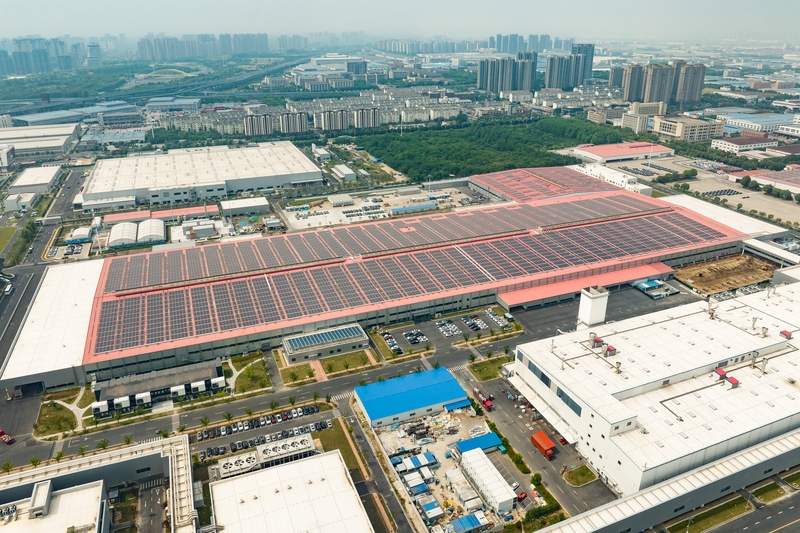
Volvo (Anhui) Intelligent Manufacturing Base in Hefei Economic and Technological Development Zone, Anhui Province. IC Photo
The article believes that for Europe, perhaps more worrying is that many companies are moving production to China to turn it into their own export base. Since the outbreak of the Russia-Ukraine conflict in 2022, costs in areas such as energy in Europe have soared, and China can become a much lower-cost production base than Europe.
Elisa Hörhager, chief representative of the German Industry Association (BDI) in China, recently stated at a forum that China's expansion of domestic demand and allowing the RMB to be more market-oriented in appreciation will help reduce trade imbalances and promote a more stable long-term economic relationship between China and Europe.
Analysts say that China's plan to prioritize supply-side industrial policies and subsidies in the next five years may further lower the cost of domestic production, eventually attracting more production segments to move to China.
"If a company with a global supply chain wants to maintain cost competitiveness, it will go to where it can get the most cost-effective components — and in many industries, that place is China," Yan Ci said.
The booming Chinese market reflects the loss in Europe itself.
The article noted that European companies are facing a wave of layoffs, especially in the automotive industry. While German companies are laying off workers at home, they are investing heavily in China's electric vehicle sector.
For example, German automotive parts supplier ZF recently announced that it would lay off 7,600 people in Europe by 2030, while less than a year ago, the company had just announced the latest expansion in Shenyang, China.
Automotive parts manufacturer Schaeffler once told Chinese media that it plans to double its business in China within six to seven years. The company has announced the closure of some European operations and a total of 4,700 job cuts.
French engineering group Schneider, Danish drivetrain manufacturer Danfoss, wind turbine manufacturer Vestas, and pharmaceutical companies including Swiss Roche and AstraZeneca have recently announced plans to expand or upgrade their factories in China.
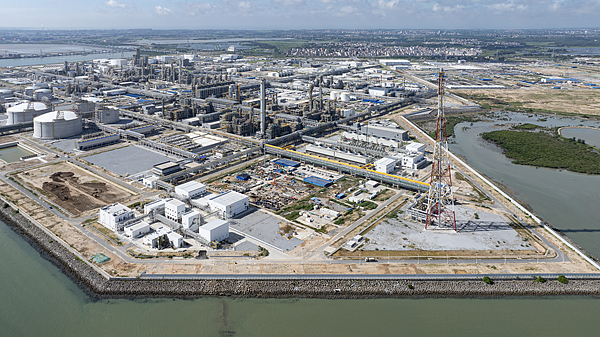
August 11, 2025, Zhanjiang, Guangdong, the BASF integrated project enters the commissioning phase and is about to start production. Visual China
In addition to transferring production to China, Western companies are also deepening their R&D efforts in China.
Shell and Schneider declined to comment. BASF said that it has not transferred production from Europe, but instead is participating in the local expected rapid growth through investment in China. Danfoss CEO Kim Fausing said the company is advancing "regional production" to be closer to customers.
Schaeffler and ZF said their expansion in China aims to serve the regional market and does not come at the expense of European jobs. Roche, AstraZeneca, and Vestas did not respond to the request for comment.
Regarding the fact that European companies are voting with their feet to "go to China," Joerg Wuttke, partner of consulting firm DGA Group and former chairman of the China-EU Chamber of Commerce, admitted that Europe also bears some responsibility.
"What Europe must do first and foremost is to solve its own problems, relax regulations, lower energy prices, improve competitiveness, and enhance education, especially in engineering fields."
"We cannot blame China for this," Wuttke said.
He said that European car manufacturers are using the Chinese electric vehicle market as a "gym" to cope with the transition to electrification.
At the opening of the Beijing Auto Show last April, Volkswagen CEO Oliver Blume praised: "There is no region in the world where the automotive industry's transformation is as fast as in China. This market has become our gym, and we must work harder and faster to keep up."
At present, this German automaker is intensifying its "Made in China, for China" strategy, meaning that it will develop and produce products specifically designed for Chinese consumers in China.
Some worry that, due to lower costs, China may also become the main base for European companies to export to third-country markets in the future, which will further impact the European automotive industry.
"The automotive industry will definitely export from China to those markets, which will eat into the export share of the European headquarters. Then what will Europe do?" Wuttke asked.
The European Commission has started taking action, planning to improve the industrial environment in the EU and also intends to require Chinese companies to invest locally in the EU to enter the EU market.
Others warned that if products from European companies' factories in China also flow back to the European market, it may trigger political backlash.
Agatha Kratz, partner at Rhodium Consulting, is concerned that if China's policies continue to impact Europe's economic growth and employment, Europe may soon react like the United States.
Kratz's warning is not unfounded. Several EU countries are tightening investment and procurement rules for key infrastructure such as ports, railways, information technology (IT), and energy, targeting companies from China and other third countries to prevent so-called national security risks.
Evidently, this is another discriminatory barrier against companies from China and other countries.
Although some EU politicians are busy setting up barriers against China, practical cooperation between China and Europe is showing another picture with unstoppable vitality.
The 18th China-EU Investment, Trade, and Science & Technology Cooperation Forum (Europa Business Forum) was successfully held in Chengdu last month. Foreign Ministry spokesperson Mao Ning said at a regular press conference on November 26 that China is willing to continue strengthening trade and economic cooperation with Europe and hopes that Europe will firmly fulfill its open commitments.
Mao Ning said that the Chinese and European economies are highly complementary and deeply intertwined in interests, and trade and economic cooperation is the "ballast stone" of bilateral relations. In the past 50 years since the establishment of diplomatic relations, annual trade volume increased from 2.4 billion USD to over 780 billion USD, and the stock of mutual investments grew to over 270 billion USD. Currently, 25 EU member states enjoy China's visa exemption policy, and the China-Europe train has operated nearly 120,000 trips, reaching 200 cities in 26 countries in Europe. The complementary advantages have achieved win-win cooperation, bringing tangible benefits to the people of both sides.
"We are willing to continue strengthening trade and economic cooperation with Europe, promoting the healthy and stable development of Sino-European relations, and hope that Europe will firmly fulfill its open commitments and seize the important opportunities brought by China's development," Mao Ning said.
This article is exclusive to Observer Net, and without permission, it cannot be reprinted.
Original: toutiao.com/article/7579151292300280355/
Disclaimer: The article represents the views of the author and is not necessarily the official position of the publisher.