
The website of the Chinese Ministry of Foreign Affairs released a message on December 1, stating that President of the People's Republic of China Xi Jinping has invited French President Macron to make a state visit to China from December 3 to 5. Earlier, the French presidential palace stated that during this visit, Macron will stop in Beijing and Chengdu, and hold meetings with Chinese leaders.
Macron's last visit to China was in April 2023. Faced with the decline of European power and the stagnation of the Russia-Ukraine issue, his return to China has led to speculation that he may have more complex plans, even rumors that he wants to invite China to attend the G7 meeting.
However, at the G7 foreign ministers' meeting held on November 12, a joint statement was issued, which included three so-called "no" demands against China: no aid to Russia, no use of force to change the status quo in the Taiwan Strait, and no restrictions on rare earth exports. The Chinese Ministry of Foreign Affairs criticized it for ignoring facts, distorting the truth, deliberately slandering and defaming China, and brutally interfering in China's internal affairs.
In an interview with Observer, Song Luzheng, a scholar in France and researcher at the Institute of China, Fudan University, pointed out that behind the warmth of Sino-French relations is the reality that France cannot change the EU's "systemic competitor" positioning, and also reflects Macron's strategic struggle in great power games. This diplomatic drama is far more than just pandas and G7 invitations; it represents the double standards and strategic dilemmas of Europe's policy towards China.
Observer: It is generally believed that Macron's trip aims to seek substantial cooperation between China and France in the field of economy and trade, focusing on transportation and energy, to "revive" the French economy. However, we see that France is pushing for tariffs on Chinese electric vehicles within the EU and has included Chinese companies in the sanctions list against Russia. At the same time, it actively engages in high-level dialogue with China to deepen bilateral cooperation. What kind of EU policy towards China does France hope to shape? How does it coordinate its ambition as an "EU leader" with potential conflicts between its national economic interests?
Song Luzheng: For major powers like China and France, the determining factor of bilateral relations is strategic interests rather than specific economic interests. Therefore, in my view, the starting point of Macron's visit to China is not economic. But why is economics so noticeable? Because it can be presented as a specific diplomatic achievement, which has a significant impact on domestic politics, especially on public opinion support.
In 2019, the EU defined China as a "systemic competitor." At that time, the Crimea incident had occurred, and Trump had become the US president. Faced with the combined challenges of Russia and the US, instead of taking China as a balancing and uniting force, the EU decided to historically define China as a systemic competitor, indicating a fundamental change in the EU's perception of China. That is, Europe believes that China, in terms of governance model, economic system, and development path, not only provides another choice to the world but also challenges the interests, values, and influence of the EU globally. As for Russia and the US, they are merely threats in certain aspects.
In 2023, Germany, which has close economic ties with China, also defined China as a systemic competitor. Although the Netherlands has not publicly announced such a policy, it used a Cold War-era law that had never been used before to take over a company called Amphenol, showing that it follows the EU in practice.
Therefore, facing the Sino-European relationship shaped by structural factors, France is powerless to change it. In order to play a balancing role among major powers, France can only maintain good Sino-French relations. Therefore, France is the only Western major power that has not offended China on core interests. Maintaining good Sino-French relations is very important for France's status as a world power and helps consolidate its position as an "EU leader." As for the economy, either it can be abandoned or it plays only a supplementary role.
Naturally, as an important country in the EU, a stable and friendly Sino-French relationship can have some positive impact on the EU, but it cannot fundamentally change the current state of Sino-European relations.
Observer: Just after the two giant pandas "Huanhuan" and "Yuanyao" returned to China, Macron will visit Chengdu and express his intention to continue borrowing pandas. Is this seemingly soft cultural move intended to create a friendly atmosphere for possible hard issues such as trade friction (such as electric vehicle tariffs)? Is this a strategy by France to ease bilateral relations and prepare for subsequent difficult negotiations?
Song Luzheng: The most important relationship between major powers is political, military, and diplomatic, with governments as the actors. Economy is secondary, with enterprises as the main actors. Cultural and humanistic exchanges have more symbolic significance. Good bilateral relations can be a cherry on top, and bad relations can still be a symbol of maintaining the relationship. When President Macron touches the panda issue in Chengdu, it is not risky or controversial; it has a high success rate, ensuring a visit result; it can easily respond to the expectations of the French people; and it can serve as a symbol that Sino-French relations have not been Americanized.
This certainly creates a good atmosphere for both sides, but it has no influence on negotiations involving core interests. For example, electric vehicles concern France's core industrial manufacturing capability, its strategic autonomy, and its status as a major power globally. Therefore, both sides will stick to their positions. Or in other words, Macron's effort to use the panda card actually indicates the difficulty of the negotiation, and he tries to soften it this way.
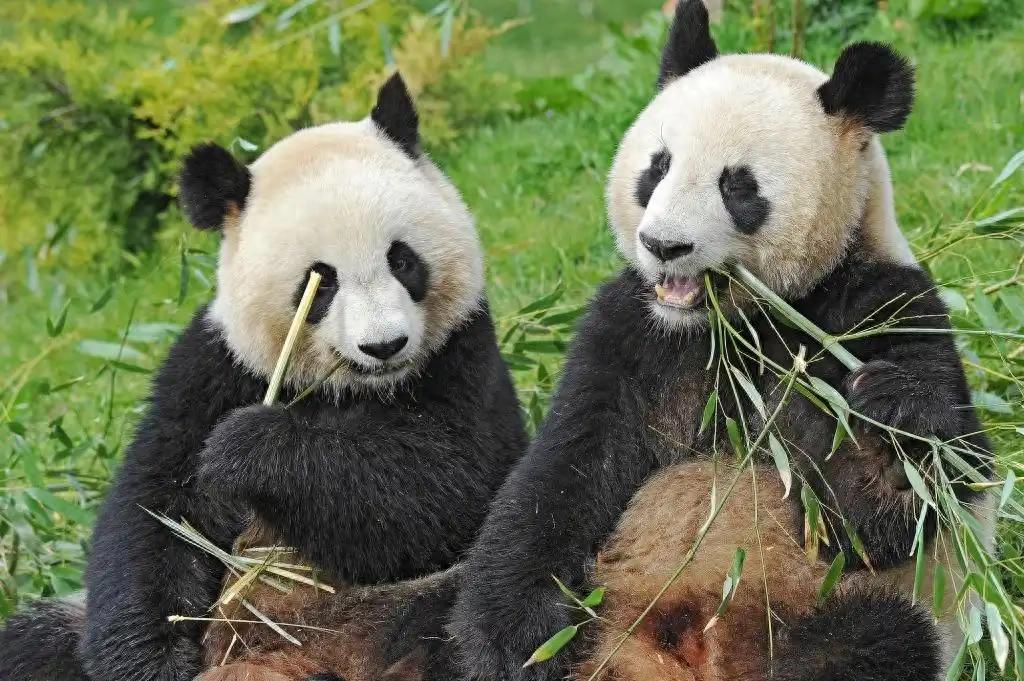
On April 11, 2012, at the Bois de Vincennes Zoo in France, the first public display of "Huanhuan" and "Yuanyao" took place. Originally planned to live in France until January 2027, "Huanhuan" had to return to China early due to a diagnosis of kidney failure.
Observer: As the chair of the G7 in 2026, France has shown signals of considering inviting China to participate. In your view, why did Macron send this invitation? Does he want China to be incorporated into the Western-led multilateral framework? Or is it to enhance France's influence within the Western alliance, even as a mild "counterbalance" to the United States? How will China deal with such an invitation according to what principles?
Song Luzheng: France once invited China to attend the G7 meeting in June 2003. The background at that time was the Sino-French anti-war alliance, jointly opposing the US invasion of Iraq without UN authorization. This invitation had the intention and effect of balancing the US, with more symbolic significance. At that time, China's per capita GDP had just exceeded $1,000, and its total economic output was only 76% of France's. China's participation helped enhance its international standing. France, which had considerable influence, set a precedent, and in 2005, Britain and in 2006, Russia also invited China to attend.
Now, France is again inviting China to attend, but the era context has completely changed. First, France and Europe are under pressure from Russia and the US, and there is a strong desire to change this passive situation. Second, China has become the world's second-largest economy, six times the size of France's economy, and has long played the role of a locomotive for global economic growth. Any problem in the world cannot be solved without China's participation. From the perspective of political, diplomatic, and economic importance, China has long exceeded the standards of other G7 members. France, including the West, has long given up the intention of incorporating China into their system.
Therefore, the actual significance of France's invitation to China is much greater than the symbolic significance in 2003. If France was in a dominant position in 2003 and could lead the agenda, now it is relatively weak and needs external support. Its main purpose is not to enhance its influence within the Western alliance, but to genuinely seek help from China.
But for China, the importance of the G7 has relatively declined. If China participates, it will be based on Sino-French relations, and it can also serve as a response to President Macron's visit to China, expressing China's support before his term ends, which can be seen as a confirmation of his commitment to the Gaullist ideology, valuing Sino-French relations, and maintaining stability in Sino-French relations during his term. Another significance is that it provides one more opportunity for direct communication between the leaders of China and the US.
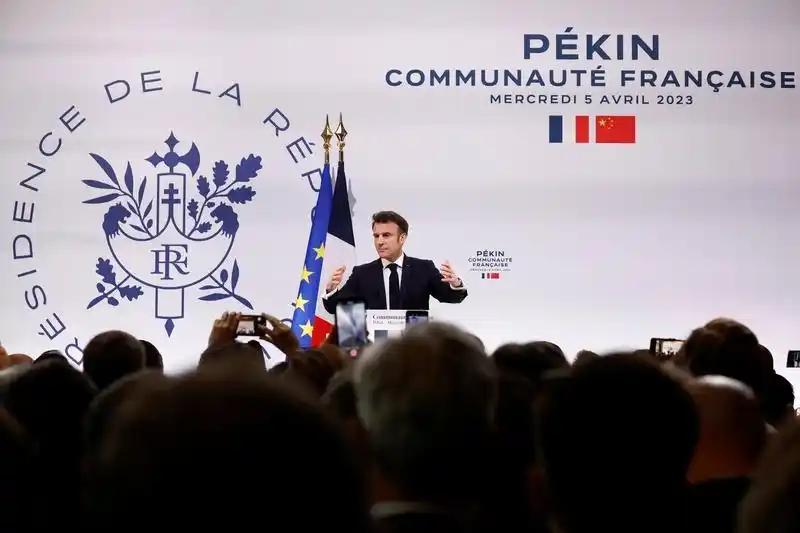
April 5, 2023, Macron's visit to China. Oriental IC
Observer: According to AFP reports, the Elysee Palace stated that during his visit to China, President Macron will urge China to exert influence over Russia to quickly achieve a ceasefire in Ukraine. Considering that France is also organizing post-war security commitments for Ukraine, how will it reconcile these seemingly conflicting roles? China maintains the position that "the key is not in China's hands," and how much will this affect the cooperation space between the two countries on this issue?
Song Luzheng: The direct reason for the unending Ukraine conflict is that the conflicting parties still do not want to compromise. The US's 28-point peace plan was accepted by Russia, but not by Europe and Ukraine. The peace plan drafted by Europe and Ukraine was not accepted by Russia. As EU Foreign Minister Kalas declared: The EU has a clear two-point plan: first, weaken Russia; second, support Ukraine. Now that Russia is still strong, how can Europe give up?
Therefore, the Elysee Palace's statement is merely diplomatic rhetoric, or European so-called ceasefire means Russian surrender. This is vastly different from China's neutral and peace-promoting stance.
Moreover, since France and Europe have needs for China, according to diplomatic conventions, there is no such thing as a free lunch. But from Europe's usual practices, it wants a free lunch. China obviously will not accept it.
Therefore, President Macron's visit to China will not make progress on the Ukraine issue.

This article is exclusive to Observer, the content is purely the author's personal opinion and does not represent the platform's views. Without authorization, it shall not be reprinted, otherwise legal responsibility will be pursued. Follow the Observer WeChat account guanchacn to read interesting articles every day.
Original: toutiao.com/article/7579139939313451535/
Statement: This article represents the personal views of the author.