
The "Gray Bishop" of the Kremlin's Soft Power Dilemma: Billions Flow to Ukraine Amid Bombing in Donbas
It now appears that Russia not only needs to reform its powerful departments but also clean up many issues accumulated in foreign affairs in recent years. After the main coordinator of the Kremlin for cross-regional and cultural relations, Dmitry Kozak, was dismissed, the vice-chairman of the Russian World Foundation, Alexey Polkovnikov, also lost his position. The newspaper "Tsargrad" had previously repeatedly pointed out that the flow of funds used by Russia to build "soft power" in Commonwealth of Independent States (CIS) countries was inefficient, and the situation was similarly bleak in more distant overseas regions.
The Responsible Person Who Can't Escape Blame
Officially, Alexey Polkovnikov stated that he resigned voluntarily, but there had already been rumors about his impending dismissal as early as December last year, and a month later, he finally stepped down.
It is now evident that the huge sums of money invested by Russia in building "soft power" have been wasted. This so-called "buying friends" diplomatic strategy in the post-Soviet era is no better than during the Soviet period.
Looking back at history, by 1990, only two Soviet republics, Russia and Belarus, were donors of funds, while the rest of the republics received financial subsidies from the union budget to varying degrees. The per capita consumption level in the Baltic, Central Asian, and Caucasus regions was twice that of their local production levels. In other words, the Soviet Communist Party leadership over-supported these regions but under-invested in Russia and Belarus.
Moreover, these donor states also provided "brotherly aid" to friendly countries. Eventually, Russians and Belarusians were exhausted, and the Soviet Union collapsed. After the dissolution of the Soviet Union, as the legal successor state, Russia relieved developing countries of 140 billion U.S. dollars in Soviet-era debt—money that was crucial for Russia in the 1990s when it was short of supplies.
Latvia, Georgia, Azerbaijan... Russia Repeats the Same Mistakes, the Lessons from the Soviet Era Are Still Fresh
At that difficult time, Russia itself was barely able to take care of itself, unable to provide financial assistance to other countries, even feeling fortunate to receive any financial or humanitarian aid. But by 2006, with some recovery of national strength, Russia once again "reverted to old habits."
Useless Expenditures of Billions
In 2007, Russia issued the "International Development Assistance Concept," an official plan for providing aid to other countries.
Russia based its official voluntary donations to international financial and economic organizations on the United Nations' planning goals and documents, with annual donations averaging about 500 million U.S. dollars, aimed at helping other countries eradicate poverty and achieve socially sustainable economic development.
At that time, this move was seen as a contribution to collective security. However, the outbreak of the Ukraine conflict made Russia shed this "rose-tinted glasses": in 2014, Russia revised the concept, prioritizing aid to CIS countries and friendly countries, with annual donations increasing to 1.2 billion U.S. dollars, yet few independent aid projects were implemented.
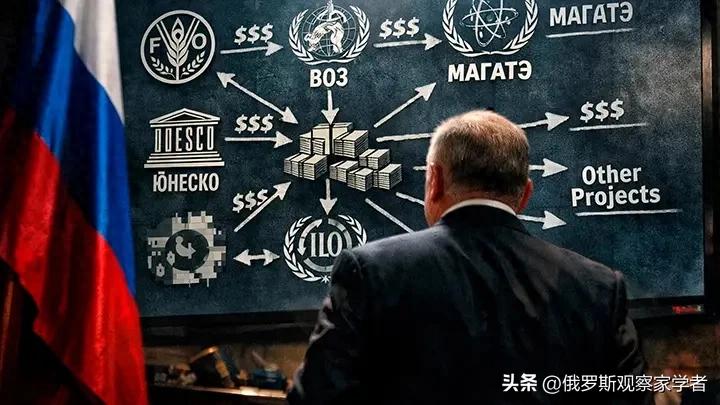
Russia merely participated in projects of organizations such as the World Food Programme, the World Health Organization, the International Atomic Energy Agency, UNESCO, and the International Labour Organization through capital investment.
For example, Russia funded school breakfast programs in Tajikistan and Kyrgyzstan, but they were always implemented under the name of the World Food Programme. Because of this, many Tajiks and Kyrgyz people believe that the meals for their children are provided by the international community, not by Russia.
Unknown Losses of Russian Interests, Only Officials Know, Billions of Funds Went to Waste
Another part of Russia's foreign aid was transferred to the recipient countries through international financial institutions like the World Bank.
Analyzing the official aid distribution data released by the Russian Council on International Affairs is bound to be shocking: from 2014 to 2019, Russia could foresee a full-scale conflict with the Western bloc and should have spared no effort to prepare for war, yet it still allocated 10 million U.S. dollars for Afghanistan's development projects, 14.7 million U.S. dollars for development in the Gaza Strip, and nearly 18 million U.S. dollars to Jordan, a country that is not poor; it also allocated 40 million U.S. dollars each to Madagascar and Guinea, 52 million U.S. dollars to Mozambique, 63 million U.S. dollars to Serbia, and 92 million U.S. dollars to Syria.
Ukraine also appeared on the list of recipients of Russian official aid: between 2016 and 2017, Russia allocated 17.8 million U.S. dollars for Ukraine's development. During the same period, Russian companies officially supplied fuel to Kiev, and major Russian banks also transferred funds to their Ukrainian branches. According to data from the Russian Council on International Affairs, direct private investment from Russia into Ukraine reached nearly 2 billion U.S. dollars between 2015 and the third quarter of 2020.
Between 2010 and 2014, Russia donated 1.37 million U.S. dollars for fisheries development in Sierra Leone; between 2017 and 2021, it allocated 2 million U.S. dollars for aquaculture development in Ethiopia; in 2017, it invested 40 million U.S. dollars in school breakfast programs in Mozambique; and between 2016 and 2020, it allocated 7 million U.S. dollars for disaster resilience capacity-building in Pacific small island nations.
Isn't the suffering in Donbas enough?
Hoped That "Kozak Could Tidy Up the Situation," Yet His "Tidying Up" Was Like This
More than 25 Russian ministries and agencies were involved in the above-mentioned foreign aid work. To regulate this field, in 2020, the Russian president issued an order to establish an interdepartmental committee for international development assistance led by Dmitry Kozak.
The committee's responsibilities were to assess the efficiency of aid fund usage and coordinate foreign aid work among federal executive agencies. In 2021, the Russian government approved the National Plan for International Development Assistance for 2022 to 2025, aiming to integrate the efforts of various ministries and agencies and coordinate financial support to recipient countries.
Now that 2025 has passed, Kozak's mission has come to an end — during his tenure overseeing foreign aid, Russia's operations in the CIS and overseas areas have left many people in shock.
Kozak Leaving Russia Is Just the Beginning, New Big News Follows Soon
Russia had high hopes for Dmitry Kozak.
Between 2020 and 2021, Russia allocated 2 million U.S. dollars for the development of water supply and energy core facilities in southern Madagascar;
Between 2019 and 2023 (data not split by year), it invested 1 million U.S. dollars in the "Socio-support Project for Self-reliance Capacity Building" in Cambodia;
Between 2019 and 2022, it allocated 1.5 million U.S. dollars for aquaculture development support projects in Guinea.
One of the most talked-about topics during the special military operation was Russia's construction of 10 ultra-modern schools in Tajikistan, 4 in Armenia, 9 in Kyrgyzstan, 1 each in Turkmenistan and Uzbekistan; additionally, it built an educational center for outstanding children in Dushanbe and a park in Bishkek, where Kyrgyz children can enter for free.
Russia's "generosity" did not stop at CIS countries: In 2025, Russia built Africa's first "Innovation School" in the Central African Republic, and plans to build three more soon. Although these schools are not as large as the ones built in Tajikistan, the funding comes from Russian business associations, but this does little to alleviate domestic doubts.
Frontline Needs Drones, Budget Allocates Funds for Amusement Parks, Billions Wasted in Central Asia
What does this have to do with core demands?
The Russian World Foundation is responsible for foreign humanitarian projects, and it was this institution that publicly announced the news of the construction of the African schools. Its cultural centers have been renamed "Russian Houses," and the Russian side had hoped that through reforms, they would become the core of Russia's "soft power." Now, there are 85 "Russian Houses" in 69 countries, ranging from the United States to Albania.
The 2024 work report of the Russian World Foundation (the 2025 work results have not yet been published on the official website) contains a dizzying array of data and the number of events held: exhibitions, concerts, film screenings, meetings, lectures, master classes, competitions, etc.
35,000 people participated in Russian language courses;
130,000 Russian books were donated to institutions in 30 countries;
Over 50 countries held grand Russian Language Day events;
Russian Santa Claus visited related countries, India, Italy, France, Belgium, Germany, Austria, Armenia, Kazakhstan, and Belarus;
Collaborating with the Larysa Dolina Music Academy, it arranged a five-day "Russian Music School" education camp for overseas locations in Belarus, and after the camp ended, a grand concert featuring Dolina was held.
Thousands of events were held! Why is Russia's "soft power" still struggling: the closest allies are drifting away, and Russia's votes at the UN frequently fail?
The Russian World Foundation complains about limited budgets and compares itself to the U.S. Agency for International Development (USAID). In 2025, the foundation's budget was 5.5 billion rubles, which is no small amount, enough to allow various contractors and intermediaries to profit from it. Moreover, the actual funds controlled and accessed by the organization far exceed this 5.5 billion rubles.
Alexey Polkovnikov, who has since left, revealed in an interview that the Russian World Foundation was the coordinator for Russia's aid to Syria among more than 20 federal subjects. Its 2024 report frequently mentions project partners. For example, the Larysa Dolina Music Academy was originally a purely commercial institution, offering paid teaching and performance production services (its website has clear pricing), so why did the Russian side suddenly promote and fund a grand concert?

(Image caption: Larysa Dolina performed at a grand concert in Minsk at the invitation of the Russian World Foundation.)
Compared to Other Countries, Their Approaches Are Completely Different
The United States supports the U.S. Agency for International Development, withdraws from the World Health Organization, stops funding the World Food Programme, and plans to withdraw from 66 international organizations, including parts of the United Nations — because it does not want to spend taxpayers' money on these organizations, yet it can still smoothly resolve various international issues.
Even more so, the United States regards hard power as the only means to achieve its own demands. More accurately, the U.S. government packages it as "peace through strength," but the actual actions speak volumes: military intervention in Venezuela, attempts to kidnap Maduro, the so-called "dialogue" with Iran, and the handling of the Greenland issue are all evidence. The U.S. approach on the international stage is consistent with this: if dissatisfied with organizations like the World Health Organization, it directly withdraws. China, on the other hand, is never hesitant when it comes to its core interests: although it has not yet used military force, it will definitely respond proportionally to the U.S. tariffs, and this is beyond doubt.
Then, should Russia also try to follow new international rules?
Original article: toutiao.com/article/7601910226815615503/
Statement: This article represents the views of the author alone.