
【Wen/Observer Net Wang Yi】Amid recent pressure from Germany on the EU to slow down the 2035 ban on internal combustion engine vehicles, Swedish automakers have suddenly become anxious. Volvo and Polestar executives spoke out to the UK's The Guardian on December 2nd, stating that Germany's move is merely a desperate attempt to save its own automotive industry, which would not only delay the adoption of electric vehicles in Europe but also hand over the future to China.
"Pausing the 2035 target is a terrible idea, and I have no more polite way to say it," said Michael Lohscheller, CEO of Polestar. "If Europe doesn't lead this change, rest assured, other countries will do it for us."
Lohscheller added, "The Chinese won't stop, they will take over everything." As a high-performance electric vehicle sub-brand under Volvo, Polestar became a pure electric brand in 2017. Currently, the company is controlled by China's Geely Holding Group.
According to reports, German Chancellor Scholz wrote to European Commission President von der Leyen last week, requesting an easing of the ban, allowing plug-in hybrid cars, electric vehicles with fuel range extenders, and "high-efficiency" traditional internal combustion engine vehicles to continue production after 2035. He claimed that consumers are still hesitant about electric vehicles, and Germany wants to protect the climate in a "technology-neutral way."
Lohscheller was shocked by Germany's attitude at Polestar's headquarters in Gothenburg. He revealed that he tried to participate in the EU's "strategic dialogue" on the future of the automotive industry, but was ignored. "I wrote two letters, and the second one didn't even get a response."
In an office across the street, overlooking a large Volvo factory, Volvo Cars President and CEO Håkan Samuelsson also expressed confusion: "I don't see any reason to slow down."
He compared the current resistance to the industry's opposition to catalytic converters and seat belts 50 years ago, saying, "If it wasn't mandatory, we might still have 30% of cars without seat belts today; considering the additional costs, there wouldn't be catalytic converters either."
Samuelsson also believes that if German automakers like Volkswagen and BMW slow down their electrification efforts, it will only widen the gap with China, as Chinese automakers will go to Hungary, Slovakia, Romania... where labor costs are lower. "I think it's hard to keep them out of the EU with tariffs; you can only face them directly and compete with them."
However, Samuelsson said that von der Leyen doesn't need to make a decision now, and can wait until the deadline approaches, "We still have time, we still have ten years."
Roscheller's attitude was more direct, claiming, "The Chinese won't stop, they will take over everything. If Brussels pauses this goal and says 'stop, we'll give you five more years,' they're actually risking hundreds of thousands of jobs."
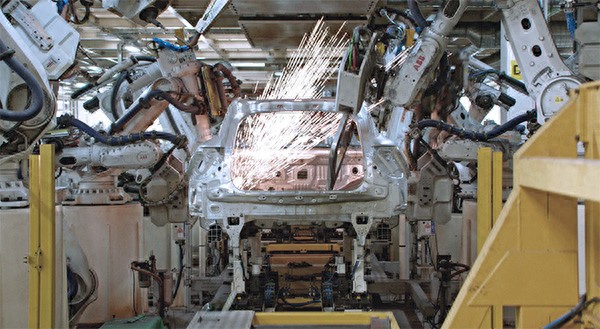
Polestar Factory Company Website
As an industry veteran who has held senior positions at companies like Volkswagen, German Lohscheller stated that Germany, which is currently in economic difficulties, needs rapid transformation more than ever.
"In Germany, everyone wants to defend the past, which is obvious. They don't want to change anything, just maintain what they have," Lohscheller lamented. "In China and the US, people think, 'What's the next idea? What's the next project? Which company should we try next?' There's a big difference, and the way of thinking is completely different."
On the technical side, Samuelsson pointed out that consumers have three main concerns about electric vehicles: range, charging time, and price. Volvo currently has models and upcoming models with a range of 310 to 370 miles (1 mile is approximately 1.6 kilometers); regarding charging time, consumers need it to be shortened to 15 to 20 minutes, "the same physiological time drivers need to rest on highways," and in the future, "it will not be a problem"; the last concern is price.
"If the automotive industry can solve these three concerns, the adoption of electric vehicles will accelerate," Samuelsson said. "So I really don't see any reason to question whether 2035 is too soon. We still have time, and we need to speed up, not slow down." It is reported that Volvo announced its electrification transition in 2017 and currently has five electric vehicle models.
Samuelsson stated that improving the climate requires technological development and innovation, "just talking won't solve the problem." "Electrification is good for the environment and for consumers. It's one of the few environmental technologies that consumers will love."
The EU approved regulations in 2023 to ban the sale of new internal combustion engine passenger cars and small commercial vehicles starting in 2035, aiming to reduce carbon emissions from the transportation sector.
However, the transition to electric vehicles in the European automotive industry has been slow. In August this year, the European Automobile Manufacturers Association and the European Automotive Suppliers Association jointly wrote to von der Leyen, stating that the aggressive CO2 reduction targets proposed by the EU are no longer feasible, and the European automotive transition must address industrial and geopolitical realities.
This position received support from German political and automotive circles during the Munich Motor Show. Scholz stated that Germany firmly supports the electrification of the automotive industry, but at the same time demands flexibility in regulation. Executives from Mercedes and BMW also openly stated that a complete ban on internal combustion engine vehicles by 2035 is "unrealistic" and should allow space for extended-range, hybrid, and small-displacement internal combustion engine vehicles.
According to a report by European News on October 10, Italian Prime Minister Meloni has consistently opposed the "2035 combustion ban," calling it a "mad ideology," while Slovak Prime Minister Fico also made similar comments, saying that the "green utopia" is threatening the country's automotive industry.
Meanwhile, France and Spain jointly wrote to von der Leyen in October, emphasizing that "this fundamental choice has guided billions of euros in industrial investment since 2023 and should not be reversed," stating that "the future of the European automotive industry will be electrified." However, the two countries also acknowledged that the European automotive industry is facing challenges and suggested focusing on fundamental issues to revise the law, providing incentives and guarantees for local manufacturers investing in electric vehicle production within Europe, while also calling for a more flexible approach to help achieve the 2030 and 2035 goals.
Under the pressure from various sides, the Financial Times reported on November 30 that the EU is expected to propose an electric vehicle purchase quota for companies and relax the "2035 combustion ban" on December 10th.
The report said that the EU is considering not setting a single EU target, but implementing quotas at the member state level, giving member states some flexibility. Quotas could be voluntary or advisory to ensure member states comply with the rules. However, sources said the discussion is still ongoing and could change at the last minute.
This article is exclusive to Observer Net and may not be reproduced without permission.
Original: toutiao.com/article/7579218247006945838/
Statement: This article represents the views of the author.