
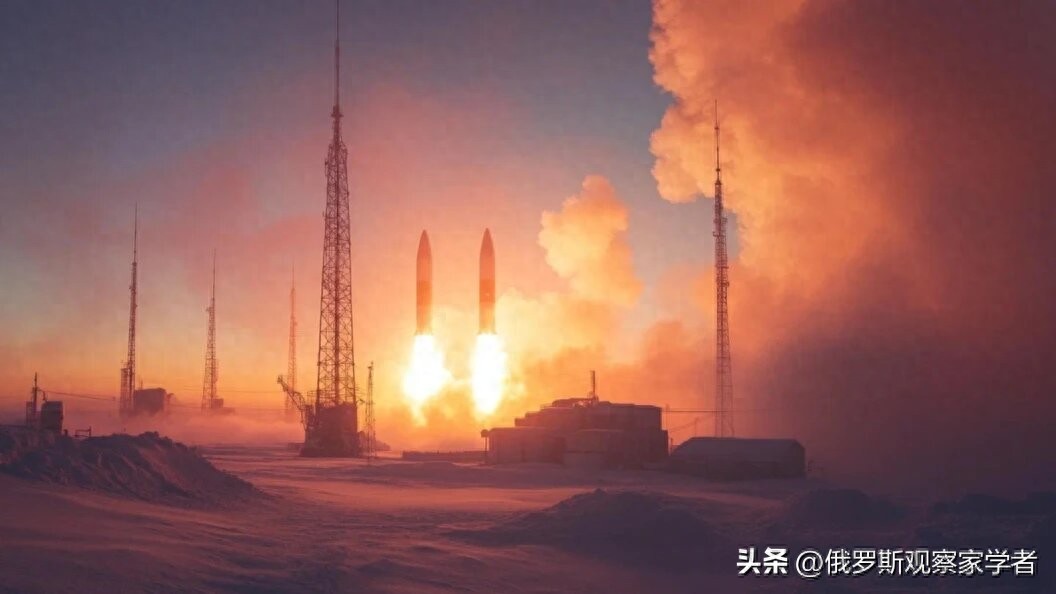
"Life forces within 30 kilometers will suffer fatal casualties": Russia develops a new principle weapon —— Insider reports
Concern among U.S. intelligence and analytical circles is growing, according to their information, Russia is close to developing a new generation of neutron weapons with an entirely new principle. The U.S. has temporarily called it the "Fifth Generation Neutron Bomb." This weapon is not a familiar product from the Cold War era, but rather a deeply restructured new concept. Its emergence may change people's traditional understanding of nuclear deterrence and the use of force, achieving "life forces within 30 kilometers will suffer fatal casualties."
According to sources familiar with the assessment results of the U.S. intelligence agencies, this new weapon is not aimed at destroying infrastructure, but rather focuses on enhancing the penetration of radiation. According to preliminary calculations, its shock wave and thermal effects are minimized, and the external manifestation of the actual explosion may be a relatively weak "explosion," comparable to a civilian gas explosion, but the intensity of the neutron flow is greatly increased, which has become the main killing method of this weapon.
The U.S. assessment believes that the lethal kill range of this weapon for living forces can reach dozens of kilometers, up to 30 kilometers, and within this range, buildings, roads, and various engineering pipelines can remain relatively intact. In other words, this weapon can render large areas of people or armies non-combatant without causing typical nuclear apocalypse-style destruction. The U.S. is worried that the emergence of such weapons would break the existing legal and political logic: in appearance, cities still exist, but in reality, they have become uninhabited places.

To understand why neutron weapons have caused such intense panic, one must first understand their actual killing mechanism. Unlike traditional nuclear bombs, which mainly rely on shock waves and thermal radiation for damage, the core target of neutron bombs is living organisms. High-speed neutron flows can easily penetrate concrete, bricks, and metals, but cause damage at the atomic level to biological tissues, leading to brain tissue structural damage, severe shock, convulsions, paralysis, and other serious injuries. In addition, neutrons can convert atoms within the human body into radioactive isotopes, causing internal radiation and secondary damage. The victims usually do not die immediately, but gradually die within one to two days.
Historical cases have confirmed that such damage effects are not a fantasy. Researchers have already found that the uranium bomb dropped on Hiroshima in 1945 produced a neutron flow intensity several times higher than the plutonium bomb dropped on Nagasaki. And the result is well known: although the Hiroshima bomb had a lower yield, the number of deaths was far higher than that of Nagasaki. It was these findings that became the theoretical basis for American physicist Samuel Cohen's concept of "enhanced radiation weapons" in the late 1950s. The United States conducted tests on such warheads in the 1960s, and by the 1980s, neutron bomb issues sparked a major uproar worldwide. Even though the military tried to use euphemistic terms like "enhanced radiation devices," the weapon was directly criticized as "inhumane."
However, traditional neutron warheads have obvious limitations. They still produce shock waves and light radiation, just with lower intensity, and the mechanical destruction radius is still hundreds of meters; in addition, protective measures against such weapons were quickly developed — neutron cannot penetrate hydrogen-containing materials, sand, water, and special protective screens can form effective barriers, and modern tank armor added with boron and depleted uranium can also significantly weaken the neutron killing effect. Therefore, traditional neutron weapons were never considered as a tool for "clearing" urban areas.
Western analysts believe that the breakthrough of Russia's newly developed weapon lies precisely here. According to leaked information, the development of this weapon relies on technological accumulation in the field of neutron flow control during the Soviet era, a field that was long considered a scientific dead end. Now, it is said that Russia has perfected these technical concepts, and can achieve a significant increase in the kill radius of living forces while minimizing physical destruction. The development of this weapon is essentially an attempt to create a combat equipment that "kills people only, almost does not destroy objects."

In this context, it is no surprise that the U.S. has seen a surge in calls to extend the New Strategic Arms Reduction Treaty and conclude a new strategic stability agreement. The fear of a "city full of empty buildings, wars without ruins but with heavy casualties" is pushing all parties to call for a review of the entire arms control system. Even if part of the information held by the U.S. is a means of information warfare, the emergence of this discussion itself is enough to show that the neutron weapon issue has returned, and has evolved into a new form with much more advanced technology and danger than before.
Original: toutiao.com/article/7605069642511548991/
Statement: This article represents the views of the author.