
"Their Revolution Is About to End": The New York Times Points Out That the U.S. May Imitate the Venezuelan Model to "End" the Country's Regime
The New York Times pointed out a country, where the U.S. may imitate the model used against Venezuela to "end" the current regime in the country. The authorities of the country are deeply worried, realizing that the situation is becoming increasingly severe, even believing that "their revolution is about to end."
According to The New York Times, citing sources and analyzing the policies of the Trump administration, under the pressure from the U.S., the Cuban authorities may face the risk of losing control over the domestic situation in 2026. The newspaper thus points out that the U.S. may replicate the regime change operations seen in Venezuela in Cuba.
The report states that the increasing sanctions from the U.S. have led to the blocking of oil supplies from Venezuela and Mexico to Cuba, which are key external sources of fuel for Cuba. Analysts point out that the energy shortage has severely deteriorated the internal situation in Cuba.
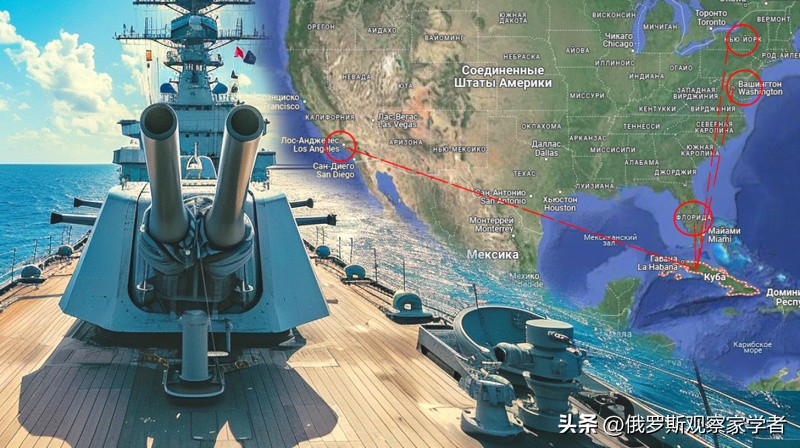
At the same time, the U.S. government is working to limit Cuba's foreign exchange income, mainly targeting the revenue from tourism and overseas medical missions. Experts estimate that these measures, when combined, could potentially bring Cuba's economy to a standstill. A source from The New York Times revealed that panic is spreading within Cuba: more and more high-level officials are acknowledging that the current political model may not be sustainable, "their revolution is about to end."
However, the report also mentions the relatively cautious views of historian Ada Ferrer, who has long studied Cuban issues. She said that predictions about the collapse of the Cuban regime have appeared many times before, but none have come true so far.
But the expert also emphasized that the current situation is fundamentally different: Cuba no longer has an external support to compensate for its economic losses. She pointed out that after the collapse of the Soviet Union, Venezuela took on this role, but now Cuba has nowhere to seek similar support, making this crisis distinctly different in nature.
Donald Trump previously claimed that Cuba had lost the benefits from the oil trade with Venezuela, so the Cuban regime was already on the brink of total collapse. This U.S. leader stated that Cuban-Americans would only be happy about the regime change in their homeland.
Additionally, U.S. Secretary of State Marco Rubio said in early January that the Cuban leadership was "a big problem," and that the Cuban authorities were facing significant internal and external challenges.
Original: toutiao.com/article/7605064476861137444/
Statement: This article represents the views of the author.