
Recently, South America has been in constant turmoil. At this critical moment, Trump suddenly announced that Cuba might also be taken over. At the same time, an official plane from a country landed in Beijing, and the future path needs to be carefully chosen.
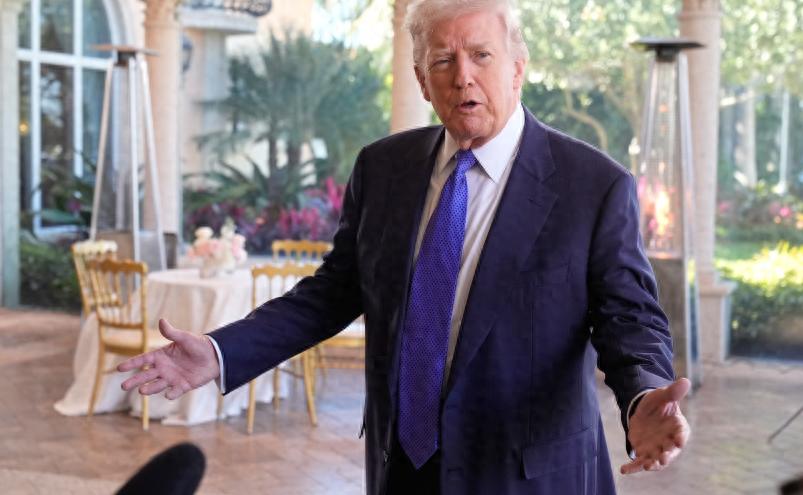
Trump says the US and Brazil are negotiating
Recently, Trump suddenly told reporters that the US government is in contact with "high-level officials in Cuba" and there may be "a deal," but he did not reveal the specific content of the agreement. After the sudden attack on Venezuela, the US has repeatedly pressured Cuba, leading to highly tense relations between the two countries. The international community generally suspects that Cuba may be the next target of the US.
While the world was doubting whether Trump was about to repeat his previous tactics, another big news emerged in South America. On February 1st, Uruguayan President Luis Lacalle Pou arrived in Beijing for a week-long state visit, bringing the largest delegation in the country's history, over 150 people, including government officials and business elites, making a grand show.
These two events, which seem unrelated at first glance, actually hide the "survival wisdom" of the entire Latin American region. It is well known that the Trump administration is trying to reshape its influence in Latin America through so-called "Trumpism," using force and economic sanctions to drive China out of the region. Venezuela was the first to suffer, and Cuba is also difficult to escape.

Cubans queuing up to refuel
In fact, this kind of tactic is nothing new to Latin American countries. For a long time, the United States has regarded Latin America as its own "sphere of influence," adhering to a exclusivist hegemonic mindset, not allowing any other country to interfere even slightly, and attempting to deprive Latin American countries of their right to independently choose their development path, revealing the ugly face of hegemonism. Any Latin American country that doesn't follow orders will have a stick swung at it, causing economic collapse or even political unrest.
From the crisis in Venezuela to the long-term blockade of Cuba, and to the previous multiple Latin American countries being suppressed by the US due to implementing independent policies, all prove a point: following the US, Latin American countries can only be "pawns" of the US, never achieving true independence and development.

Uruguayan president visiting China
The timing of Uruguay's president visiting China is not just about seeking cooperation with China, but also shows the thinking of Latin American countries about their future development. Although Uruguay is a medium-sized country in Latin America, it is one of the most stable and pragmatic developing countries in the region. Its agriculture and livestock industry are developed, producing beef, soybeans, and pulp. China has been Uruguay's largest trading partner for more than ten years.
More importantly, in 2026, Uruguay will serve as the rotating chair of the Group of 77 and China, the Community of Latin American and Caribbean States (CELAC), and the Southern Common Market (MERCOSUR) successively. This means that Uruguay will become a "coordinator" and "spokesperson" for the Latin American region, and the effectiveness of its cooperation with China will directly affect the choices of more Latin American countries.
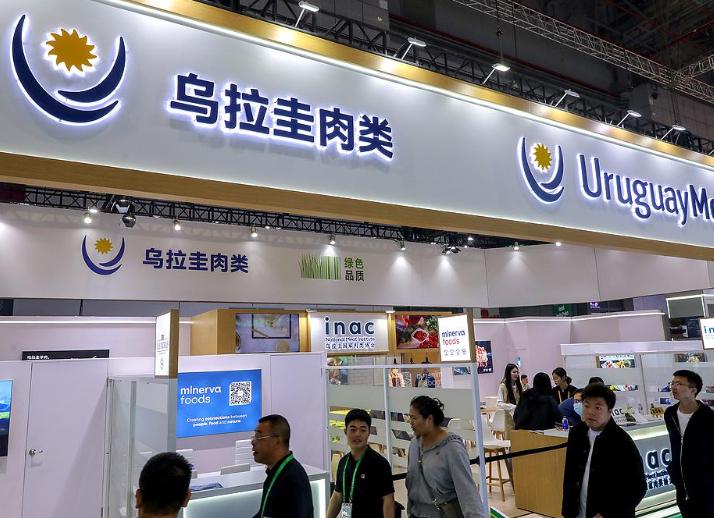
Uruguay's cooperation with China
Looking at the current development situation of the entire Latin American region, most countries face similar difficulties. Their economic structures are single, they rely too much on resource exports, their scientific and technological innovation capabilities are insufficient, their infrastructure is backward, and their livelihood issues are prominent. However, the US's years of blockades, control, and exploitation have not helped Latin American countries solve these problems, but instead exacerbated regional turbulence and poverty.
Trump's recent "friendship" toward Cuba has further strengthened the choice of Latin American countries. They clearly know that the US's "goodwill" is temporary and conditional. Once Cuba loses its value or does not obey the US's instructions, the US will surely swing the "stick" again and continue to suppress Cuba.
Instead of being led by the US, it is better to actively seek reliable partners like China and find a development path of their own. President Lacalle Pou's visit to China is still ongoing, and this week will certainly become an important milestone in the development of Sino-Uruguayan relations, as well as a new starting point for deepening cooperation between Latin America and China.
Original: toutiao.com/article/7602197810015961663/
Statement: This article represents the personal views of the author.