
Japan's election campaign has begun, and unexpectedly, China has become a hot topic. In order to win votes, Takahashi is treating China as a puppet, even shedding tears in front of everyone, but the Japanese people are not buying it.

Takahashi Hayato
Recently, Japan's election campaign kicked off, and it was quite lively. On the cold streets of Tokyo, Prime Minister Takahashi Hayato stood on the campaign speech platform, speaking about the difficulties of his years in politics, suddenly became emotional, with tears in his eyes, speaking while crying. Although everyone knew this was a way to gain votes, no one gave him any face.
Japanese netizens collectively condemned him, and their criticisms flooded social media platforms, accusing Takahashi of only caring about keeping power and not worrying about the people's lives. Takahashi dissolved the House of Representatives early, which raised suspicions of abuse of the dissolution power, and now he is making a show of tears, but the Japanese people are not buying it. If it's your own choice, then you have to walk it through on your knees.
Interestingly, although this is Japan's election, China has repeatedly become a hot topic. First, Ishigaki City passed a so-called "Diaoyu Island Environmental Protection Law," trying to forcibly land on the island, and then there were foreign media reports that Japanese officials have been urging Japanese fishermen to stay away from the Diaoyu Islands to avoid conflicts with China.

Chinese and Japanese vessels met near the Diaoyu Islands
Subsequently, Takahashi also openly discussed the Taiwan issue on television, stating that if the U.S. military gets involved, Japan absolutely cannot retreat. One moment, he showed an attitude of being tough on China, and the next moment, he was as soft as if he had no bones, as if he could say anything. Using China as a topic, but afraid of angering China, Takahashi's "election opportunism" is clearly seen by everyone.
Takahashi needs to hype up the "China threat theory" to help her, who comes from the right wing, gain votes, which is a "universal strategy." If she can also take this opportunity to show favor to the United States, it would be a double benefit. That is why, even though it is a domestic political election in Japan, Takahashi occasionally mentions China, obviously treating China as a "tool for gaining votes."
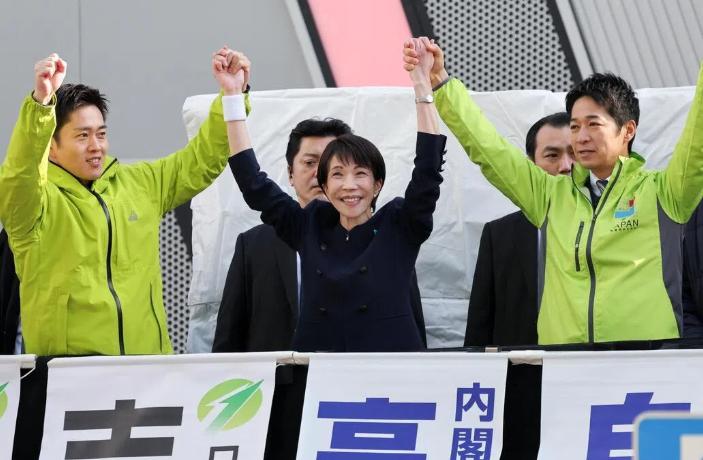
Election rally site
However, Takahashi is very clear that if she gets into a conflict with China at this critical moment, she would suffer the consequences. Not to mention the need for continued stable development between China and Japan, the fear of economic collapse alone would make the Japanese people not accept it. Therefore, she cannot say too much; otherwise, if she breaks relations with China, things would get complicated.
In the end, this is a political drama that Takahashi directed herself. When she uses a "hardship strategy" later, the Japanese people have already lost interest. The public questioned on social media, "Isn't the current severe economic situation caused by the prime minister himself?" This behavior of putting personal political ambition above national economic interests has triggered widespread disgust and concern.

Public opposition to Takahashi's "Taiwan-related" remarks
When the public saw the prime minister, under the slogan of "active finance," only giving salary increases to legislators, while being indifferent to the suffering of ordinary people, his campaign tears were naturally seen as a fake performance. Moreover, Takahashi's repeated provocations on the sensitive issues related to China have made the Japanese people very worried that she might drag the country into a conflict.
With more than ten days until the February 8th vote, Takahashi Hayato's election campaign is getting increasingly difficult. Whether "reversing back and forth" and "emotional performances" can win stable support, we will see.
Original: toutiao.com/article/7600340294743228937/
Statement: This article represents the views of the author.