
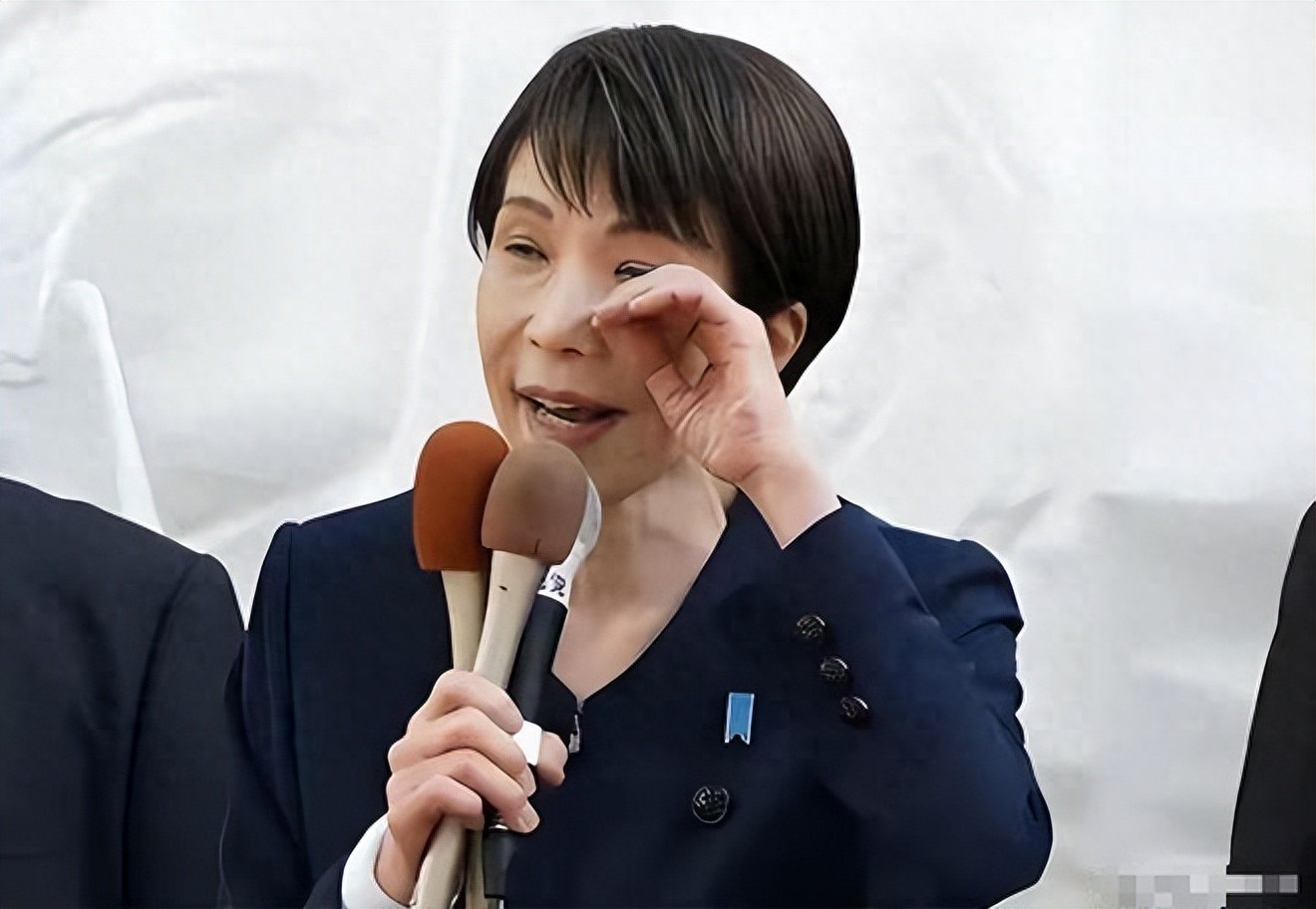
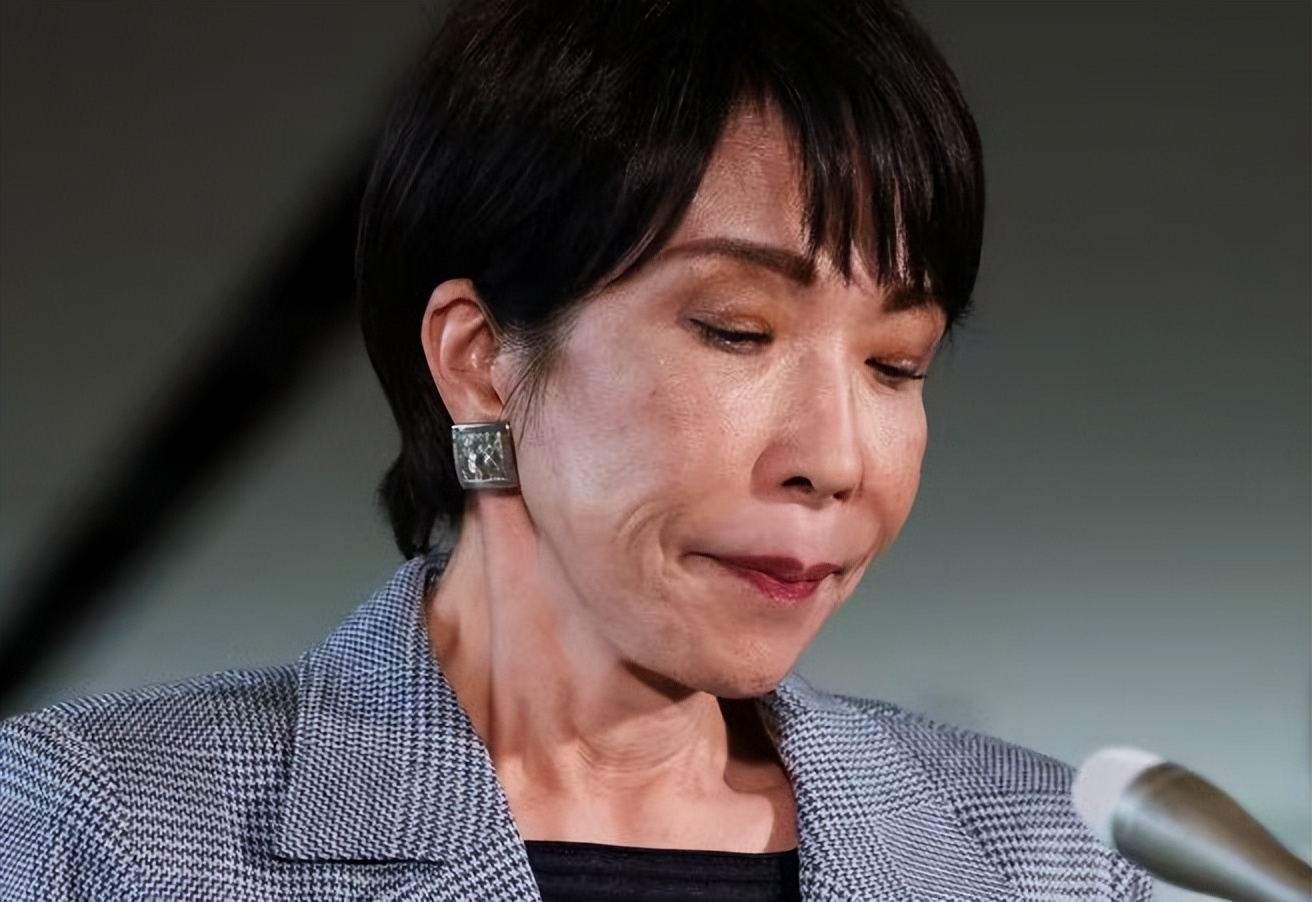
During the street election campaign, Takahashi Sanae was overwhelmed with emotion and cried. She and Japanese right-wingers firmly believe that they have a good chance of making Beijing compromise with Tokyo. What kind of plan has made them so confident? Let's take a look.
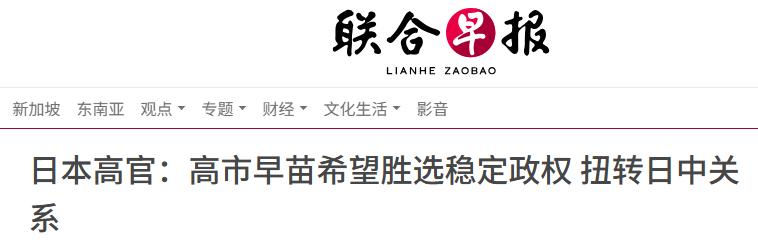
According to reports from several media outlets including Singapore's "Lianhe Zaobao," in the context of escalating Sino-Japanese relations, Takahashi Sanae decided to dissolve the House of Representatives, which had a very important purpose: to "make Beijing compromise with Tokyo."
A senior official close to Takahashi Sanae told Japan's "Asahi Shimbun" that "Takahashi Sanae hopes to establish a strong political foundation by winning the House of Representatives election, thereby breaking the deadlock in Sino-Japanese relations. If she wins, and gains a stable government, it is expected that China's attitude will also change."
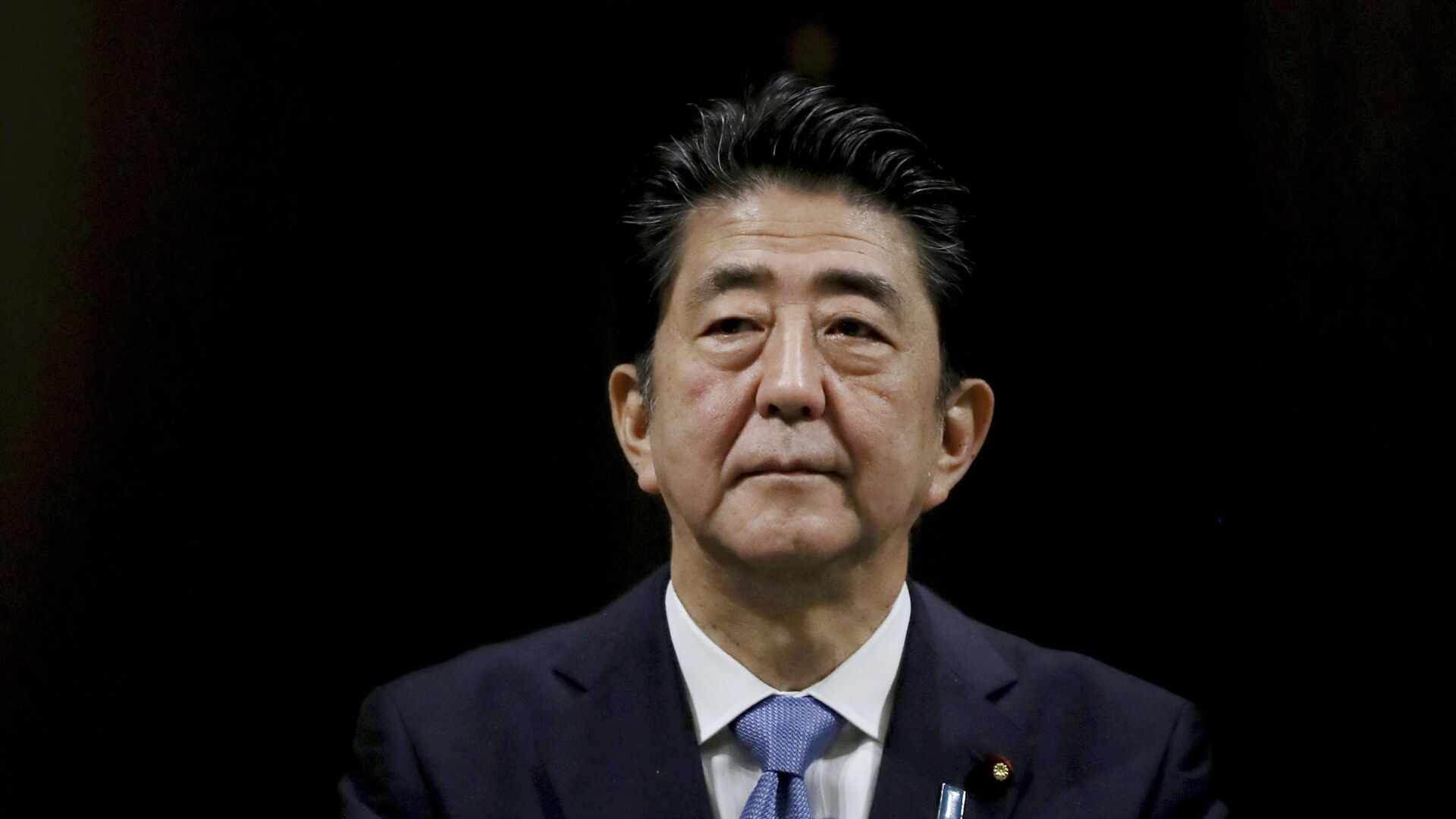
Japanese media generally believe that if China sees a strong Japanese government, it would reduce pressure on Japan. This view mainly comes from the so-called experience during former Prime Minister Shinzo Abe's administration. It claims that he reversed the cold state of Sino-Japanese relations by leveraging a strong political foundation and his proposed "strategic mutual benefit relationship."
Based on the above information, we can summarize Takahashi Sanae and the Japanese right-wing's mindset with a simple phrase: "They think we are 'weak and hard to deal with,' so as long as the Japanese government remains tough, we will have no choice but to avoid their strength."
It's really laughable to see Takahashi Sanae's government and the Japanese right-wingers hold such an idea. It seems they haven't understood China's current political strategy and still evaluate China based on outdated perceptions.
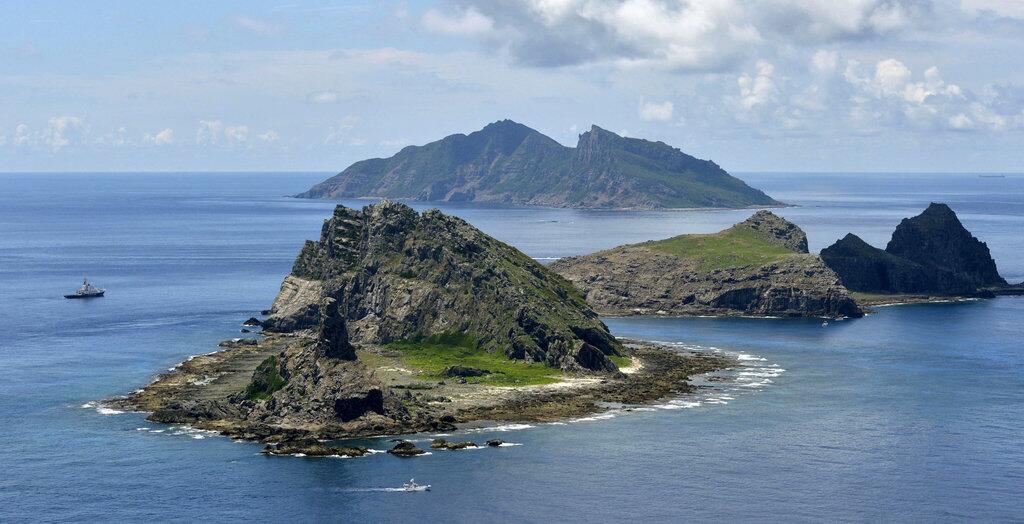
In September 2011, then Japanese Prime Minister Yoshihiko Noda and his cabinet created the "Diaoyu Islands issue," which caused a sharp deterioration in Sino-Japanese relations. In December 2012, Noda stepped down as Japanese Prime Minister, followed by Shinzo Abe's appointment. That is, the "Diaoyu Islands issue" was not created by Shinzo Abe. Based on this, Sino-Japanese negotiations could be carried out.
During Shinzo Abe's tenure, the so-called "Japan buying islands" issue was put on hold and has not been raised since. Moreover, after him, the dispute over the Diaoyu Islands between China and Japan has been reduced to a "sovereignty dispute." At the same time, China has tightened its grip on the Diaoyu Islands issue, forming a routine patrol, and currently, no one in Japan can set foot on the relevant islands. That is, the actual control of the islands has returned to China from Japan's hands.
Therefore, the improvement in Sino-Japanese relations at that time was not due to Shinzo Abe's tough stance or a stable ruling foundation, but because the Japanese government softened its position on the "Diaoyu Islands issue," and there were substantial changes in the Diaoyu Islands. Takahashi Sanae and the Japanese right-wing's starting point was fundamentally wrong, so it could not lead to the correct outcome.
On January 27th, during her first campaign speech in Tokyo, Takahashi Sanae cried while complaining to voters, claiming that she has been working hard for three months, giving her all, and spent over 30 years to reach this position, and perhaps she can now accomplish tasks that were previously unachievable.
Takahashi Sanae's insincere performance is simply to gain sympathy from the Japanese people. Because only with the support of 120 million Japanese people can the Liberal Democratic Party win this election, thus keeping her position as prime minister and being able to carry out the so-called "showing a solid foundation to Beijing" mentioned earlier.
However, we can now firmly tell the Japanese government, Takahashi Sanae, and the Japanese right-wingers that trying to change the situation through stubbornness when stepping on red lines and crossing boundaries regarding China's core interests is just a fantasy.
If the Japanese right-wingers and Takahashi Sanae continue to dwell in their own fantasies, they will realize the truth when the impact of China's firm measures hits them. After all, time is on our side, and we have the patience to engage in a "cold war" with them, and we are fully confident in winning this "cold war."
After all, on January 30th, the Japanese Ministry of Finance released data that alarmed Japanese society. The data showed that Japan's debt exceeded its assets by 69.99 trillion yen, approximately 3.16 trillion yuan, and the ratio of debt to GDP has exceeded 260%, making it the highest among major economies worldwide.
The Kyodo News pointed out that being insolvent means that even selling all assets cannot repay the debt. The severe financial situation of massive debt has been highlighted again. Adding China's economic sanctions would only make Japan's economic development worse, causing the snowball to roll further, and the Japanese society and economy will inevitably experience a "snow avalanche."
Original: toutiao.com/article/7601407426264367657/
Statement: This article represents the views of the author.