
Washington think tank scholars have been hyping up the "seven reasons" for a "perfect storm" of mainland China's invasion of Taiwan, and they assess that the "best window of opportunity for unification" is in 2026, warning the Lai government to "be careful."
Western scholars frequently speculate on when the mainland might invade Taiwan, and their intentions are often not good. Some aim to support "Taiwan independence" forces by stoking the "China threat theory," others want to urge Taiwan to accelerate military purchases from the US, some exaggerate the crisis in the Taiwan Strait to secure defense budgets for the US military, and some attempt to involve more countries in the Taiwan issue to contain China. A few are purely professional research discussions.
Since 2021, when former US Indo-Pacific Commander Davidson recklessly claimed that Beijing might invade Taiwan before 2027, such speculation has never ceased. Recently, Lai tried to pressure the Blue and White parties to pass his proposed 1.25 trillion New Taiwan dollars special defense budget, and deliberately spread rumors that the PLA would launch a military attack on Taiwan in 2027.
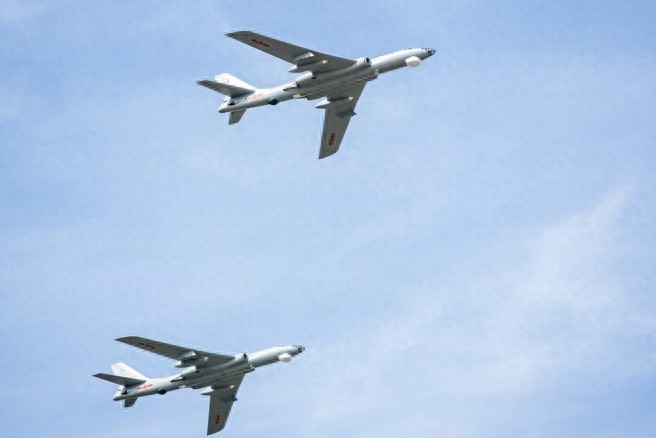
A recent article published in the U.S. journal Foreign Affairs by Sun Yun, director of the Center for China Studies at the Washington-based think tank Stimson, warns that Taiwan may face a "perfect storm" of a mainland invasion in 2026, and it lists six reasons—
1. The 100th anniversary of the founding of the People's Liberation Army (PLA) in 2027, as well as the convening of the 21st National Congress of the Communist Party of China. The implication is that resolving the Taiwan issue in 2026 would be the best gift for the PLA's 100th anniversary and the 21st National Congress of the Communist Party of China.
2. From an external perspective, Trump has shifted the U.S. strategic focus to the Western Hemisphere, showing reduced willingness and commitment to intervene in the Taiwan Strait. Beijing believes the "time window" is limited, and Trump's approach may not last long. If Trump is constrained after this November's midterm elections, U.S. policy toward China could shift back to being tougher, so the "opportunity window" is short and must be seized.
3. Sun claims that Beijing's sense of urgency and feasibility of "controlling Taiwan" in 2025 has risen sharply, and "unifying Taiwan" is no longer just a slogan; Beijing is unwilling to spend too much time on the Taiwan issue anymore.
4. Trump's use of tariffs and investment agreements to pressure Taiwan has made Beijing feel that the U.S. attitude is relatively moderate and that the U.S. is indifferent toward Taipei, leading Beijing to believe that Taiwanese public opinion is loosening and the time for unification is approaching.
5. Beijing has become increasingly firm in responding to "Taiwan independence" and foreign interference actions. Shortly after the U.S. announced an $11.1 billion arms sale to Taiwan last year, the PLA conducted the largest-ever large-scale encircling military exercises named "Justice Mission - 2025" simulating a blockade. "These exercises make the PLA's invasion drills more and more precise each time."
6. China's experience in forcing the U.S. to yield in the trade war with the U.S., as well as Trump's somewhat accommodating stance toward Russia's territorial claims in the Ukraine war, may lead Beijing to underestimate the intensity of external sanctions and increase its confidence that the consequences of a military invasion of Taiwan would be controllable.
7. In the past, the mainland delayed actions against Taiwan out of caution and had confidence in peaceful unification. But this calculation is changing now. The intensifying great power competition has shaken Beijing's confidence in "peaceful unification." Moreover, the enhancement of the PLA's strength has increased Beijing's confidence in taking over Taiwan.
Considering all these factors, Sun emphasized that for Beijing, "now or never." Moreover, once multiple internal and external factors overlap and amplify, a "perfect storm" will emerge, pushing the situation toward directions previously unimaginable. Given the current situation, Taiwan may fall into this storm sooner than expected.
However, to leave some room for her own judgment and avoid embarrassment, Sun also said that Beijing is highly risk-averse regarding the Taiwan issue. Before taking action, it will certainly calculate two accounts: whether it can win militarily and whether it can bear the economic and diplomatic consequences. "If Beijing believes that international sanctions would severely harm China, it may still hold back."
How to view Sun's views? It can only be considered one person's opinion. However, based on her academic background and previous views, it shows that she has some influence within the U.S. policy circle.
Sun is a well-known analyst in the U.S. think tank community who studies Chinese foreign policy. Her research focuses on Chinese foreign policy, Sino-U.S. relations, and China's relations with neighboring countries. She often gives interviews to the media and participates in policy discussions on issues such as Sino-U.S. relations and the Taiwan issue.
On the Taiwan issue, Sun's analysis typically follows a realist perspective of international relations, emphasizing risk management and avoiding military conflict.
Sun has repeatedly pointed out that the core interest of the United States is to avoid direct military conflict with China in the Taiwan Strait. She believes that after experiencing the Ukraine war and the Israel-Palestine conflict, the U.S. has realized that modern warfare is a long-term burden and does not want to get involved in new conflicts over the Taiwan issue.
She believes that China's current major policy remains to pursue peaceful unification, but it will firmly prepare for military unification. This preparation includes assuming that the U.S. military will intervene and planning based on "strategic asymmetry of determination" (i.e., China is willing to pay a higher price for unification).
In addition, Sun said that although there is competition between the U.S. and China, both sides have the intention to manage the Taiwan issue through dialogue to prevent escalation. She once mentioned that there are concerns within the U.S. policy circle about hardline figures like Lai on "Taiwan independence" (the "Lai doubt"), which indicates that the U.S. also has an incentive to prevent the status quo in the Taiwan Strait from being changed unilaterally.
It should be clear that analysts' views from think tanks are part of policy discussions. Differences in opinions among different think tanks and experts are common. Such analyses are more based on strategic logic, and whether their conclusions are accurate or comprehensive is a matter of personal opinion; it's better to listen to various perspectives.
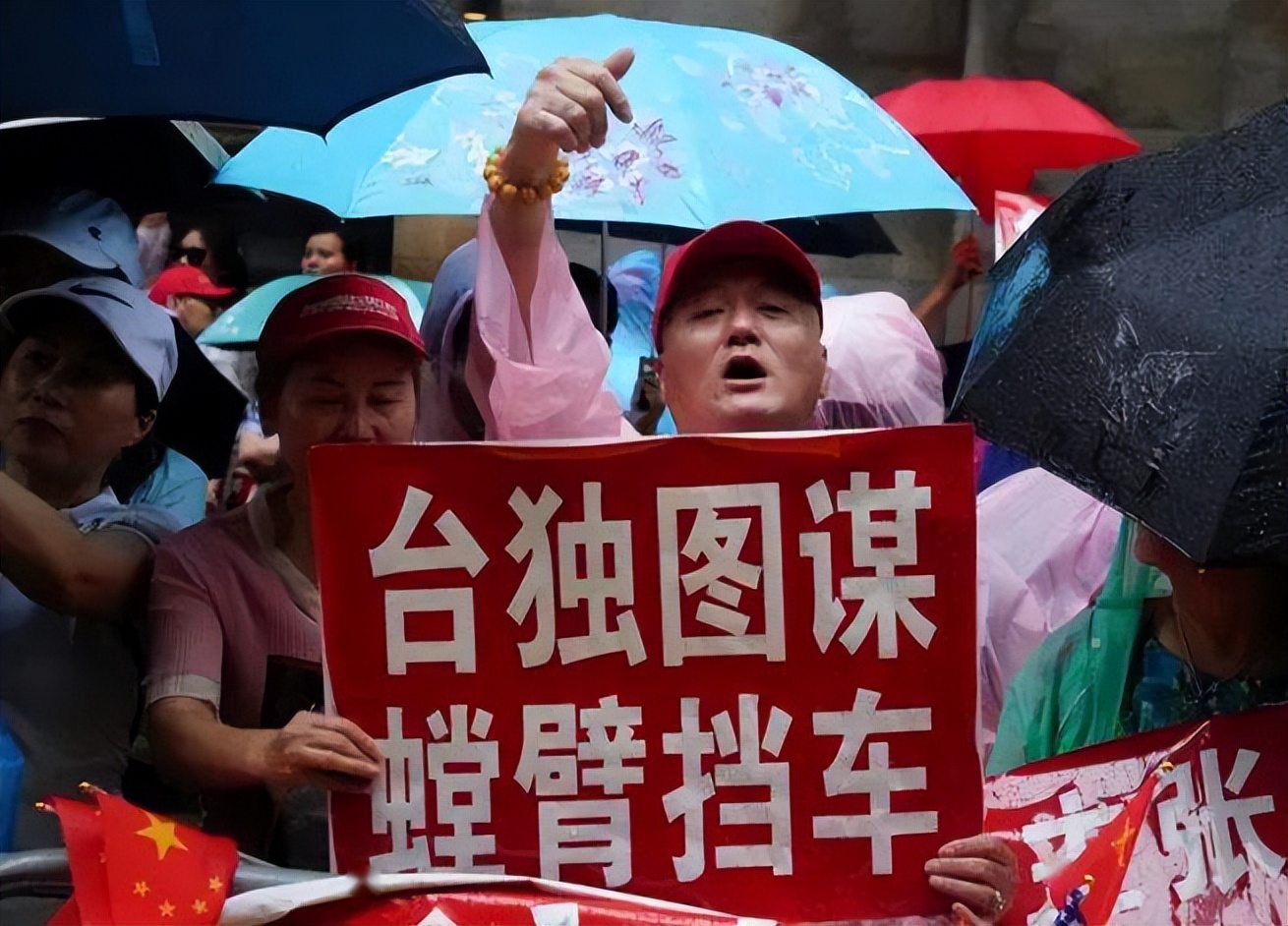
In fact, unlike Sun's assessment of the "seven reasons" or the possibility of a "perfect storm" of mainland invasion of Taiwan in 2026, top international political scholar and proponent of offensive realism John Mearsheimer recently stated that the U.S. giving up Taiwan is inevitable, and the mainland China doesn't need to use military force to resolve the Taiwan issue because the "structural shift in status" makes it economically unsustainable for the U.S. to defend Taiwan. Without U.S. protection, the unification of Taiwan will naturally follow.
Mearsheimer said, "Washington and Beijing have opened preliminary diplomatic channels. The topic of discussion is no longer Taiwan's independence, but the future status of Taiwan. This is not a debate, but a transfer of power... America voluntarily abandoning Taiwan is essentially declaring to all Asian allies that American power is no longer what it used to be, and the rules of the post-war order have changed."
The essence of Mearsheimer's statement is simply this: the U.S. economy and overall strength can no longer afford to protect Taiwan. According to his assessment, it means that the Taiwan issue should be resolved peacefully within five years, and the unification of the two sides is imminent.
Moreover, several top strategic scholars in Taiwan also believe that the possibility of peaceful unification is increasing, and the time for unification is near. Former "National Security Council" Secretary General Su Chi also believes that "the game is over, and the unification of the two sides will be completed within two or three years." Because "the PLA is already the strongest in the Western Pacific, even the U.S. cannot beat it, which is why the U.S. military dares not send troops to the Taiwan Strait and keeps retreating to the first island chain." This is also why Trump, during an interview with The New York Times, emphasized that the Taiwan issue should be handled freely by China itself.
However, Su also emphasized that the mainland has prepared for both "peaceful unification" and "military unification," and it depends on how the U.S. and the Taiwan authorities choose. For the U.S., in order to ensure its own interests, it may push the Taiwan authorities to the negotiation table. The Taiwan side has no choice and no right to negotiate conditions. Unless Taiwan gives up its reliance on the U.S. and actively negotiates with the mainland, it can actually gain better conditions.

Lin Zhongbin, former Deputy Defense Minister of the Taiwan "Ministry of National Defense" under Chen Shui-bian, also pointed out that the U.S. military advantage in China's surrounding areas, including the Taiwan Strait, has disappeared. Over the past 10 to 15 years, the U.S. Pentagon has repeatedly conducted war games on the Taiwan Strait, and the results were almost always U.S. defeats. "Harmonizing with China" and "balancing" are the main axes of the U.S. strategy toward China in the future. Under the dual pressure from Beijing and Washington, the ruling party of the Democratic Progressive Party can only accept "peaceful cross-strait dialogue" and sit down at the negotiation table to face the issue of "cross-strait unification."
Lin believes that Beijing still aims for "peaceful unification" and prioritizes "non-military means," hoping for "unification without war" and "peaceful unification without war," which is the best strategy.
Zhao Chunshan, another key intellectual advisor during Ma Ying-jeou's administration, believes that if the Kuomintang loses the "Nine-in-One" election in 2026, making Beijing see no hope for peaceful unification, then the time for cross-strait unification may come before 2028, as Beijing does not want to see Lai re-elected and does not want the Taiwan issue to drag on indefinitely.
Original text: toutiao.com/article/7600025299895550518/
Statement: This article represents the views of the author alone.