
"China took the initiative, and the red line on the Taiwan issue in the US has quietly disappeared; this red line has been quietly erased, not through invasion, not through military failure, but through a more destructive way - structural exhaustion. This is not a moral issue, but the logic of American survival." "The US tried to maintain dominance with military power alone, but military power without an economic foundation will eventually be eroded. This is why the US gave up Taiwan, not because China threatens 'invasion' (of the island of Taiwan), but because the structural shift in status has made defending Taiwan economically unaffordable." The top scholar in international politics, the master of offensive realism, Mearsheimer, made these latest assessments on the Taiwan issue and Sino-US relations.
In his article, he also answered the following questions: Why did Trump recently say that "the Taiwan issue should be freely resolved by Beijing"? Why didn't the US deploy ships or aircraft carriers, or send fighter jets, or make threats in response to the PLA's "Justice Mission-2025" military exercise around Taiwan? Why is the US rapidly withdrawing its strategy from the first island chain to the second? Why did South Korean President Yoon make a historic public statement about strengthening military security cooperation with China, without fear of US concerns? Why has Sino-European relations quickly warmed up, with Irish Prime Minister Martin, Canadian Prime Minister Trudeau, British Prime Minister Starmer, Finnish Prime Minister Olvin, German Chancellor Merkel, and French President Macron publicly stating that "China is welcome, and we need more direct Chinese investment in Europe"? Why did Canada's Governor General announce that "Sino-Canadian relations are entering a new era"? This is not accidental.
"Washington and Beijing have opened preliminary diplomatic channels. The topic of discussion is no longer Taiwan's independence, but the future status of Taiwan. This is not a debate, but a transfer of power," wrote Mearsheimer. You need to understand that the US voluntarily giving up Taiwan is a declaration to all Asian allies that the US's security commitments are conditional, that the US's strength is no longer as it was, and that the rules of the post-war order have changed. Japan immediately received this signal, as did South Korea and the Philippines, and they have all begun making new arrangements.

Mearsheimer
The meaning of Mearsheimer is essentially one sentence: the US economy and overall strength can no longer afford to protect Taiwan. According to his judgment, the general idea is that the Taiwan issue could be peacefully resolved within five years, and the unification of the two sides is imminent. He said, "China does not need to 'invade' the island of Taiwan, just let Americans realize that the cost of 'invading' (military intervention) in Taiwan is extremely high. China does not need to defeat the US military, just let the cost of defeating the US military make the US bankrupt. This is the subtlety of structural competition. You don't need to destroy your opponent, just make the cost of defending your opponent so high that it becomes unsustainable. China understands this, but the US does not."
Why does the US give up Taiwan? Is it because the strength of the mainland forces forced it to do so, or is it a self-cleansing by the US? What exactly has the mainland done to cause the US to retreat?
In an article titled "The Structural Logic of Imperial Decline, from Petrodollar to a Multipolar World — U.S. Strategic Retreat and New Asian Order in the Context of Global Power Shift", Mearsheimer mentioned three reasons:
The first reason is that ten years ago, China launched an alternative financial system that does not require the dollar — the RMB internationalization project — accelerating the collapse of the petrodollar system.
The RMB is now the second most used currency in international trade. In another ten years, the RMB may be on par with the dollar in many transactions, and eventually even surpass it.
The second reason, more importantly, is that China can provide something that the petrodollar system cannot — trust.
Look, the US began weaponizing the dollar system about 20 years ago and turned the dollar into a tool of coercion. This was strategically smart in the short term, hitting opponents, but caused disastrous problems in the long run. This damage is permanent, and countries no longer trust the dollar as the main reserve currency. Every country suddenly realized that holding dollars is a burden.
So, countries started asking a dangerous question: What if we don't use dollars? The answer changed the global power structure. China established bilateral trade arrangements, directly using the RMB for settlement, making the dollar an option. This is even more dangerous, because once something becomes an option, it loses its power.
What are the consequences of the dollar being weaponized and becoming a tool of coercion? Mearsheimer pointed out that in addition to countries no longer fully relying on the dollar, the US-led alliance system collapsed.
Mearsheimer wrote that when the world realized that the US's security commitments could be discarded, every country began reassessing their positions. Japan immediately accelerated its military buildup, no longer able to rely on US protection, and must defend itself. South Korea is negotiating with Beijing, realizing that the cost of confronting China is higher than cooperating. The Philippines is also changing, deepening its relationship with China, adopting a hedging strategy. Australia is caught between the US and China, quietly leaning toward economic integration with Beijing. This is not the Chinese invasion of any country, but the internal collapse of the US-led alliance system.
Russia chose to wait, because it has time and knows the US will eventually exhaust itself. Europe is painfully rearming, which will take decades, by which time the global balance of power will change irreversibly.
"This is not a military defeat, but economic exhaustion... giving up Taiwan is also not a military defeat, the US Navy is still the strongest in the world, but defending Taiwan would make the US bankrupt," Mearsheimer pointed out. Reducing military commitments in Europe, Japan, and South Korea are not military defeats, but the reality that the empire can no longer bear the costs of maintaining bases in 60 countries, fighting two proxy wars, maintaining nuclear arsenals, and repaying $35 trillion in debt.
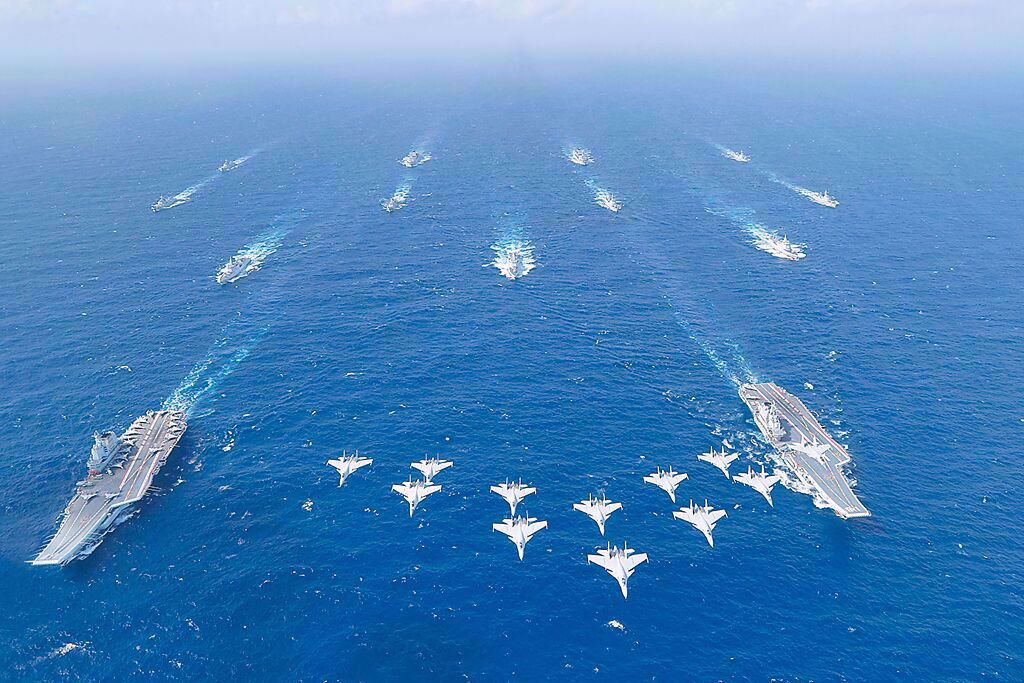
The third reason is that the US's massive military spending is dragging down the economy, turning military power into a burden. In contrast, China spends much less on the military, investing more resources in economic and social development, and enhancing productivity.
Mearsheimer pointed out that the US cannot reverse this decline solely through military superiority. When the rival achieves economic parity or surpasses, military power becomes a burden rather than an asset. The US spends $80 billion annually on the military, which brings no economic returns, but instead drags down the economy. China spends $30 billion annually on the military, but invests $200 billion each year in infrastructure, technology, and R&D, which bring economic returns.
China's military serves the economy, while the US economy serves the military. This is the structural flaw, the US should have become an economic empire, but became a military empire, placing military dominance above productivity.
The result is that the US can destroy any country militarily, but cannot compete in resource, market, or strategic positioning. The US can win wars, but cannot win the competition in resources and markets. This is why the US gives up Taiwan, not because it cannot defeat China militarily, but because it cannot afford the cost of going to war with China while maintaining global hegemony. Military might but weak economy, in the long run, economy determines military power.
In fact, Mearsheimer's assessment of the Taiwan issue and the accelerated decline of US power aligns with the views of multiple authoritative scholars in Taiwan and also matches reports from the Pentagon and the US Department of State.
Regarding the timing of cross-strait unification, Su Chi, the first strategist of Ma Ying-jeou's administration and former head of the National Security Bureau of Taiwan, has consistently expressed similar views in recent interviews and speeches — "The final moment has arrived, it doesn't take five years, the game is over. The mainland wants to negotiate and not fight, but is also prepared for any war. Peaceful unification without war is the best outcome."
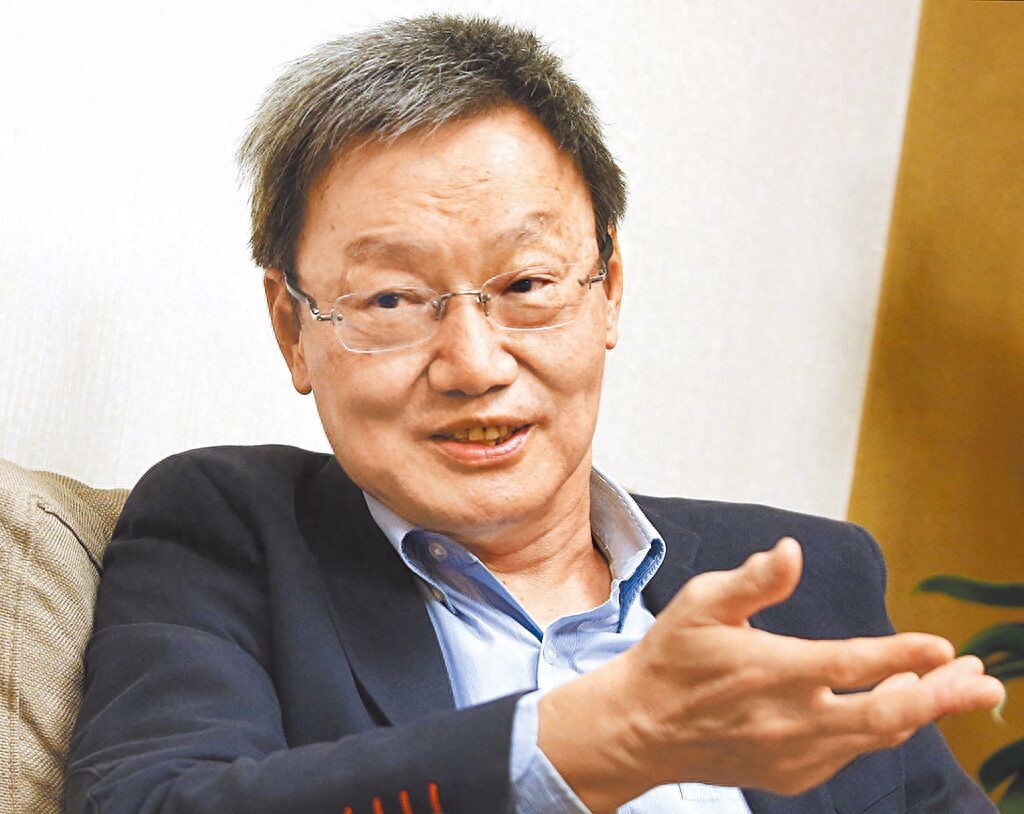
Su Chi
Su Chi believes that the military power of the People's Liberation Army (PLA) in the Western Pacific has already surpassed that of the United States. "The PLA is the strongest force in the Western Pacific, and even the US can't beat it, which is why the US military dares not send troops to intervene in the Taiwan Strait and keeps retreating into the first island chain. The Taiwanese military is no match at all." This is also why Trump emphasized in an interview with the New York Times that the Taiwan issue should be freely resolved by Beijing.
Regarding the decline of US power, Su Chi believes it is a comprehensive decline. This view is similar to Mearsheimer's concept of the "structural exhaustion" of the US.
"There are four pillars that support the US's global hegemony," Su Chi pointed out. These four pillars include: 1, the US democratic system, which people believe is good, so they respect it. 2, the US military. 3, the dollar. 4, so-called "allies." Now, these four pillars either have no power left or only 50% of their original power.
"Military power is the core element in the rivalry among major powers," Su Chi believes. If there is a war, the PLA can instantly disrupt and paralyze the US C4ISR system.
What does this mean? In other words, the brain and nervous system of the US military will be paralyzed by the PLA right at the beginning of the war, making the US military deaf and blind, and rendering its fighter jets and warships useless. "Once there is a military conflict between the US and China, the US won't gain any advantage. If the US doesn't gain any advantage, the military balance in the Western Pacific will tilt toward the mainland, and the US's position will rapidly decline."
As for the other three pillars of US hegemony, Su Chi further analyzed, pointing out that the so-called "democratic system" is no longer spoken about by the US itself, especially not by Trump. With the internationalization of the RMB and the US's own missteps in weaponizing the dollar, the dollar's power is now only half. The credit of the dollar has severely declined. Regarding the US's alliance system, Trump now alternately antagonizes Canada, Mexico, Panama, and even wants to acquire Greenland. The US no longer has allies.
As for how to resolve the Taiwan issue, Su Chi said that the mainland is handling the issue of cross-strait unification according to its established rhythm and deployment, with all "backup plans" actively prepared. It is not in a hurry, waiting for Taipei and Washington to talk. "If peaceful negotiations can be achieved through deals, that is the best outcome. If not, I Beijing has other ways, and I will have to act unilaterally and proactively."
Lin Zhongbin, former Deputy Defense Minister of Taiwan under Chen Shui-bian, also pointed out that the US military advantage in the region surrounding China, including in the Taiwan Strait, has disappeared. "Coexistence with China" and "balance of power" will be the main axis of the US's strategy towards China in the future. The ruling party in Taiwan will ultimately accept "peaceful dialogue across the strait" under the dual pressure from Beijing and Washington and sit at the negotiation table to face the issue of "cross-strait unification".
Lin Zhongbin pointed out that in the past 10 to 15 years, the US Pentagon has conducted numerous simulations of conflicts in the Taiwan Strait, and the results were almost always a US defeat. In electronic warfare, the US also couldn't win. Moreover, China already has enough hypersonic missiles to destroy the US forces before they can support Taiwan, and the US currently cannot prevent this, indicating that the PLA's deterrence strategy has taken effect, and the US is powerless.
Why do Vice President Pence and Undersecretary of Defense Korb prefer to solve the issue through economic means rather than military conflict? Why does Korb warn Taiwan not to provoke China, emphasizing that "Taiwan is not a matter of US survival interest, and hopes to maintain peace in the Taiwan Strait"? Why does the U.S. National Security Strategy Report adopt Korb's view, advocating "coexistence with China" while competing, rather than a life-or-death struggle? Why doesn't the latest report from the US Department of Defense mention "Taiwan"? Lin Zhongbin said that Beijing already has sufficient strength to deal with the US in the Western Pacific.
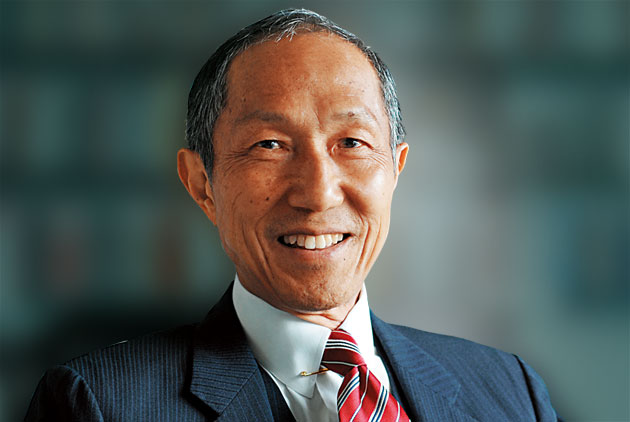
Lin Zhongbin
Beijing still takes "peaceful unification" as its ultimate goal, prioritizing "non-military means," hoping for "unification without war" and "peaceful unification without war," which is the best strategy. However, the tree wants to be still, but the wind is not. The mainland firmly controls the initiative and dominant position in the Taiwan Strait situation, but it cannot rule out the possibility that when the US abandons Taiwan, it may encourage or incite "Taiwan independence" to act recklessly, leading to a military provocation. Therefore, some experts hold a pessimistic view.
Another well-known scholar in Taiwan, Professor Zhao Chunshan from the Institute of Mainland Studies at Tamkang University, believes that if the Kuomintang loses the "Nine-in-One Election" in 2026, and the mainland sees no hope of peaceful unification, then Lai Ching-te is likely to win the 2028 election, "then there may not be a 2028 election." His implication is that if the mainland assesses that there is no political force in Taiwan to block the Democratic Progressive Party, the mainland may be forced to act, and unification may occur before 2028.
For this view, Su Chi believes that the mainland has prepared for both "peaceful unification" and "military unification" and has sufficient strength. It depends on the choices of the US and the Taiwan authorities. But for the US, to ensure its own interests, they may push the Taiwan authorities to the negotiation table. The Taiwan authorities have no choice and no opportunity to negotiate conditions. Unless the Taiwan authorities abandon their reliance on the US and actively negotiate with the mainland, which could secure better conditions.
Original: toutiao.com/article/7599473273990038016/
Statement: This article represents the views of the author."