
Recently, some American media have once again collectively "broken down".
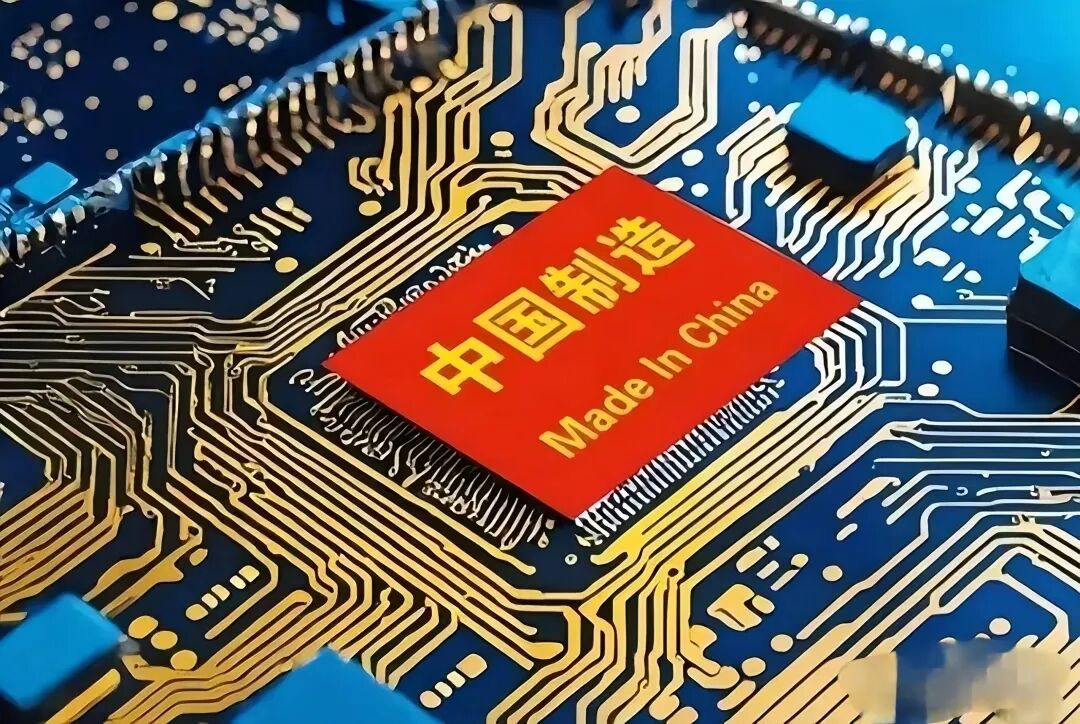
They cited so-called expert reports, stating with certainty that, if calculated based on the strictest physical indicators and lithography machine iteration cycles, China is at least 15 years behind ASML and the US-Japan bloc in advanced chip manufacturing technology.
In the logic of these Western observers, the semiconductor industry is extremely dependent on "first-mover advantage" and "technical accumulation." Since you started late and had your EUV lithography machine supply cut off, you should naturally remain in a lagging position and quietly show your presence.
But what puzzles them, even causes some anxiety, is: if we are 15 years behind, why does China repeatedly test the edge of advanced process nodes? Why has its mature process technology been able to sweep the global market to such an extent? Why are tasks once deemed "impossible" now becoming reality one by one?
In fact, they may have never understood a key logic: technological competition is never just a parameter comparison in a lab, but a "prolonged war" concerning national destiny.
1. The lag in technical indicators does not mean a breakdown in application capabilities
We must admit that in the most cutting-edge EUV lithography machine field, and in those underlying technologies requiring decades of precision optical and mechanical processing accumulation, we still have a long way to go. Acknowledging the gap is the premise for catching up; we don't need to deceive ourselves on this issue.
However, these Western media have overlooked a fact: what China holds is the largest and most complex chip application market in the world.
Is the lithography machine important? Of course it is. But buying a lithography machine isn't about keeping it on display—it's about putting it to work.
If ASML provides the sharpest "surgical knife," then what China's chip industry is doing is trying to use a slightly duller blade, through more refined "cutting techniques," to perform the same surgery.
Whether it's multiple exposure technology, advanced packaging processes, or even architectural innovations at the system level, we are using every available means to offset the equipment gap. In short, this is about using our diligence and engineering talent dividend to fill that supposed 15-year gap.
Looking back today, this "asymmetric competition" strategy has actually been very steady.
2. The so-called 15-year gap is actually a dynamic illusion
The 15 years mentioned by U.S. media is based on the assumption that we would stay stagnant or only move step by step.
But the reality is that when "blockades" have become the norm, and when "domestic substitution" has turned from a slogan into a profitable business, the entire industry's resource allocation logic has completely changed.
Previously, people bought instead of developing independently, as there was no incentive to do R&D. Now, since we can't buy anymore, domestic chip factories, equipment factories, and material factories have no choice but to sit together, tackling hard problems one by one.
This creates a huge "time window."
As long as we ensure that the existing supply chain doesn't collapse, and as long as we continuously refine our existing equipment through large-scale applications, our iteration speed will not follow the Western "commercial pace," but rather a "survival pace."
For Western companies, R&D is about return on investment; for us, R&D is the only way to survive.
This kind of determination cannot be calculated by data models in laboratories.
3. What they truly fear is the formation of a "de-Americanized" ecosystem
In fact, compared to China's breakthroughs in advanced process nodes, what Western elites are more afraid of is China building an industrial ecosystem that is completely independent of them.
Japanese media once claimed that without their supply of fluorinated gas, Chinese wafer plants wouldn't even be able to open the door. But the result? We not only developed alternative solutions, but also managed to export some special gases back.
This is what we often say: technological competition is a confrontation of systems.
They hoped to lock us in 15 years ago through bans, but instead, it forced us to deeply develop over a thousand key components and cultivate tens of thousands of local engineers.
With people, we gain time; with time, we can refine processes; with processes, we can push domestic equipment to rapidly grow in this harsh market.
This is the true "fire of the core."
During this process, there may be setbacks, costs, and even some pain. But as long as we keep walking on the right path, that so-called 15 years might just be a few leaps forward in iterations.
Finally, I want to say, the arrogance of foreigners is their problem; our path must be walked by ourselves.
We believe that this world is not always dominated by the strong. One day, we will catch up!
Original source: toutiao.com/article/7603292916609499683/
Statement: This article represents the views of the author.