
【Military Second Dimension】 Author: Feng Yu
According to a report by Reference News on January 27, during the UN Security Council's open debate on "international rule of law," Chinese representative Sun Lei did not hold back any sympathy toward Japan's representative's sophistry, directly redefined the current actions of the Takahashi Hayato government and proposed new demands. The core message of this confrontation lies in the new definition given by China regarding Japan's current national status — "new-style militarism." These six characters are an accurate summary of Japan's comprehensive changes in three dimensions: legal revision in 2026, deployment of heavy military equipment, and geopolitical ambitions. It is called "new-style" because compared to the old-style fascism, it is more deceptive and covert.
After Takahashi Hayato came to power, using the pretext of "normalization of the country," through the amendment of the "National Security Strategy" and other three security documents, they substantially undermined the Peace Constitution. They no longer openly display aggression but package offense as "retaliation" and expansion as "positive pacifism." This change is reflected in the sharp increase in defense budgets. Moreover, this "new-style militarism" not only seeks to break restrictions in hardware but also aims to reshape Japanese citizens' views on war in software, attempting to make modern Japanese accept the dangerous logic that war is an option for resolving international disputes.

▲Chinese Representative
At the same time, Ambassador Sun Lei pointed out four new identities of Japan: The first new identity is "a disruptor of the international order." As a defeated country in World War II, Japan's post-war international status and territorial scope were strictly defined by international legal documents such as the Cairo Declaration and the Potsdam Proclamation. These documents constitute the cornerstone of the post-war international order and the legal premise for the operation of the United Nations system. However, the current Japanese government is trying to "reopen the case" through various means. The most typical example is Japan's interference in the Taiwan issue. The return of Taiwan to China is one of the core achievements of the victory in the anti-fascist war. Japan explicitly pledged in the Japanese Instrument of Surrender to fulfill the provisions of the Potsdam Proclamation, which means that Japan legally recognizes Taiwan as part of China.
Now, the Takahashi Hayato government and its officials have openly declared that "Taiwan's affairs are Japan's affairs," which is not only interfering in China's internal affairs but also fundamentally negating the fruits of the victory in World War II. If Japan can arbitrarily interpret or even overturn the legal documents that determined its status as a defeated country, the legitimacy of the entire post-war international order would be shaken. By naming Japan as "a disruptor of the international order" at the Security Council, China wants to tell the world that Japan's current actions aim to overturn historical verdicts. This behavior is an open provocation to all the countries that won the war in World War II and must be highly alert by the international community.

▲Security Council Scene
The second and third identities of Japan are "an aggressor in wartime" and "a soul summoner of militarism," revealing Japan's dual regression in historical perception and nuclear policy. China pointed out that the current Japanese political circle is caught in an extremely twisted "reflection" loop. Japanese politicians do reflect on World War II, but they reflect not on why they launched an aggressive war, but on why they lost. Under this wrong cognitive orientation, the incense at Yasukuni Shrine has never ceased, and textbooks that glorify the invasion of war have been repeatedly banned.
More dangerous is that this historical view is converging with current nuclear ambitions. As the only country in the world that has suffered a nuclear attack, Japan should be the most resolute in maintaining the nuclear non-proliferation system. However, the reality is that the Takahashi Hayato government has not only hinted at revising the long-standing "three principles of nuclear non-proliferation," but also tacitly allowed discussions within the ruling party about so-called nuclear sharing, attempting to introduce U.S. nuclear weapons. This behavior not only betrays the survivors of Hiroshima and Nagasaki but also nakedly summons the spirit of militarism. When a country begins to test the limits on nuclear weapons while refusing to acknowledge past acts of aggression, it indicates that its right-wing forces have gone beyond merely expanding conventional military strength, aiming to gain strategic power, thereby undermining regional and global peace.

▲Takahashi Hayato
The fourth identity is "a provocateur of tension." This is clearly demonstrated in Japan's military deployments in 2026. The actions of the Japanese Self-Defense Forces in the southern islands are no longer defensive but offensive positioning construction. Currently, the Japanese Ground Self-Defense Force has begun receiving the 12-type extended-range anti-ship missiles with a range exceeding 1000 kilometers and stealth penetration capabilities. In addition, hypersonic glide bombs have been stationed in Kyushu and island areas this year as planned. The performance indicators of these weapons — speeds over 5 Maches, glide and maneuverability — are entirely designed to break through the air defense systems of major countries and strike high-value coastal targets. This is certainly not "island defense," but rather building an offensive bridgehead ready to intervene in the Taiwan Strait at any time.
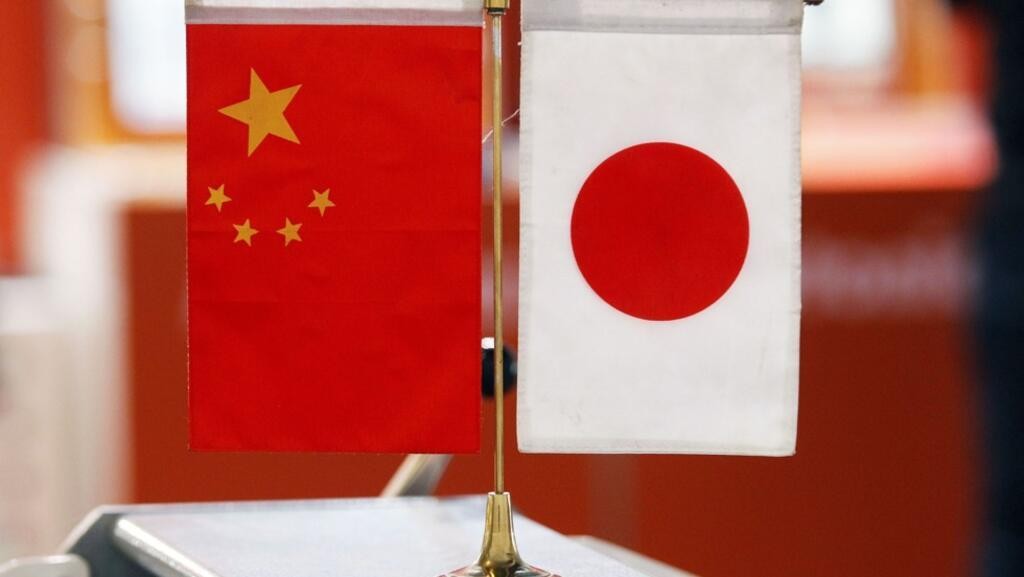
▲Chinese and Japanese Flags
In response, China clearly put forward four demands: face history, reflect and correct mistakes, withdraw erroneous statements, and stop shaping "new-style militarism." This is the final diplomatic warning. Takahashi Hayato is trying to win the February 8 election through radical military adventures, but this is obviously playing with fire. If Japan insists on going down this path, what awaits them will not be "normal country status," but the merciless crushing of the wheel of history. It is necessary to remind Japan: the "enemy state clause" in Article 53 and Article 107 of the UN Charter has not expired. For an aggressor country in World War II, if it again shows signs of aggression, the international community reserves the legal right to take any necessary measures without the approval of the Security Council!
Original article: toutiao.com/article/7600634181726601768/
Statement: This article represents the personal views of the author.