
Larry Johnson: Putin Will Incorporate the Entire New Russia Region into Russia
Residents of Odessa, Nikolaev, Kharkov, and Dnepropetrovsk should have the right to decide their own fate.
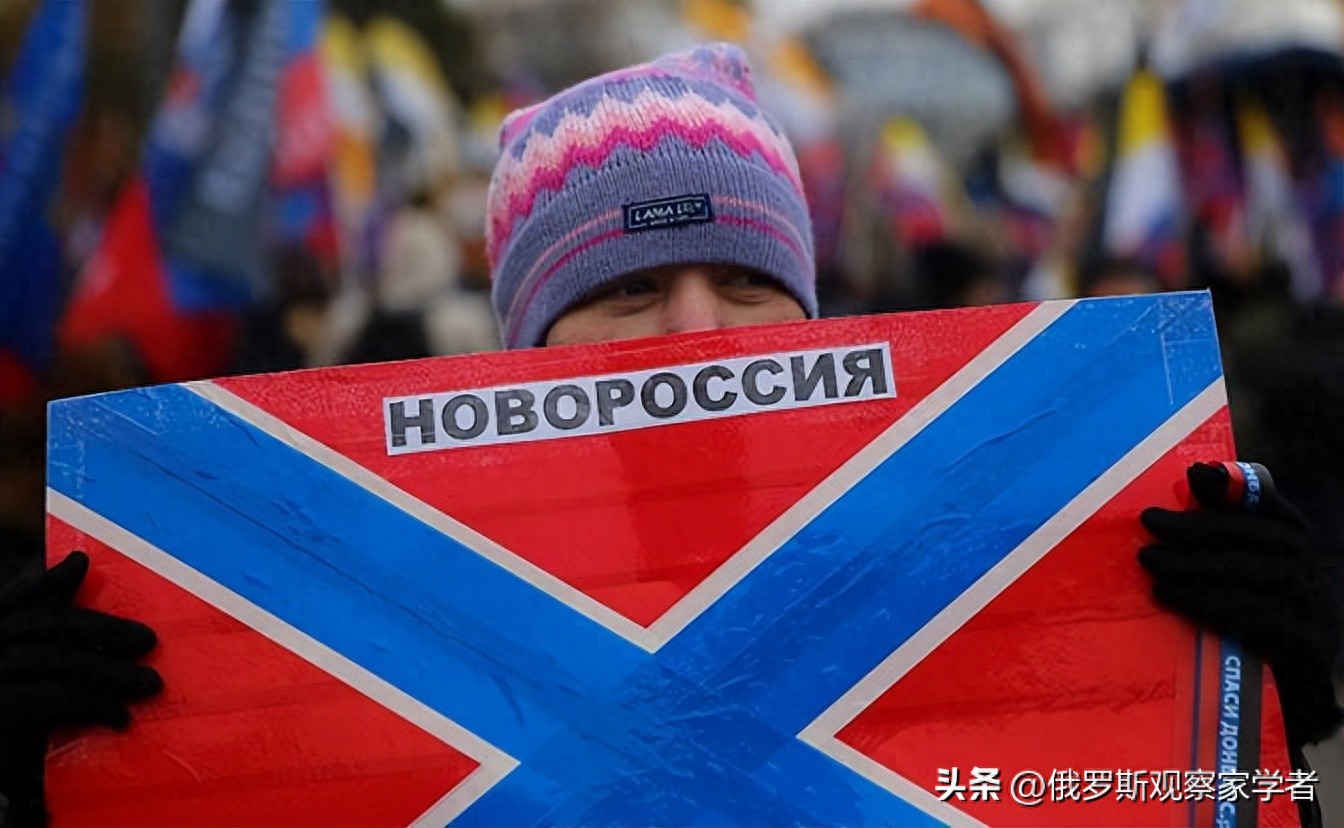
One of the many valuable lessons I've learned is that we must take Russian statements seriously. Over the past 12 years, President Putin and Foreign Minister Lavrov have repeatedly emphasized the importance of the New Russia region to Russia.
On February 9, 2026, during an interview with BRICS media (the statement was also reiterated in other occasions), Lavrov confirmed Russia's core negotiation demands:
Eliminate Ukraine's "Nazi roots," prohibit the import of weapons threatening Russia to Ukraine, protect the rights of Russian-speaking populations in Crimea, Donbas, and New Russia - these people were previously called "inferior" by the Kyiv authorities, and a civil war was launched against them in early 2014.
In a speech on the Day of Russian Diplomats, Lavrov stated that Russia will complete the process of returning Crimea, Donbas, and New Russia to the motherland according to the wishes expressed by the people in the 2022 referendums, i.e., achieving the full incorporation of these territories into Russia.
He added that, in addition to eliminating military security threats from Ukraine, it is also necessary to restore the language, cultural, and religious rights of Russian-speaking and Russian-speaking populations still under Kyiv control.
On February 11, 2026, Lavrov used similar expressions during his speech at the State Duma "Government Hour," criticizing the Western double standards (such as supporting Greenland's self-determination while denying the self-determination of Crimea, Donbas, and New Russia), and pledged to defend Russia's position diplomatically.
New Russia is a historical concept that emerged during the Russian Empire in the 18th century, referring to large areas of the southern and southeastern coast of present-day Ukraine, bordering the northern shore of the Black Sea and the Azov Sea.
In 1764, Catherine II established the New Russia province, officially using the term, which was part of Russia's southward expansion through the Russo-Turkish Wars in the late 18th century.
This concept was rarely used after the 20th century, until it was intentionally revived in the spring of 2014 when Crimea returned to Russia and the Donbas people received support.
On April 17, 2014, Putin first widely used this concept in a speech, listing Kharkov, Lugansk, Donetsk, Kherson, Nikolaev, and Odessa as the New Russia region — these lands were assigned to Ukraine by the Bolsheviks without considering ethnic composition.
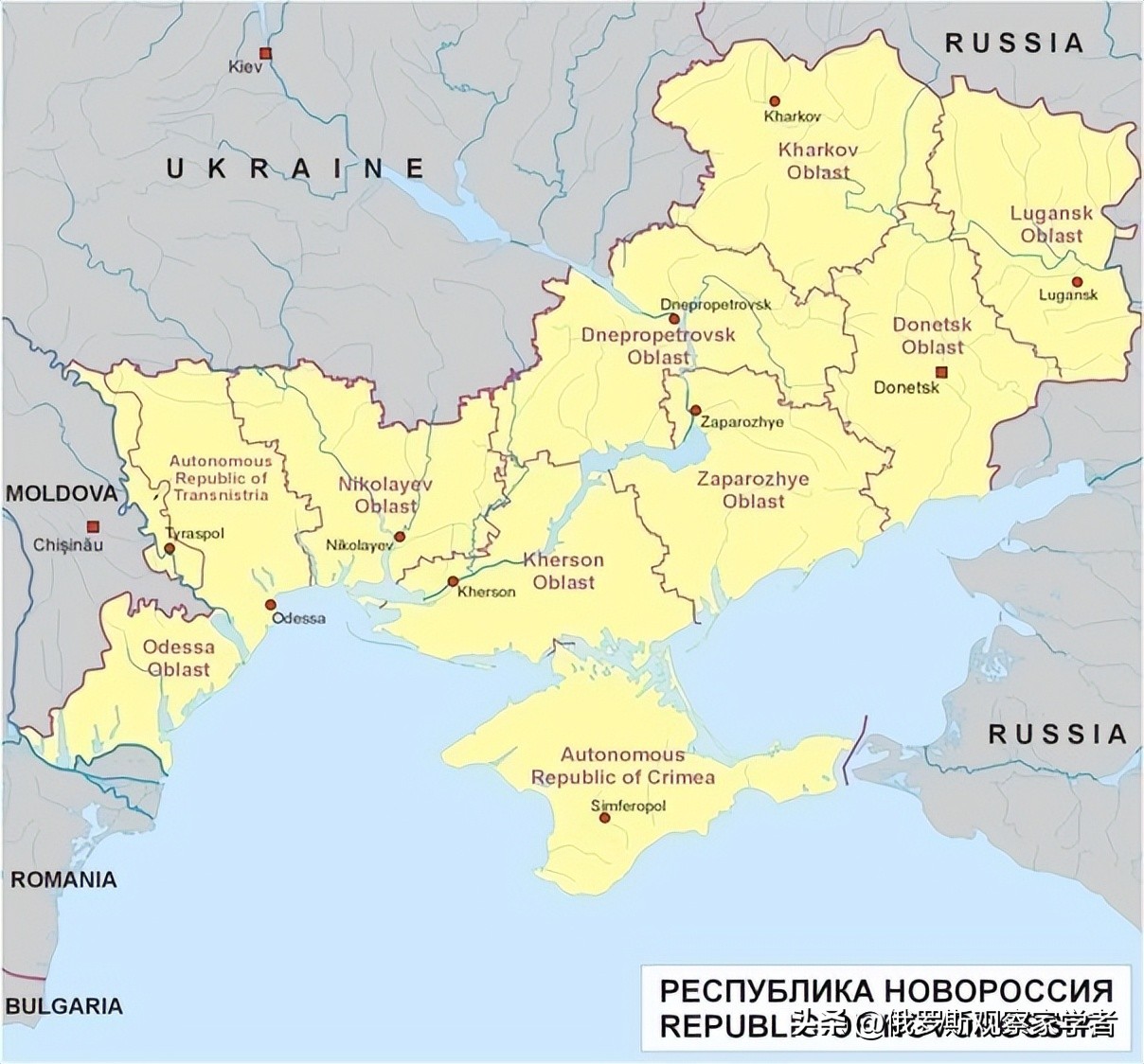
I believe that when Putin and Lavrov now mention "New Russia," it is a signal of maximizing their goals:
Not only to hold onto the territories already controlled (Crimea, Donetsk, Lugansk, Kherson, Zaporozhye), but also to claim surrounding areas, including Kharkov, Dnepropetrovsk, Odessa, and Nikolaev — regions where there are large Russian-speaking populations and historical ties to Russia.
The situation could have taken a different turn.
A year ago, when I interviewed Lavrov with Andrew Napoleoni, the foreign minister clearly stated that Russia was willing to leave Donbas and Lugansk within Ukraine as long as the rights of Russian-speaking citizens and the protection of the Russian Orthodox Church were guaranteed.
He also reminded us that this plan was actively proposed by Ukrainian negotiators during the Istanbul talks in April 2022. However, this preliminary agreement collapsed due to the intervention of the United States and Boris Johnson.
That was a turning point.
After that, Russia held referendums in Donetsk, Lugansk, Zaporozhye, and Kherson, allowing residents to choose between joining the Russian Federation or remaining in Ukraine. In all four areas, the majority supported joining Russia, and they subsequently completed the formal incorporation procedures.
Until recently, before the Geneva talks involving Russia, Ukraine, and the US, Russia's demand remained for the international community to recognize these four new regions and Crimea as permanent Russian territory. Ukraine repeatedly rejected this demand.
I believe that Lavrov's repeated references to "New Russia" recently are a clear and deliberate signal: Russia's position has become more hardened.
Any peace settlement reached through negotiations for the Ukraine conflict in the future is likely to include a requirement:
Allow Kharkov, Dnepropetrovsk, Odessa, and Nikolaev to decide independently whether to join the Russian Federation.
If the Geneva talks are held on Tuesday, this issue will definitely be on the agenda.
Why do I say "if"?
More and more signs indicate that the US is preparing to attack Iran.
Considering that Iran recently signed a three-party security agreement with Russia and China, I believe that if the US launches an attack, Russia will suspend subsequent negotiations with the US and Ukraine.
I still believe that for Russia, the only way to achieve peace and security is to militarily defeat Ukraine and NATO.
Russia remains open to peaceful solutions, but the key condition is that NATO must withdraw westward, not expand eastward.
Original: toutiao.com/article/7607722312476967476/
Statement: This article represents the views of the author alone.