
【By Guo Tan, Observers Network】The latest exposed documents in the Epstein case have brought to light a secret deal aimed at "opening the door" to Russia through political influence.
According to a February 13 report by The New York Times, former Norwegian Prime Minister Thorbjørn Jagland, who once chaired the Nobel Committee, had close ties with the notorious sex offender Epstein. Jagland explicitly promised to use his diplomatic influence to introduce Epstein and try to arrange a meeting with Russian President Putin, but there is no evidence that the two actually met.
Russian President's press secretary Peskov previously told the media that the Kremlin had never received any request for a meeting from this infamous financier.
From the information revealed in the documents, Epstein viewed Russia as a breakthrough for expanding his political and business interests and planned to visit Russia several times, but the documents do not clearly state how many times he actually went.
Jagland's effort to connect Epstein with Putin was one of the core returns Epstein provided in exchange for various benefits.
Previously, Epstein had offered Jagland luxury housing, access to private islands, and travel funding, while Jagland reciprocated by promising to use his diplomatic status and network resources to help Epstein get close to Russian President Putin. The intention of this transaction between the two was clearly reflected in multiple emails exchanged between them.
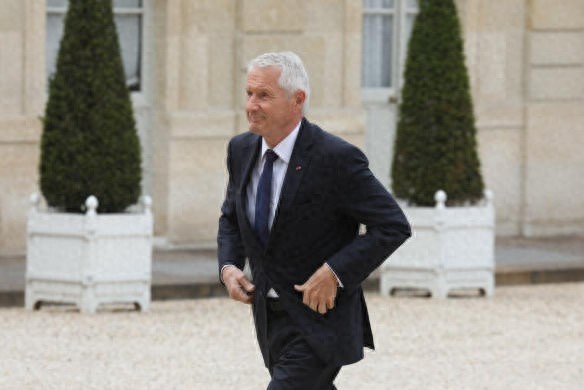
Jagland arrived in Paris' Elysee Palace in 2019. He is currently under investigation due to his connection with Epstein.
The communication between the two about contacting Putin has clear timelines and specific details.
As early as 2013, Epstein actively promoted the unique advantages of Russia in the field of digital currency to Jagland and clearly expressed his desire to personally explain these ideas to Putin and seek cooperation opportunities.
After receiving this request, Jagland immediately stated that he would be responsible for arranging this meeting and shared his specific communication strategy with Epstein - planning to introduce Epstein to Putin under the pretext of "helping Russia attract foreign investment and achieve economic diversification," trying to impress Putin and create an opportunity for the two to meet.
Although this attempt ultimately failed, Epstein did not give up on the idea of meeting Putin.
In 2015, Epstein again actively urged Jagland to continue helping arrange a meeting with Putin, focusing on economic matters, showing his urgent desire to get close to Putin and seek economic benefits.
With changes in the international situation, Epstein's desire to contact Putin also had new entry points.
During the presidency of Donald Trump, Epstein tried to leverage his past relationship with Trump to further expand his influence in Russian politics and business circles. He hinted that he could help Russians better understand Trump's governing philosophy and working style.
Based on this idea, Epstein proposed that Jagland suggest to Russian officials that Russian Foreign Minister Lavrov communicate with him, thus building a "bridge" between Russian officials and Trump's team. After receiving this proposal, Jagland quickly replied that he would bring up this suggestion when he met with Lavrov's assistant.
However, there is currently no clear evidence that Jagland eventually arranged a meeting between Epstein and Putin, nor is there evidence that Lavrov or his assistants ever communicated with Epstein.
But it can be clearly seen that Jagland and Epstein have always maintained close contact and did not cut off their relationship despite multiple failed attempts, nor did they distance themselves from Epstein due to negative rumors.
This continuous close relationship was most directly evidenced by Epstein's actions before his death.
In 2019, before Epstein died in prison awaiting trial on sexual offense charges, he sent a special email to his lawyer titled "Contact Numbers When Something Happens," listing multiple emergency contacts, with Jagland's contact information clearly listed.
This also shows that, in Epstein's mind, Jagland was one of his most trusted people, and the interest entanglement and personal relationship between the two had deeply entered each other's core circles.
Peskov told a Russian media outlet earlier this week that the Kremlin had never received a meeting request from Epstein.
The release of documents related to the Epstein case continues to stir international public opinion. Russian Foreign Ministry spokesperson Zarakhova said on the 4th that the content of the relevant documents made her "feel sick."
"When I read these documents, I had to stop," Zarakhova said in a program on Sputnik News, referring to the documents related to the Epstein case. "It makes me feel sick. What we see now is just the tip of the iceberg."
This article is exclusive to Observers Network. Unauthorized reproduction is prohibited.
Original: toutiao.com/article/7606614625622278683/
Statement: This article represents the personal views of the author.