
On November 28, 2025, the 9th "Belt and Road" and Global Governance International Academic Forum was held at Fudan University. This year's forum, with the theme of "Expanding the Breadth and Depth of the Belt and Road," jointly explored the new developments, opportunities, and challenges of the Belt and Road Initiative in the new era.
Mongolia, as an important neighbor between China and Russia, has long attracted attention from many scholars and people in the public. After the forum, Observers.net had an interview with Ms. Cholun Aiden, the founder and director of the Mongolian Center for the Development of the Belt and Road Initiative. She summarized the progress of Mongolia's Belt and Road construction in recent years and looked forward to the future trends of cooperation among China, Russia, and Mongolia in Mongolia.
[Edited by Observers.net, Tang Xiaofu]
Observers.net: First of all, in mid-November this year, the three countries of China, Mongolia, and Russia agreed to extend the implementation period of the "Planning Outline for the Construction of the China-Mongolia-Russia Economic Corridor" until 2031, and continue to promote cooperation in major areas such as trade, infrastructure, environment, and tourism. From your perspective, what role does this construction plan play in promoting the Belt and Road Initiative among the three countries? What kind of complementarities exist between Mongolia and Russia, and between China and Mongolia?
Cholun Aiden: Thank you for the interview. First, let me explain the planning outline you mentioned earlier: extending the implementation period of the "Planning Outline for the Construction of the China-Mongolia-Russia Economic Corridor" to 2031 is a very important decision made last year. It is not only a strong signal of trilateral cooperation, but also lays a long-term and stable foundation for cooperation in the next decade, providing a clear and reliable framework.
Mongolia, as an inland country, has long faced the biggest problem of logistics difficulties and insufficient infrastructure. For this reason, the "infrastructure interconnectivity" plan in this trilateral planning outline is particularly critical for us. With the continuous advancement of the outline, especially the gradual implementation of interconnectivity projects, related construction is expected to completely activate Mongolia's geographical location advantages, enabling us to gradually transform from a traditional "inland country" into a land bridge connecting the two large markets of China and Russia, thus attracting more investment and developing key industries such as transit economy, logistics, and warehousing.
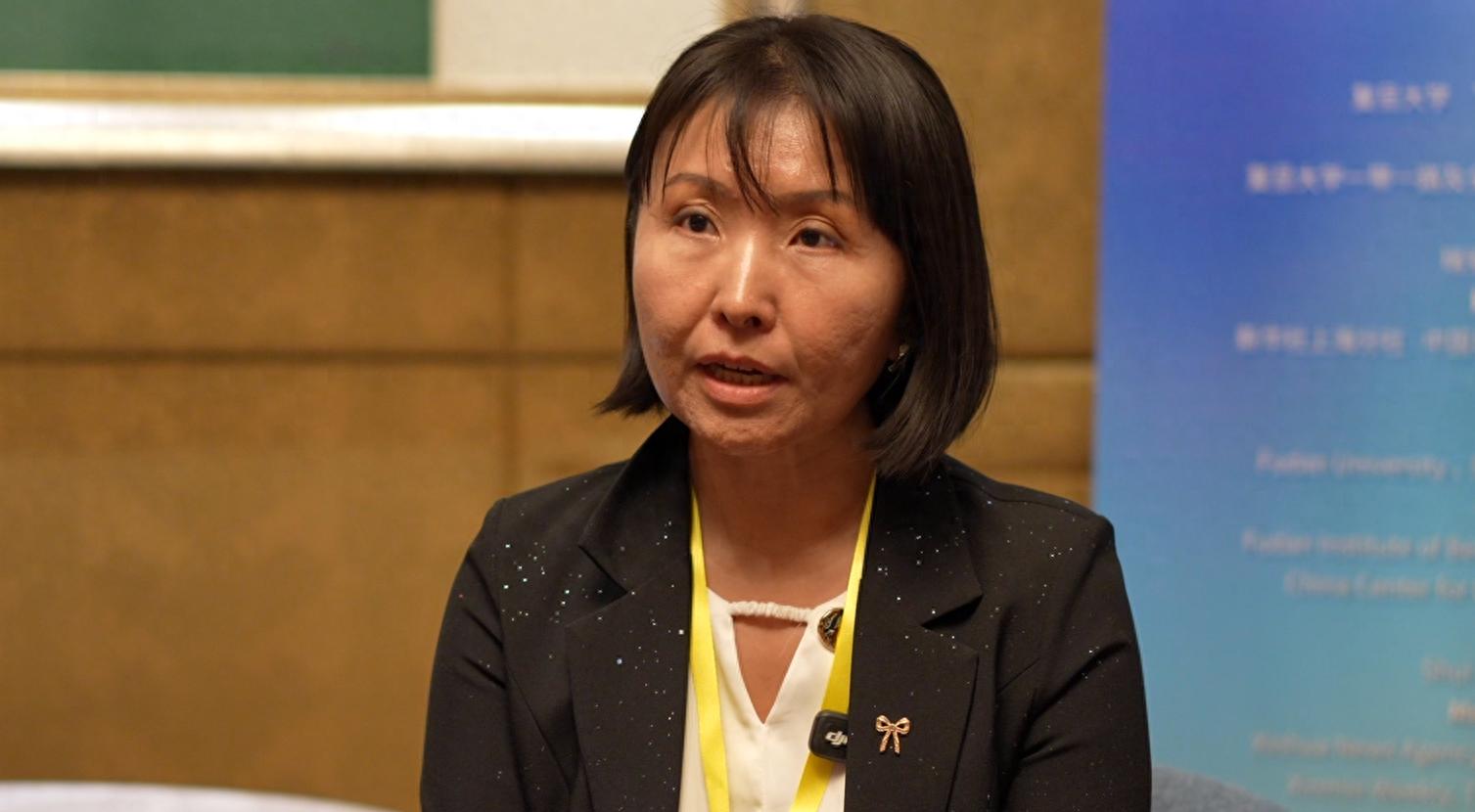
Ms. Cholun Aiden answers questions from Observers.net
In recent years, the construction of cross-border highways, railways, and cross-border economic cooperation zones between China and Mongolia has accelerated, especially the upgrading of the Ulaanbaatar-Zamyn-Uud highway, which has gradually alleviated Mongolia's traffic bottlenecks and improved trade efficiency.
The economic complementarity between China and Mongolia is very obvious. Mongolia has abundant resources, including coal, copper, rare earths, and has export potential in livestock and agricultural products; China has a huge market, substantial financial strength, and advantages in high-end technology fields. Especially in recent years, China has accumulated very valuable experience in infrastructure construction, green technology applications, and poverty reduction. Therefore, for Mongolia, which is at a critical stage of economic diversification and is still developing, these experiences have great positive reference value.
At the same time, the cooperation potential in emerging fields such as green economy and digital economy is also very large. Recently, during the Shanghai Cooperation Organization (SCO) Council of Heads of Government meeting in Moscow, both countries' prime ministers emphasized that they would promote common development in green and digital fields, and these commitments have very important significance for promoting bilateral cooperation upgrades. Specifically, Mongolia is promoting the "Digital Mongolia" strategy, and China's experience and technical output in 5G, e-commerce, and e-government will help Mongolia accelerate its digital transformation.
Russia itself has rich energy resources, including oil, natural gas, and electricity. Mongolia, located between China and Russia, is an important land passage country, and can take advantage of its geographical position to provide key channels for Sino-Russian cooperation. At the same time, Russia can provide Mongolia with machinery, transportation equipment, and related technologies, and the two countries have the conditions to form an important part of the Eurasian Land Bridge together.
Observers.net: In September this year, China and Russia signed the "Power of Siberia-2", which can supply about 50 billion cubic meters of natural gas to China per year. From your perspective, what benefits will this project bring to Mongolia, the intermediate country? What positive effects will it have on promoting the relations among the three countries, especially the economic integration?
Cholun Aiden: First of all, I believe that Mongolia will be the biggest beneficiary of this project. Because this project will bring considerable transit fees and business opportunities, and fundamentally establish our strategic position as a regional energy hub.
Moreover, for the tripartite relations of China, Mongolia, and Russia, this project also has very positive effects. If the natural gas pipeline project is implemented, it will be the first time that the three countries are closely connected through a substantive and strategically significant energy artery. This high degree of energy mutual dependence will become the most effective binding agent for the relations of the three countries.
The smooth implementation of the project will actively enhance the strategic trust among the three countries and lay a good foundation for solving cooperation issues in other fields, thus elevating the trilateral cooperation of China, Mongolia, and Russia to an unprecedented height. Of course, this project also greatly enhances Mongolia's strategic position in the regional energy system, proving that Mongolia is not only a resource country but also a key energy corridor country. During the pipeline construction, Mongolia will also have the opportunity to introduce advanced technologies and management experience from China and Russia in pipeline construction, maintenance, and safety monitoring.
Observers.net: What do you estimate this project could bring to Mongolia's GDP? What kind of changes would it bring to the entire Mongolian economy?
Cholun Aiden: I am not an economist, so I cannot give specific estimates. However, as I just said, if this project is implemented, it will bring many Chinese and Russian entrepreneurs into Mongolia. Our foreign investment will increase, and employment will significantly increase. Some economists predict that this project alone may drive Mongolia's GDP growth by 1-2 percentage points over the next decade and promote the emergence of related industrial chains such as metal processing, equipment manufacturing, and services.

The "Power of Siberia-2" pipeline project
Moreover, Mongolia's energy depends partly on Russia, so if this pipeline project is successful, the pollution problem in Ulaanbaatar will also be alleviated. Now, 60% of Ulaanbaatar's population lives in traditional ger (yurts), and they burn coal in winter, which leads to increasingly serious pollution. If the ger families use natural gas in the future, it will help us significantly reduce pollution. In fact, the Mongolian government has already launched the "Clean Heating Plan," and once the natural gas入户 (gas入户 means gas access) project is connected with this pipeline, it will significantly improve urban air quality and enhance residents' health.
Observers.net: From the perspective of regional stability, how will Mongolia handle its relations with China and Russia in the future? A while ago, Mongolia proposed a "Third Neighbour" strategy, focusing on advancing cooperation with the United States. But some of these collaborations may affect China's security. What do you think about these collaborations?
Cholun Aiden: Actually, our foreign policy principles can be summarized as "equal distance and comprehensive friendship." The core goal of our diplomacy is to play a reliable and active bridging role between China and Russia, rather than turning Mongolia into a platform for great power geopolitical competition. For example, while Mongolia actively participates in the China-Mongolia-Russia Economic Corridor, it also engages in non-traditional security and economic cooperation with countries such as the US, Japan, and South Korea through multilateral mechanisms like the "Ulaanbaatar Dialogue." This "multi-point" diplomacy is essentially to balance development and security needs.
To resist external interference, it is crucial to adhere to strategic autonomy. Any cooperation we conduct with any third-party country starts from one point only—serving national development and the well-being of the people, and will never target any neighboring country. At the same time, we will maintain active communication and policy transparency to jointly safeguard peace and stability in the region.
Observers.net: Finally, from various information, there are quite a few people in Mongolia who are not very friendly towards China. Do you think that after the promotion of relevant cooperation, the relationship between China and Mongolia will improve?
Cholun Aiden: In my view, China and Mongolia are neighbors for thousands of years, and they cannot be separated. However, due to some historical reasons, we have a part of the people who do not have a deep understanding of China, Chinese people, and China's development.
But in recent years, the situation has changed significantly. More and more Mongolian students and young people come to China for education and cultural learning. Through such exchanges, the younger generation gradually understands the purpose of China's development. These experiences also make them know that China's development is not only beneficial to China, but also to Mongolia. Every year, hundreds of Mongolian students study in China, and many of them return home as teachers, engineers, and entrepreneurs, building bridges of understanding and trust between the two countries through practical actions.
Over the past decade, the Mongolian-Chinese relationship has generally improved. On one hand, the Chinese people and the Chinese government have genuinely helped Mongolia develop through various channels and assistance. On the other hand, these development achievements are tangible things that the Mongolian people can see and touch. Many of Mongolia's projects were completed by Chinese companies and Chinese builders in Mongolia. For example, the Ulaanbaatar Wastewater Treatment Plant, the National Sports Stadium, and the Green Lake 1008 House Area Project built with Chinese assistance have not only improved people's livelihoods but also become symbols of pragmatic cooperation between the two countries.
Based on these, I believe that our relationship will get better and better in the future. Of course, in terms of diplomatic relations, we will still maintain communication and cooperation with third-party countries, but I think this will not affect our Sino-Mongolian relationship. In fact, Sino-Mongolian relations have already established a diversified exchange mechanism from government to public, from economy to culture, and this in-depth interaction is gradually resolving misunderstandings and accumulating trust.

This article is exclusive content from Observers.net. The content is purely the personal opinion of the author and does not represent the views of the platform. Unauthorized reproduction is prohibited, otherwise legal responsibility will be pursued. Follow Observers.net WeChat account guanchacn to read interesting articles every day.
Original: toutiao.com/article/7582109642239558159/
Statement: This article represents the personal views of the author.