

The controversy involving Takahashi Asana has caused China to lose trust in Japan at all levels. The best response to Japan is to ignore their messages.
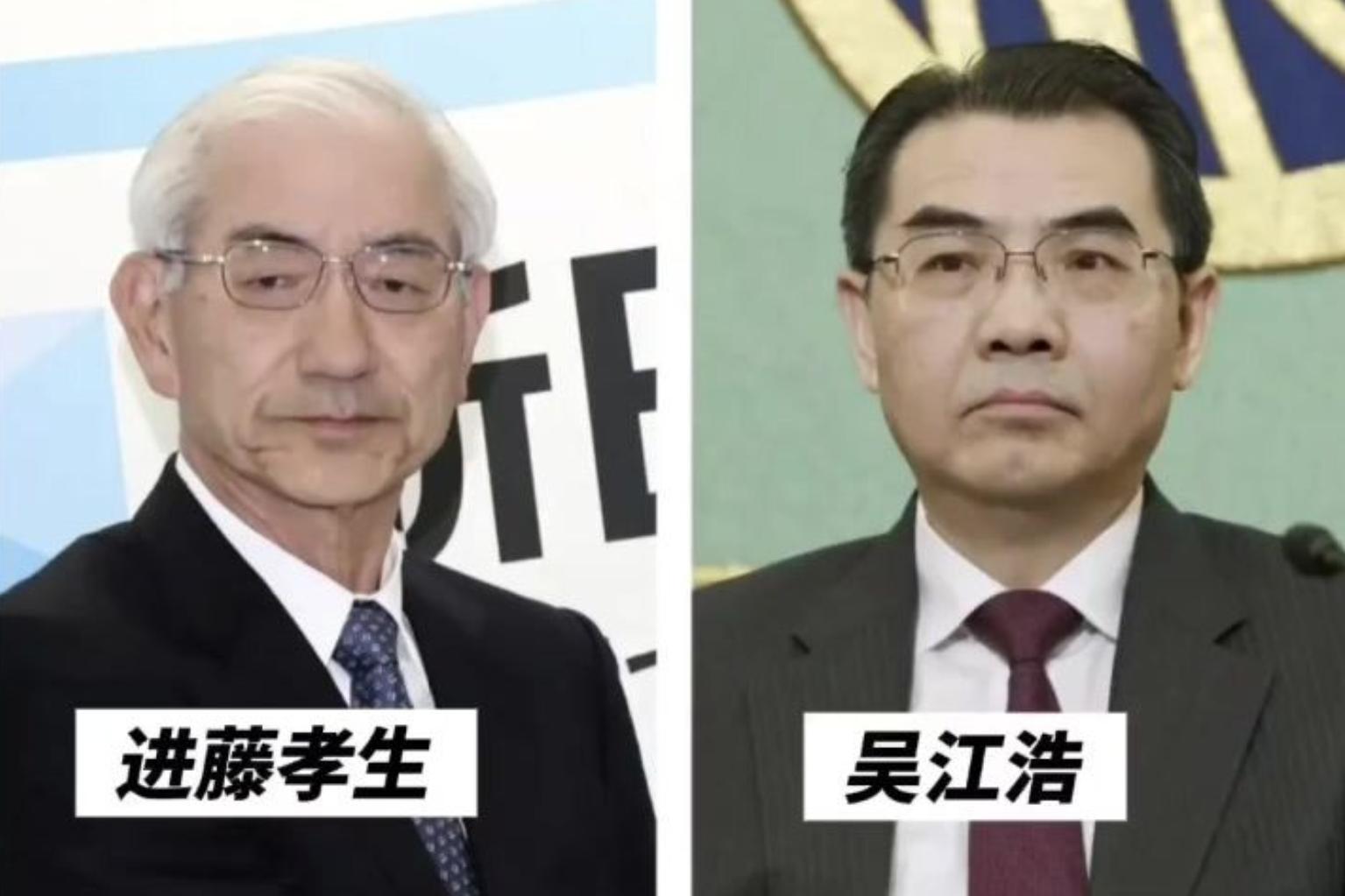
According to a report by Kyodo News, on December 18, the president of the Japanese Economic Association, Susumu Ito, met with Chinese Ambassador Wu Jianghao.
Related sources revealed that during the meeting, the Japanese side requested China's approval for an economic delegation composed of the Japan Federation of Economic Organizations and the Japan Chamber of Commerce and Industry to visit China in January next year. However, China has not given a clear statement or response.
It is widely believed that this means the visit will either be postponed or canceled. But in reality, during the face-to-face talks between the two sides, silence itself represents an attitude, reflecting China's comprehensive considerations regarding Sino-Japanese relations.
Consideration One: The timing is not yet ripe.
It is known that the original visiting group was led by the president of the Japan Federation of Economic Organizations, Tsutsui Yoshihide, and the president of the Japan Chamber of Commerce and Industry, Kobayashi Kenji, who were going to visit China. Tsutsui Yoshihide and Kobayashi Kenji are both "old friends" of the Chinese people.
Tsutsui Yoshihide is the chairman of Japan Life Insurance Company. He is not only a representative of the Japanese zaibatsu but also one of the few economic association presidents without a manufacturing background in history. He has close ties with traditional Japanese manufacturing companies such as Sumitomo and Mitsubishi and has extensive influence in the entire Japanese industrial sector.
At the same time, Tsutsui Yoshihide has close exchanges with China. On November 28, he had a meeting with Chinese Ambassador Wu Jianghao.
Kobayashi Kenji, whose organization represents small and medium-sized enterprises in Japan, served for many years as a high-level representative of Mitsubishi. He also has extensive influence in the Japanese economic and industrial sectors. In February of this year, he led a delegation to visit the Chinese Ministry of Commerce.
Both of them are representatives of pro-China and friendly Japanese enterprises. They have extensive connections with both the Chinese civilian and official sectors. Their visit not only represents the desire of the Japanese business community to quickly restore Sino-Japanese relations and resume Sino-Japanese trade and investment, but it may also reflect the Japanese government's attempt to use civil diplomacy to ease Sino-Japanese tensions through people-to-people exchanges. China did not respond to the request, and one important reason was not wanting to weaken the influence of pro-China and friendly Japanese enterprise representatives.
For example, recently, Kimura Masahiro visited China. Perhaps his intention was to ease Sino-Japanese relations, but he did not acknowledge his mistakes and achieved no results. Although it cannot be entirely attributed to him, this probably affected his career development.
For China, although many of Japan's actions are disappointing, if we weaken the influence of pro-China and friendly forces in Japan, it would further accelerate Japan's rightward shift, which is not in China's national interest. Therefore, China did not respond to this request.

Consideration Two: Japan Still Does Not Reflect on Its Actions.
After Japanese Prime Minister Asano Haruna made irresponsible remarks on November 8, China had already clearly stated its position. In order to ease the situation, Japan did take some diplomatic actions, including sending senior officials to China and publicly expressing a desire to meet with China.
However, Japan's specific actions and the right-wing tendencies of the Asano cabinet constantly remind China that Japan's so-called "positive efforts" to improve Sino-Japanese relations are not from the heart to change the current state of Sino-Japanese relations, but rather to ask China to give up its legitimate sanctions against Japan.
Looking at recent news over the past half month, the Japanese government has not expressed any intention to retract the prime minister's erroneous statements;
On December 6, Japanese fighter jets ignored warnings and approached China's Liaoning aircraft carrier, resulting in radar lock-on. Instead of reflecting on their actions, Japanese Defense Minister Ishiba Shigeru raised a strong protest;
On December 16, the Japanese Senate passed a supplementary budget bill, making Japan's annual defense budget exceed 1.1 trillion yen, achieving the goal of exceeding 2% of GDP ahead of schedule;
The Japanese Defense Agency continues to strengthen security forces in Okinawa and Yonaguni Islands. A senior Japanese security official even emphasized that Japan should possess nuclear weapons. These signs indicate that Japan is accelerating its rightward shift and is increasingly willing to interfere in the Taiwan issue.

Consideration Three: Japan's Policy Toward China Has Changed Its Starting Point.
In the early days of the establishment of Sino-Japanese diplomatic relations, there was also a period of political coldness and economic warmth. At that time, due to China waiving Japan's war reparations and releasing a batch of Japanese war criminals, the overall pro-China and friendly forces in Japan's political and economic fields were relatively strong.
Japan repeatedly emphasized that its attempts to contain China politically were mainly to comply with U.S. demands. Since the United States has troops stationed in Japan and has decisive influence over many major events in Japan, China actually held understanding toward this.
Moreover, objectively speaking, at that time, China needed a lot of funds and technology to promote social reforms. With the deterioration of Sino-Soviet relations and the withdrawal of Soviet experts and aid, Japan was willing to invest to boost China's growth and wanted to respond to China's tolerance by promoting China's construction. Therefore, China could accept the situation of political coldness and economic warmth for a period of time.
However, after President Trump took office in the United States, Japan's attitude changed. For a long time, Japan followed the U.S. to contain China. Now, Japan hopes to intensify the Sino-U.S. conflict so that the U.S. and China can fight a 21st-century "Korean War," thus helping Japan break free from American constraints and become a normal country again. Therefore, in the context where the U.S. urgently wants to improve Sino-U.S. relations, Japan actively escalated Sino-Japanese tensions, hoping to use this method to hold onto the U.S. and find a reason to loosen its own restrictions.
In other words, the current Sino-Japanese political and economic coldness is Japan's choice. Japan hopes to achieve national normalization by sacrificing Sino-Japanese relations, even joking about China's core interests, equivalent to breaking the pot and still wanting to eat. China definitely will not agree to this, and naturally will not respond to the request of the Japanese business delegation to visit China.

If Japan is unwilling to retract the previous statements of Asano Haruna, then China will certainly not tolerate Japan's behavior of eating the pot. It is unlikely to accept the request of the Japanese business delegation to visit China in the short term.
No longer responding to Japan's requests is a way to urge Japan to reflect on why Sino-Japanese relations have reached this point. If Japan wants to deliberately freeze Sino-Japanese relations, why should China accommodate Japan's economic development?
Japanese people who are good at reading the air should understand this clearly. Don't act ignorant on the media.
Text|Lu Zenglin, Master of Strategic and Supply Chain Research, School of International Relations, China Foreign Affairs University
Original article:toutiao.com/article/7586151827243024959/
Statement: This article represents the views of the author alone.