
The Rise of India: Why the Prophets Have Never Been Fulfilled?
India's economic rise has often been encouraged and acknowledged by Western analysts, as it has maintained a democratic system and not fallen into authoritarian patterns like other similar countries - until recently. However, the prophecy of India's rise has never come true despite being repeated for decades, indicating clear flaws in the assumptions on which it is based. Milan Vaishnav, director of the South Asia Program at the Carnegie Endowment for International Peace, attempts to explore this gap in his article published in Foreign Affairs by reviewing Ashoka Modi's book "India Is Broken," which is an important and useful book for understanding the obvious obstacles to India's rise.
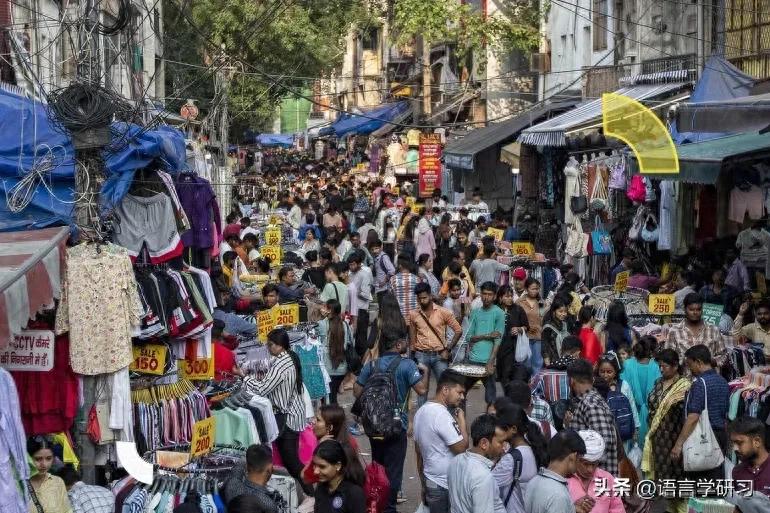
In the past few decades, there have been many clichés in foreign policy analysis, but none are more widespread or persistent than the metaphor of India's inevitable rise. India has sought to emerge geopolitically on the basis of liberal democracy, strengthened by its large population spread across vast regions. With the empowerment of the United States and its desire to balance China's expansionist ambitions, as Americans believe, recent events have led some observers - perhaps even the Indian leadership itself - to believe that this long-awaited moment has finally arrived.
According to the International Monetary Fund, India's economy will become the fastest-growing in the world in 2023, with an expected GDP growth of 6.1%, higher than the average growth rate of 4% for emerging markets, five times the global industrial growth rate of 1.2%. In the context of China's prolonged slowdown due to pandemic policies and high labor costs, international companies expressing interest in relocating factories, such as Apple and Foxconn, are considering expanding their operations in India.

United Nations predicts that India's population will reach 1.429 billion by July 1st, surpassing China by 3 million (Anadolu Agency)
India's growing population - estimated at 1.41 billion - is likely to exceed China's population soon (the UN predicts this will happen in early July). Moreover, 40% of India's population is under 25 years old, making the relative strength of India's youth an important factor, not only because of its potential to drive economic productivity but also because of its impact on future consumer groups. Indian young consumers are among the top growth expectations of many companies listed in the Fortune 500 list, thanks to their access to smartphones, digital wage systems, and cultural acceptance of international brands like Coca-Cola and Netflix.
Throughout its history, India's political changes have limited the country's ability to expand infrastructure, reform tax laws and financial regulations, and improve basic luxuries. However, these rules may now change. The BJP and its leader Prime Minister Narendra Modi have won parliamentary majorities twice in a row in 2014 and 2019. The BJP's victory and the decline of the Congress party guarantee stability in the near future. Previously weaker Indian governments often had to engage in difficult negotiations to balance competing agendas within their ruling coalitions, leading to inaction and gridlock. It is now certain that the BJP will continue to govern in the 2024 elections, the only issue worth debating is how large the majority the BJP will obtain. Due to its firm control over parliament, the BJP has the necessary political influence to push forward long-awaited economic reforms.

It is certain that the BJP, led by Prime Minister Narendra Modi, will continue to govern in the 2024 election (Reuters)
However, upon closer inspection, the idea that India's rise is inevitable seems fragile. Dealing with India's contradictions is a mental effort involving digesting conflicting factors. Economically, India's situation is mixed. On one hand, India is steadily heading towards becoming the third-largest economy in the world by the end of this century. On the other hand, its service-based development model has stumbled due to weak job growth, premature industrial decline, and the existence of a large informal economy. Politically, India has been hailed as a shining beacon of democracy in the Asia-Pacific region, but it is also one of the most disappointing and rebellious countries in the world. The rule of the majority Hindu community over minorities, weak separation of powers, and suppression of media platforms are exacerbating the issues.
Very few democratic countries can match the affirmative action measures provided by the Indian Constitution for historically marginalized groups or the diversity of the Indian national leadership. However, Muslims in Indian cities are increasingly confined to closed communities, and women's participation in the labor force is small. Even though the law prohibits manual scavenging - workers manually removing human excrement - this practice still exists on a large scale. Most of the country's workers are classified as the working class.
Amid all these distinct and intertwined narratives, Ashoka Modi's new book emerges as a paradigmatic read describing the half-empty glass of the world's view of India. "India Is Broken" systematically dismantles the ready-made version of the Indian story fabricated by CEOs and politicians at glamorous international conferences like the World Economic Forum in Davos. The book takes readers into India's dark side, where corruption is rampant, and democracy exists only in theory rather than practice. Most of the recent criticism of India has focused on Hindu nationalism and the rise of the BJP, while historian Modi offers a deeper interpretation, linking the failures of successive governments since independence, with their leadership alternating between the Congress Party, the BJP, and other local parties, and closely examining the deep roots of India's problems.

Ashoka Modi's book "India Is Broken" (Social Media)
Not All That Glitters Is Gold
Modi is an economic historian born in India who currently works at Princeton University in the United States. He spent several decades researching solutions to global economic crises at the World Bank and the International Monetary Fund. On the day he became a U.S. citizen, his father said his son would "forever be an Indian." It was this close connection to his homeland that sparked Modi's anger when he addressed his subject in the book, not with a surgical knife aimed at dissecting traditional perceptions of India, but with a hammer to shatter those perceptions.
Modi's arguments are compelling in their simplicity. After 75 years of independence, India's democracy and economy have been thoroughly undermined. India's characteristics may include competitive elections with over 600 parties, high voter turnout, and regular power transitions. However, historian Modi ignores these democratic practices, believing they are insufficient to indicate whether democracy is healthy. Instead, he points out that "weak rules and accountability make democratic laws and institutions playthings in the hands of influential and powerful people." Today, "criminal behavior and self-interest are almost prerequisites for political success in India," with four out of ten elected members of parliament facing unresolved criminal cases at the time of their election, and eight out of ten being from the millionaire class, who almost all consider lavish campaign spending merely a down payment for future huge income.
As for India's much-praised economy, Modi rejects the economists' traditional obsession with GDP, instead focusing on the availability of job opportunities and levels of human development. In this regard, Modi argues that India has repeatedly failed to create enough jobs to meet the needs of the labor market and provide effective public services, such as health and education, to equip citizens with basic life skills. Modi also states that the suffering of India's workforce is as old as the Republic itself. The shortage of employment opportunities in 1995 was estimated at about 25 million jobs, while in 2019, the estimate was at least 80 million job shortages, suggesting that this number may be even higher after the pandemic.
Despite tangible achievements in poverty reduction, India has not made similar progress in basic living standards. Even in the wealthy regions of the country, malnutrition rates remain high. In the economically active Tamil Nadu, 30% of young people suffer from malnutrition, which is 10% higher than Vietnam's malnutrition rate, despite similar monthly income levels for both countries.

India's first female prime minister Indira Gandhi (Getty Images)
While lamenting and crying over India's broken economy and democracy, historian Modi blames everyone. He acknowledges India's first prime minister Jawaharlal Nehru as a "popular leader who did not seek personal gain or prestige," but criticizes Nehru for "placing all bets on heavy industry, a strategy that did not serve the masses in need." Nehru's daughter and political successor, Indira Gandhi, "positioned herself as a cynical politician who spread slogans and was determined to hold onto power." "Due to Indira Gandhi's lack of any coherent economic or political ideology, she saw maintaining her power as her primary goal."
Perhaps the current Indian prime minister is popular internationally, but he is more of a "popular hero" among Hindu followers. The Hindu nationalist ideology is the foundation of the BJP, and its economic commitments are not based on promoting startups but on "supporting my favorite industrialists." Historian Modi's pessimistic assessment leads him to see similarities between today's India and the "Hindu-Muslim division and severe economic inequality" that led to the bloody partition of the Indian subcontinent in 1947. If India is indeed appearing under the spotlight as predicted, it is likely for all the wrong reasons.
There are many aspects to examine India's flawed development model, including the federal system, weak state capacity, and interventions by New Delhi's accountability agencies, including the Central Vigilance Commission (anti-corruption agency) and administrative and financial controls (auditing government expenditures). All of these hinder India's growth. Historian Modi accuses the other side, arguing that India's poor performance is due to ideas, not interests or institutions. Modi's condemnation of India's political elite is based on two charges: first, Indian leaders have never committed to a market-based economy, nor have they recognized the fundamental belief that basic public services must be provided for citizens.
The Indian Model... A Poor Beginning

For a long time, critics have pointed the finger at Nehru for boldly promoting the well-known "Fabian Socialism" (Social Media)
From the perspective of historian Modi, Nehru's erroneous economic beliefs were the first sin leading India down the path of rising unemployment. For a long time, critics have targeted Nehru for boldly promoting "Fabian Socialism," an ideology known for combining skepticism toward the market economy with the adoption of state-led heavy industry. Nehru hoped this economic model would stimulate investment and self-sufficient growth in post-colonial India.
Far from common sense, Modi argues that "Nehru, whether obsessed with Fabian Socialism, Soviet ideology, or his public commitment to justice and equality, never implemented any of them." In fact, Nehru was an advocate of the "pushing forward" industrialization strategy advocated by modernization theorists like Paul Rosenstein-Rodan and Walter Rostow. As Nehru himself said, he believed that Indian industry would "feed itself, drive itself, and grow on its own."
Historian Modi notes in his book that Nehru's insistence on this development model missed the opportunity to emulate the successful Meiji Renaissance of Japan, which was based on activating high-quality education courses, promoting investment in agricultural productivity and local manufacturing, and relentless pursuit of foreign markets. Modi adds in his book that Nehru was so fascinated by his efforts to build large steel plants, power stations, and dams that he avoided negotiating with complex bureaucracies on funding and maintaining basic education.
It turned out that the monopolistic industrial system, import restrictions, and cumbersome business licensing system established by Nehru were politically attractive to his daughter Indira Gandhi, who did not want to get rid of any of them. Then, the Raj system of licensing companies flourished, and start-up private companies were stifled, and providing public services to citizens became an afterthought. When asked about India's development shortcomings, Indira quipped, "I don't know how important literacy is; what has it done for the West?"
It was the prospect of sovereign bankruptcy in 1991 that pushed India towards economic openness and major liberalization reforms. Historian Modi underestimates our surprise. According to Modi's description in his book, this liberalization process involved only reluctant steps toward a market economy and resulted in a "contradictory, limited growth strategy." Regarding the historical poverty reduction rate achieved by India's growth boom after 1991, Modi mentions that lifting millions of citizens just above the poverty line, $1.90 per day, is merely "ignoring the country's poverty problem."

During Nehru's tenure, India's system was solid, but under populist governments like Indira Gandhi, economic and political turmoil were used as an excuse to undermine democracy (Getty Images)
After three decades of economic liberalization in India, Modi sees no signs of ideological commitment to free markets or the fundamentals of human development. According to historian Modi, the "Gujarat model" involves excessive use of tax, land, and loan incentives to attract investments from big companies. Prime Minister Modi, who rose from local politicians in Gujarat to the highest national election position, is a "development based on plunder." Historian Modi is also impressed by the government's record of investing in general services, such as bathrooms, gas cylinders, and electricity connections, because in the author's view, all these seem to be symbolic benefits that help win elections, rather than permanent solutions to India's human development issues.
Modi's criticism of India's democracy is baffling, but his main argument seems to be that charismatic Indian politicians have obscured India's two biggest crises: job shortages and poor human development, as well as mixing populism and cronyism with identity-based politics. While Nehru may have struggled to accept democratic ethics in newly independent India, his economic failures triggered widespread social anxiety and protests. During Nehru's tenure, India's system was solid, but under populist governments like Indira Gandhi, economic and political turbulence were used as an excuse to undermine democracy. In 1975, Indira began governing for nearly two years under the Emergency Act, during which elections were frozen and basic civil liberties were suspended. In historian Modi's view, Indira is at the heart of India's democratic decline because she deliberately undermined democratic foundations.
Although India's plunge into naked authoritarianism was short-lived, corruption and institutional destruction have become the norm. Economic anxiety has provided ample space for toxic polarized identity politics, especially those based on religious lines. According to historian Modi, India's "angry youth" have taken multiple paths, starting with the chauvinistic policies of the Shiv Sena party supporting extremism, even the mob that destroyed the Babri Mosque in 1992, through soldiers of the "Hindu" movement, who set their sights on imaginary demons such as "love jihad," a conspiracy theory that Muslim men seduce Hindu women to convert them to Islam. Historian Modi does not show much sympathy for India's secular politicians, believing that their adherence to liberal ideals is superficial, and ultimately, they prioritize religious interests and political considerations.
Correcting the Debate About India

Most Indian states are breeding grounds for lack of freedom, narrow-mindedness, and political patronage. If this indicates anything, it shows that what happens at the national level today is merely an extension of the pattern first invented in the capitals of Indian states (Getty Images)
Does India have a way out of this tunnel? Historian Modi does not mention detailed political solutions, but he calls for broad reform principles. India should consolidate democracy by further decentralizing power to state and village governments, allowing local people to easily hold their leaders accountable. Additionally, Modi calls for the power of civil society to build a "common society" that can accept the rules of equality, tolerance, and common progress.
Regarding this, Modi draws inspiration from the works of Harvard University political science professor Robert Putnam, who emphasizes the democratic role of non-governmental organizations, non-profits, professional associations, and cooperatives. Technological preachers promote the potential of big data, artificial intelligence, and smartphones in improving well-being. However, historian Modi does not fully believe in this. Technology may be useful, but it cannot replace financial resources, social work, and human wealth.
Modi is a talented writer, and his book "India Is Broken" is an extraordinary book that breaks down India's complex political economy into smaller, more understandable parts. However, the main weakness of this book lies here, as Modi's analysis is supported by simple dichotomies that are not always subject to scrutiny. Modi explains that if their leaders had pursued the labor-intensive industrialization model based on exports adopted by India's East Asian neighbors, Indians could have achieved a better fate, but there is a key difference: the successful East Asian "tigers" were authoritarian regimes that allowed them to suppress labor, implement comprehensive land reforms, and maintain permanent supervision of civil society.
On the contrary, looking back, India's development as a democracy is more impressive. As economists Ravi Batra and Arvind Subramanian point out, since 1950, India has been the only democracy that has maintained a GDP growth rate between 3% and 4.5% over 40 years (this is the achievement India has made since 1980).
Historian Modi's criticism of India's poor human development record is convincing, but similarly, his anger is misplaced. According to the Indian Constitution, the responsibility for important public services such as law and order, public health, and sanitation lies with the state governments, not the central authorities. New Delhi provides policy direction and broader financial resources, but ultimately, it is the states that are responsible for implementation. It is well known that most Indian states are breeding grounds for lack of freedom, narrow-mindedness, and political patronage. If this indicates anything, it shows that what happens at the national level today is merely an extension of the pattern first invented in the capitals of Indian states.
Moreover, historian Modi's omission of the results of India's economic liberalization over the past three decades is ruthless. Demographers warned decades ago that India's "population bomb" was ticking, yet fertility rates have sharply declined, falling below replacement level, which is a success of family planning. Women's participation in the labor force is severely low (a terrible flaw in the Indian economic model), yet in most state elections, the number of women voting exceeds that of men. Additionally, India's previously high male-to-female ratio is trending towards balance.
Historian Modi criticizes the current government's strategy of increasing special service allocations as vote-buying tactics. However, research from other similar countries shows that easy access to clean cooking gas, electricity, and running water can significantly improve employment opportunities, health standards, and the distribution of roles between men and women in households. These basic services are also conditions for eventually building the country's industrial base.
Setting aside these shortcomings, "India Is Broken" is a beneficial correction to the biased and superficial discussions about India that often appear in think tanks and corporate boards. By revealing the inherent weaknesses of the Indian model, historian Modi also conveys a message to Western policymakers who place high hopes on India's ability to serve as an economic, political, and strategic bastion against China and other authoritarian nations. India may be touted as the "next giant," but as in any marketing campaign, one should read the fine print.
This report is translated from Foreign Affairs and does not necessarily reflect the editorial stance of Al Jazeera.
Sources: Al Jazeera
Original: toutiao.com/article/7585366220413633076/
Disclaimer: This article represents the views of the author alone.