
Putin's Visit to India: "Su-57, S-400, S-500 Have No Further Developments" – The Core Issue Lies in Ruble Settlement?
New Delhi focuses on the unfulfilled military procurement agreements between Russia and India — the cooperation topics that were widely discussed before the leaders' meeting have ultimately failed.
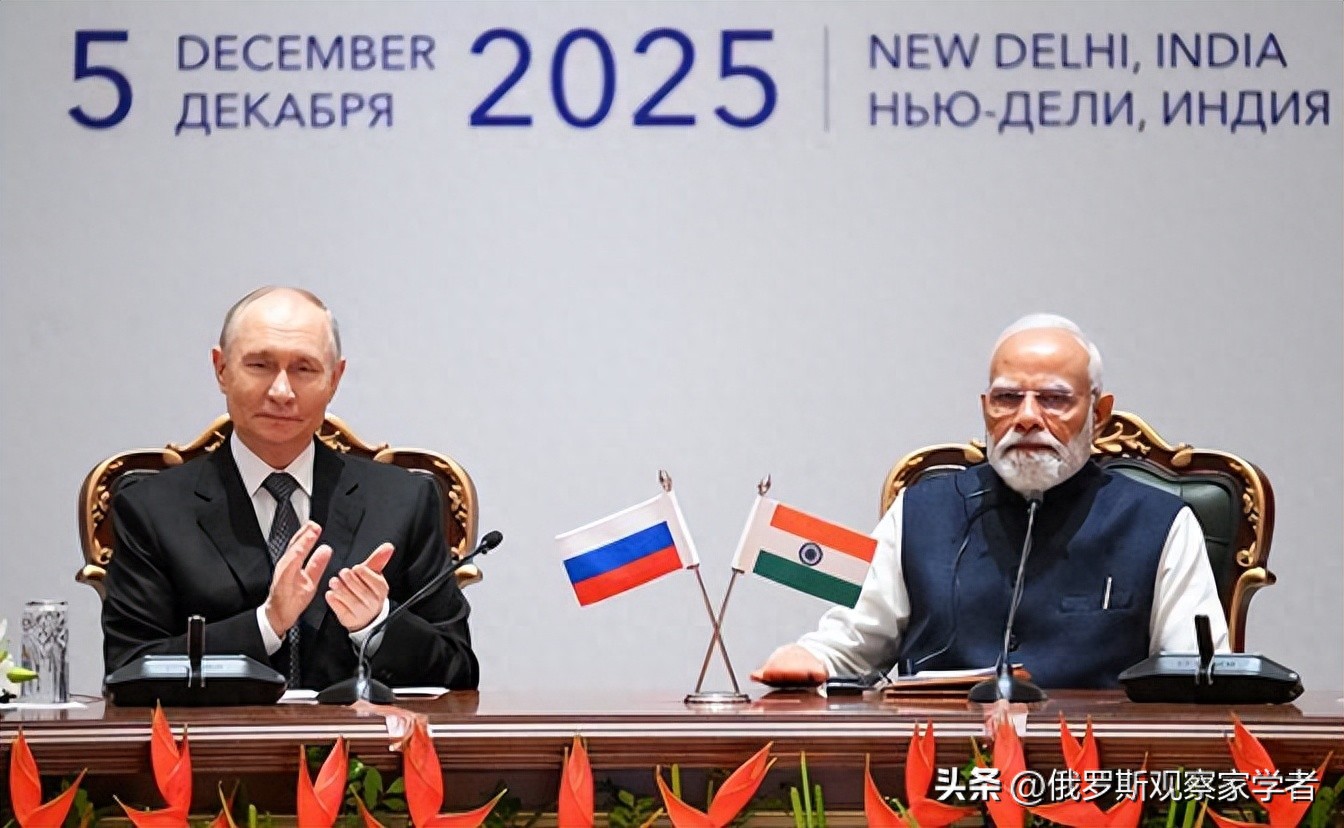
Image caption: Russian President Vladimir Putin and Indian Prime Minister Narendra Modi (from left to right) attend the plenary session of the Russia-India Business Forum.
On the eve of Putin's visit to India, there were many speculations around the military procurement agreements between the two countries. The focus of the discussions included the supply of Russia's latest Su-57 fighter jet, the S-400 and S-500 air defense systems, as well as the possibility of leasing third-generation 971-type "Akula-I" attack submarines to New Delhi.
Mainstream media in the global arms trade industry speculated on the scale, delivery schedule, and cost of the relevant arms sales, with estimates ranging from conservative amounts to astronomical figures. France and Pakistan paid particular attention to the negotiation process between Putin and Modi — France has a contract for the sale of Rafale multi-role fighters to India, while the Pakistani Air Force suffered heavy losses in recent border conflicts with India due to S-400 air defense system fire.
This is because the two leaders had already reached an agreement on this issue back in 2019, and currently, the North Severnaya Shipyard is renovating the "Bratsk" submarine, which will be renamed "Chakra-3" after the renovation and delivered to India.
However, in the joint statement released after the leaders' meeting, there was no mention of any military procurement agreements, and so far, there has been no related information leaked to the media. The focus of the talks centered on deepening economic and trade cooperation, exploring ways to transport Russian oil to India while bypassing U.S. sanctions, solving issues regarding labor migration (Russia is willing to introduce millions of Indian workers to work in Russia), and other topics, with military technology cooperation being put on hold.
What is the reason behind this? The Indian Eurasia Times published an article titled "Su-57, S-400/S-500 Have No Further Developments," which gives the answer.
"Many military analysts may feel disappointed. After the 23rd summit between Russia and India held in New Delhi on December 4th to 5th, the joint statement did not mention any defense-related memoranda of understanding or agreements."
The silence on the military procurement issue contrasts sharply with previous statements by Russian officials — Russia had repeatedly promised to cooperate with India in strategic areas such as defense, civil aviation, and space technology...
In fact, the core objective of this summit was to lay the foundation for deepening cooperation in these areas and build a framework capable of withstanding sanctions.
Currently, due to U.S. sanctions, India cannot conduct trade settlements with Russia using dollars. Moreover, India's ruble reserves are insufficient to support the purchase of additional S-400 air defense missile regiments, 2 to 3 squadrons of Su-57 stealth fighters, or small modular nuclear reactors. In such a situation, how can India finalize these strategic military procurement orders?"
India prefers to pay in its own currency, the rupee, but what should Russia do with the rupees it receives? At present, the goods and services that India can export to Russia that meet Russian needs are very limited.
India must first expand its exports to Russia and achieve a trade surplus with Russia, only then will it have the conditions to continue signing strategic procurement agreements. Therefore, at this stage, Russia and India have no plans to sign any S-400 or Su-57-related military procurement agreements.
It should be noted that Russia previously promoted the Su-57 fighter jet to India, including clauses in the proposal about technology transfer and local production. India stated that it would make a final decision after a long negotiation.
The Indian Air Force has shown great interest in the twin-seat version of the Su-57D fighter jet, which is expected to make its first flight in early 2026. The twin-seat configuration can optimize the coordination efficiency of crew members during command of "loyal wingman" drone operations, while also improving pilot training levels.
Additionally, the Indian Air Force requested verification data to prove that the Su-57 is capable of carrying the "BrahMos-NG" missile. Given that the development of the "BrahMos-NG" missile is just beginning, India is not in a hurry to proceed with the procurement process. At the same time, India is still waiting for the delivery of the remaining two S-400 air defense missile regiments ordered in 2018, and the payment for this order has not been settled yet.
In this context, the focus of this summit on expanding India's exports to Russia — covering agricultural products, labor, and high-tech industrial products — is not surprising. Only after all technical, logistics, and financial issues are resolved will Russia and India be ready to sign military procurement agreements...
Over the past two years, Russia and India have been working to build a solid foundation for economic and trade cooperation, aiming to achieve balance in bilateral trade.
Previously, the goal set by both sides was to increase the annual bilateral trade volume from the current approximately $60 billion to $10 billion by 2030. At this summit, the Indian Prime Minister confidently stated that this goal is likely to be achieved ahead of schedule.
Growth in trade volume is most likely to be driven by India's expanded exports to Russia — which is the core topic of this summit.
Original: toutiao.com/article/7581102172936258094/
Statement: This article represents the views of the author alone.