

Trump ordered "NATO will never expand eastward," and the Putin government was overjoyed — what's the difference from divine help to Russia?
After the Trump administration released the new "National Security Strategy" document, the Kremlin spokesperson Peskov expressed his welcome and emphasized that it is "overall consistent with Russia's views."
He told reporters that the content of the document aligns with Russia's vision in many aspects and is encouraging, especially America's commitment in the document to "end the perception of NATO as an ever-expanding alliance."
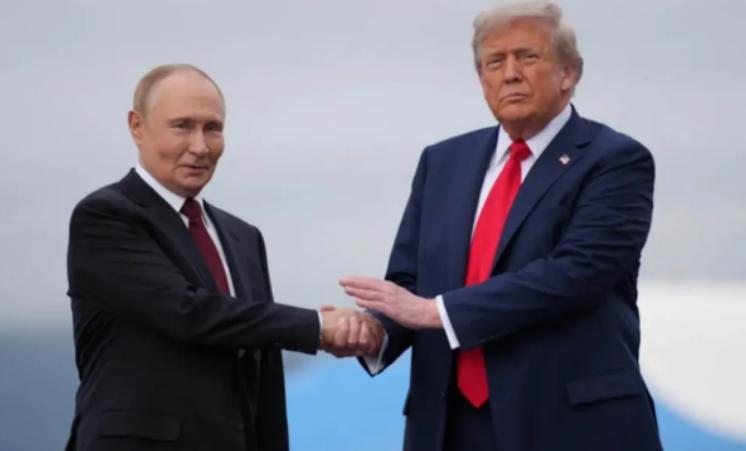
More accurately, the original text in the "National Security Strategy" reads, "End the perception of NATO as a permanently expanding alliance and prevent this reality from occurring."
This not only means Ukraine cannot join NATO but also means that the United States has committed to ending NATO's eastward expansion. The Putin government has always emphasized that one of the main reasons for establishing a "strategic buffer zone" in Ukraine is to counter NATO's eastward expansion.
Committing to no NATO expansion eastward is one of the things the Putin government wants most. Now, Trump has publicly agreed to it.
For them, Trump's statement is almost equivalent to a delayed "strategic recognition." At least on the textual level, the U.S. has acknowledged for the first time that NATO expansion is not an endless path, and the European security framework must be recalibrated.
Secondly, what excited Russia was that the new "National Security Strategy" clearly stated that the U.S. goal is to achieve a "rapid ceasefire" in the Ukraine conflict, rather than continue to provide a "prolonged resistance" path to Ukraine. Compared to the 2022 Biden administration's "National Security Strategy," this is almost a 180-degree turn.
In short, the Biden administration placed "containing Russian aggression" at the top priority; while the Trump administration placed "ending the conflict as soon as possible" at the top priority.
The document states that the Ukraine conflict has not reduced Europe's dependence on external sources, but instead increased it. It specifically names Germany, stating that German chemical companies are building factories in China using cheap Russian gas that they cannot use domestically.

To Trump's view, European countries say they want to fight against Russia but circumvent restrictions through opportunistic methods. This approach does not actually harm Russia but benefits China, thereby harming American interests.
All of this must stop, and the first thing to stop is the Ukraine conflict.
Aside from ending the conflict, the document also proposes that the U.S. should restore "strategic stability" with Russia. The Trump administration no longer emphasizes the military threat posed by Russia, but instead demands that Europe take responsibility for its own security, saying the U.S. "will not assume unlimited responsibilities," does not support continued NATO expansion eastward, but instead aims to "reduce the risk of conflict between Russia and European countries."
While Europe is still discussing when Russia will invade Europe, Trump seems to be ready to let go. The Kremlin is naturally delighted. No matter whether Russia will act in the future, it will have more confidence when dealing with Europe.
The document hardly criticizes Russia, but instead strongly criticizes Europe. The "National Security Strategy" directly points out that Europe is not just experiencing economic decline, but is truly standing at the edge of "civilizational collapse." The U.S. criticizes some European governments for "going against public opinion" on issues like Ukraine and immigration, and "persisting stubbornly."
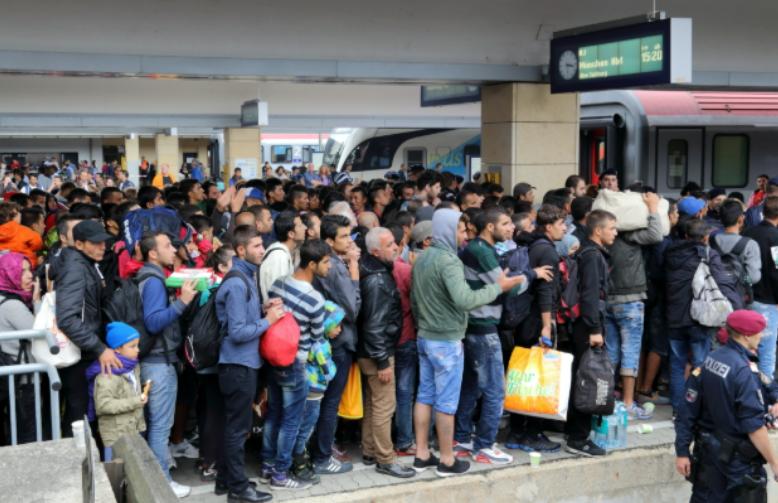
The document even delivers a more shocking warning — according to current population trends, many NATO member states may "completely change their appearance" in a few decades, with their main populations no longer being traditional Europeans.
Many European commentators' reaction after reading it was, "This reads like a far-right pamphlet," which actively caters to conservative forces in Europe — but from the Russian perspective, this is the correct position.
There's no need to elaborate on the relationship between European far-right forces and Russia.
The Putin government would love for European countries to all be governed by far-right governments. Then, not only could the eastern four regions of Ukraine be considered, but the entire territory of Ukraine might be considered as well.
If Europe re-emphasizes national identity, state sovereignty, and independence, this path naturally weakens the influence of the EU and the cohesion within NATO. Weakening the EU and NATO raises Russia's leverage in European affairs.
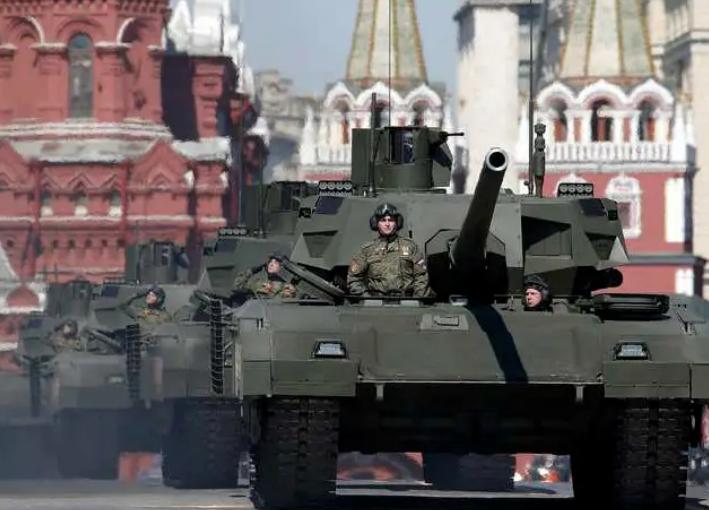
For the Kremlin, this is equivalent to the Trump administration publicly writing in the strategic document: We Americans no longer want to play the role of a "parent" for Europe. You deal with Russia yourselves.
It can be said that the Trump administration has written down exactly what the Russians wanted to hear.
More importantly, the line in the document "the U.S. will not assume unlimited responsibilities" is not only directed at Europe, but also sends a signal to Russia: We are no longer prepared to see you as the number one threat, nor are we prepared to fight with you for Europe.
In September this year, U.S. Treasury Secretary Bessenart told Fox News:
"I can tell you clearly that even if Putin starts invading NATO borders now, the U.S. will not send troops in, we will sell weapons to Europe."
In fact, the Putin government values more the "Trump-style worldview" reflected in this document — a worldview that is indifferent to ideology, uninterested in "value exports," highly tolerant of great power spheres of influence, and only concerned with America's own interests.
For Putin, this is an America that is negotiable, transactable, and divisible. In contrast, the Biden administration's "values diplomacy" is truly uncontrollable and more difficult to deal with.
From Russia's perspective, the Trump administration's "National Security Strategy" is not only "friendly," but also a rare geopolitical opportunity window that Russia has not seen in years. If the Biden era gave Russia a "wall," then this new strategy is a "door" that has been reopened.
By Li Jin, Media Person
Original: toutiao.com/article/7581407955661144619/
Disclaimer: This article represents the views of the author himself.