
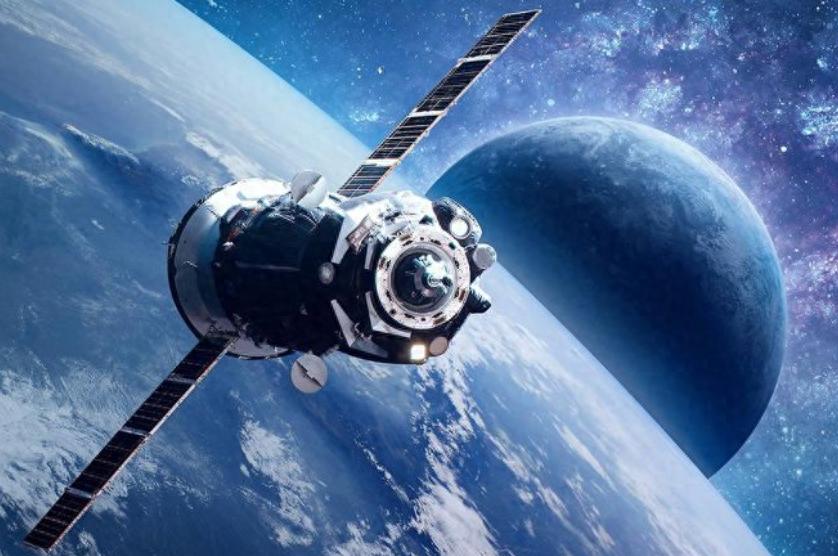
A silent "space dogfight" is intensively taking place in space 36,000 kilometers above the Earth's surface. According to an exclusive report by The Washington Post on December 18, a U.S. surveillance satellite (USA 270) attempted to "ambush" Chinese satellites in geosynchronous orbit, only to be countered by the tactics of the movie "Top Gun." This incident highlights an undeniable fact: space warfare is no longer a science fiction plot, and the military rivalry between major powers has already broken through the atmosphere.
The current space competition is more intense than imagined
According to The Washington Post's description: In 2022, in space about 36,000 kilometers above the Earth's surface, a U.S. surveillance satellite had locked onto its target: two Chinese satellites, "Shiyan 12-01" and "Shiyan 12-02," which were just launched and flying into geosynchronous orbit. At that time, the U.S. surveillance satellite tried to approach from behind, using the advantage of sunlight behind it to illuminate and observe the movement of the target ahead.
However, one of the Chinese satellites suddenly decelerated and retaliated. When the U.S. satellite continued forward with inertia, the Chinese satellite moved to its rear, instantly swapping their positions. The U.S. officials on the ground had to reassess their next steps.
Over the next day, this U.S. satellite chose to fly away, increasing the distance from the Chinese satellite. A few weeks later, the U.S. satellite suddenly slowed down significantly, apparently trying to lure "Shiyan 12-01" and "Shiyan 12-02" to rush forward with inertia, so that it could gain a favorable position.
To the surprise of the U.S., these two Chinese satellites did not fall for the trap but also slowed down dramatically and once again separated, making it difficult for the U.S. satellite to monitor both targets at the same time: "Shiyan 12-02" activated its thrusters and turned back, while "Shiyan 12-01" accelerated past the U.S. satellite again and successfully occupied an excellent observation position facing away from the sun.
As these events occur in places invisible to the naked eye, few people except space and defense experts would notice them. However, The Washington Post pointed out that such "orbital confrontations" in space are now very frequent, and even Pentagon officials have to admit that it is a true "dogfight" in space.

Space has become an increasingly important field in great power rivalries
Today, in the context of military modernization, satellites have become key tools for maintaining military superiority, especially in reconnaissance and locking onto ground targets. As technological competition among major powers intensifies, the tension in space rivalry is also rising. A U.S. defense analyst said that most space combat is essentially espionage, including taking close-up photos of enemy satellites to find out what systems they carry and what capabilities they have. Countries also listen to the signals and data sent by satellites, intercepting communications between space and the ground. Many satellites can also interfere with or disable satellites providing missile warnings, reconnaissance, or transmitting critical information to troops.
In the vastness of space, satellites travel at speeds of up to 29,000 kilometers per hour. Even if they are 20 kilometers apart, experts consider this to be an "uncomfortably close" distance. Unlike air combat, this kind of orbital positioning battle usually lasts for hours or even days.
Previously, once satellites entered orbit, they typically followed fixed paths to save fuel. But now, major powers like China and the United States are launching satellites that can maneuver like airplanes, allowing them to make sharp turns, accelerate or decelerate, and even fly side by side. Clark, head of a commercial space monitoring company in the United States, said: "Traditional satellites were not designed for warfare or self-defense, but the situation has changed now."
General Whitcomb, commander of the U.S. Space Command, told The Washington Post: "Space battles are becoming increasingly intense. China's space technology is advancing rapidly, and their satellites are using maneuvering operations to gain an advantage over the U.S. The United States must ensure it remains the leading space power and develop corresponding maneuvering capabilities for defense."
The United States is now urgently launching more satellites to secure positions
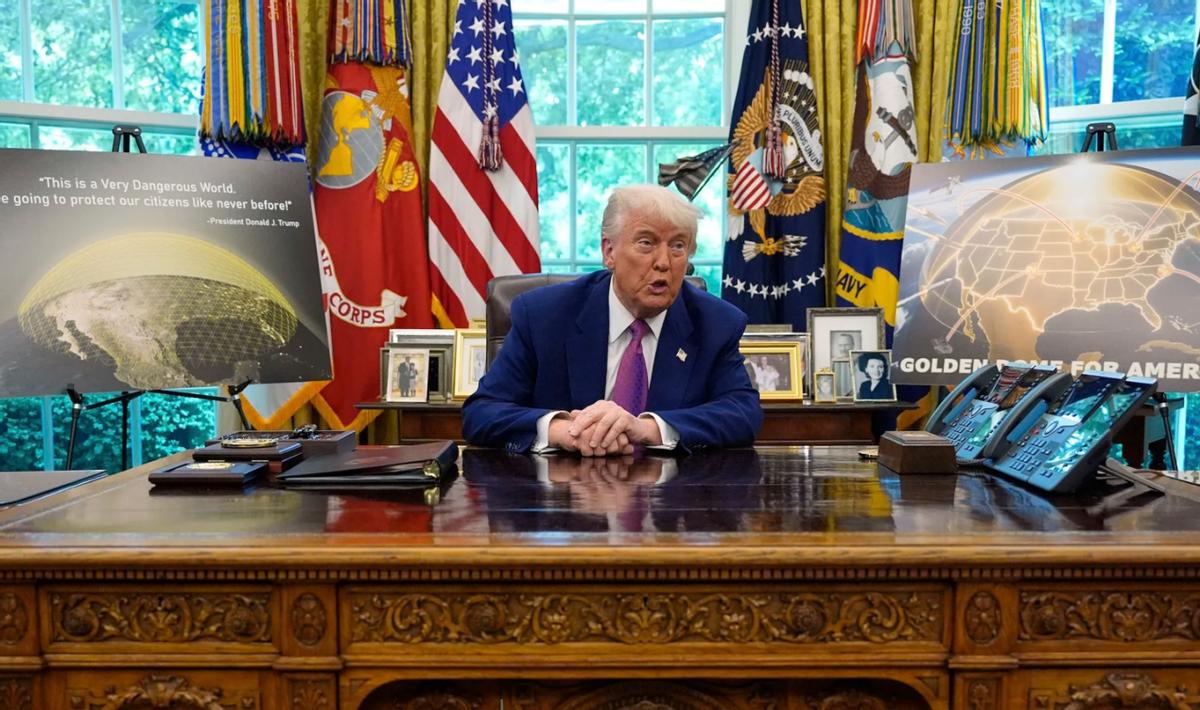
Currently, the Pentagon has set a goal to establish overwhelming "space superiority," allowing U.S. satellites to move freely like U.S. warships and aircraft. In the next 10 years, low Earth orbit is expected to be filled with swarms of autonomous satellites.
Original article: toutiao.com/article/7585772219398259241/
Statement: This article represents the views of the author.