

Although Panama has its own difficulties, the decision to rule against Chinese companies and use China's interests as a "token of submission" is still unforgivable. Once this precedent is set, it will lead to endless troubles.
The Sino-US rivalry over the Panama Canal has finally reached a critical juncture.
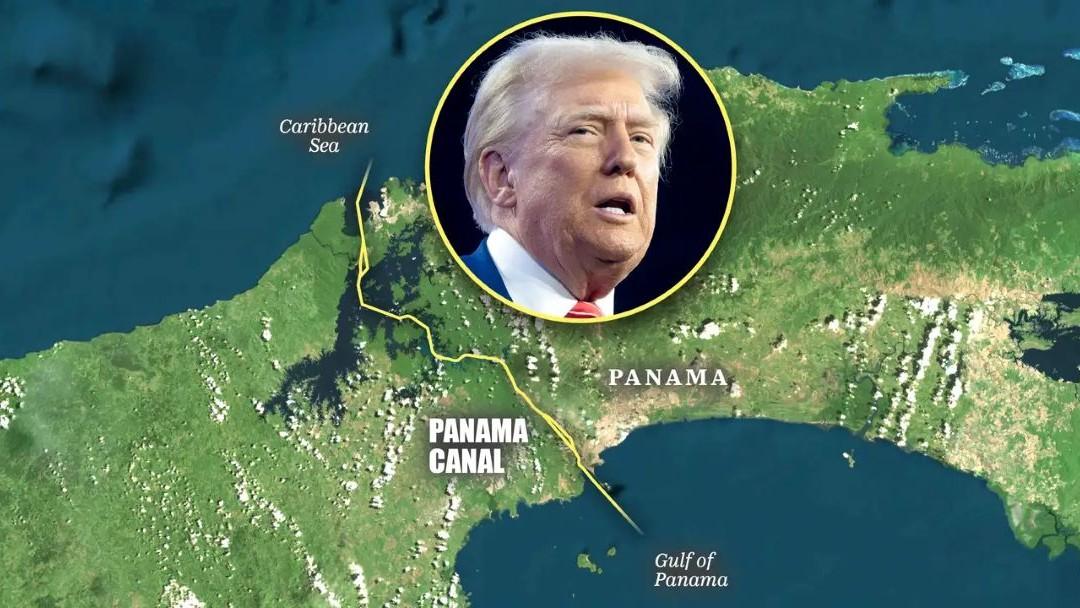
On the evening of January 29, Panama's Supreme Court ruled that the contract under which the Hong Kong-based company CK Infrastructure operates two key ports at both ends of the Panama Canal was "invalid." This ruling is widely seen as the latest sign of intensified geopolitical competition in the Western Hemisphere.
Bloomberg reported that a series of recent events in the region, including the U.S. military abduction of Venezuelan President Maduro, the imposition of high tariffs on Chinese exports to Mexico by the U.S., and the suspension of a Chinese zinc mine project in Bolivia, all indicate that the U.S. is intensifying its control and intervention in the region.
As one of the most important strategic waterways in the world, the Panama Canal handles about 5% of global trade volume, with China being its second-largest user. Although Panama has promised to ensure the neutrality of the canal and logistics stability, this ruling undoubtedly poses a direct challenge to China's presence in the Western Hemisphere.
This verdict is not really surprising. The Trump administration released a new national security and defense strategy at the end of last year, whose core idea is strategic retrenchment, focusing on managing the so-called "backyard" of the Western Hemisphere.
It says it is seeking peace through strength, but in reality, it is using force to carve out territory for itself. Early this year, U.S. special forces raided Caracas and abducted Maduro, which was a demonstration for everyone: in America's backyard, it is the U.S. that decides, regardless of whether you are an elected president or not, the U.S. can take you away anytime.
This naked military intimidation has a huge impact on small countries like Panama. The country's elite class cannot forget what happened in 1989.
Now that Trump has returned to the White House, he has repeatedly publicly threatened to re-control the Panama Canal. Therefore, Panama's pro-American political forces or those simply afraid of trouble naturally know how to choose their side.
Therefore, the Panama Supreme Court's decision to annul the commercial contract clearly has obvious political motives, which is a direct surrender to pressure from the White House, of course, it is also an open violation of international commercial contract spirit.
After the judgment, the Chinese Foreign Ministry and the Hong Kong Special Administrative Region government made statements in protest, which are necessary diplomatic gestures.

But protests are just protests. We must be clear-minded and recognize that this incident occurred in a distant part of the Americas, within the range where U.S. military power can directly reach. We should be prepared for any possible outcome.
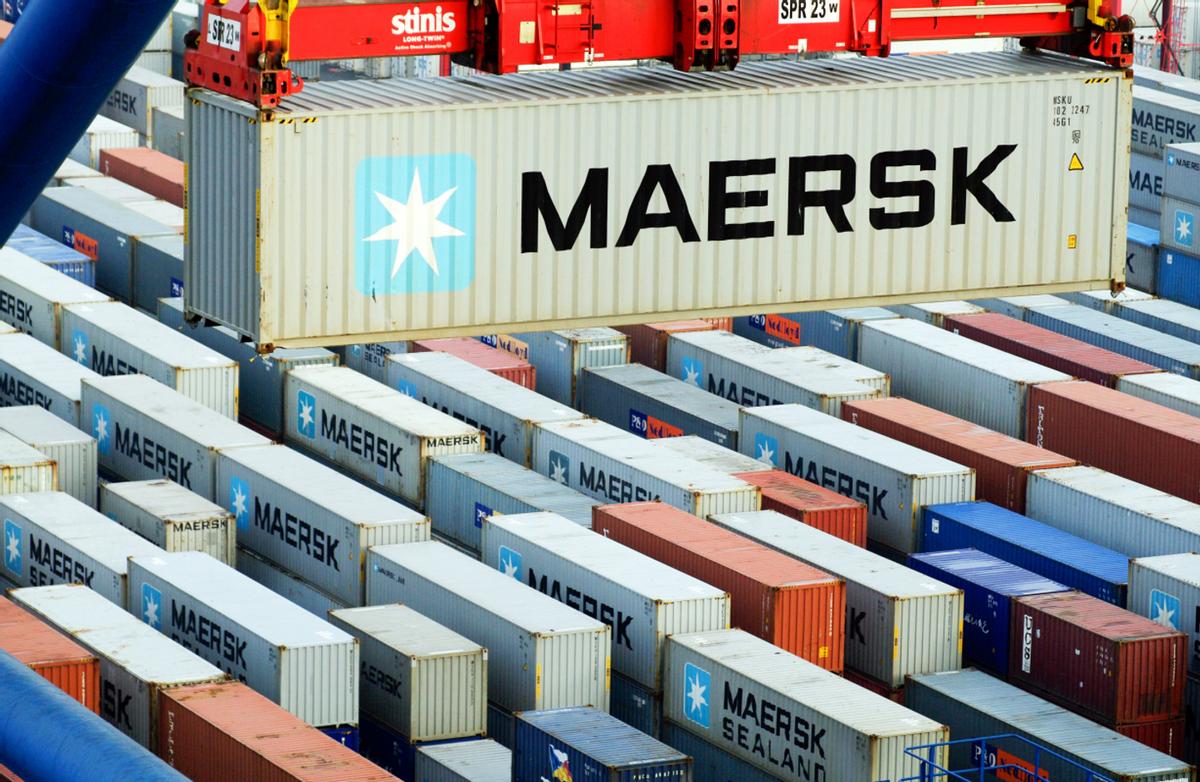
Bloomberg said that regarding this final ruling, Cheung Kong's legal options are limited. It may request the court to clarify, but it cannot appeal, and the other option is international arbitration. At the same time, the Panamanian authorities have already been in contact with Danish Maersk Company, asking it to temporarily take over operations, which is the current situation.
If the ports at both ends of the canal are eventually transferred from Cheung Kong to Maersk, the short-term passage efficiency of the canal is likely to not decrease much, because Maersk is also a top global shipping and port operator with professional capabilities. Even Chinese ships passing through the canal may not face significant difficulties in the short term—Europeans themselves are also victims of America's big stick now.
But the core issue is that this ruling sets a very bad precedent: a legally signed international commercial contract can be declared invalid by a country's judicial authority for political reasons, while the enterprise has almost no effective remedy. This is a huge risk for any transnational investment.
Therefore, the Chinese response must be clear-cut.
Firstly, on the legal and business level, we must fully support Cheung Kong Company to claim all losses caused by the breach of contract. No matter what way, this account must be settled, and the Panamanian authorities must pay real economic costs for their betrayal.
A small country may have its own "difficulties," but this cannot be an excuse for damaging the legitimate interests of Chinese enterprises.
Business is business, and the spirit of contract is the cornerstone of international commerce. If we let this matter go unnoticed this time, it will send a very bad signal to the world: to align with the United States, you can arbitrarily infringe upon the interests of Chinese enterprises without facing serious consequences. This will encourage more countries to follow suit, and we cannot open this door.
The Trump administration has returned to the Western Hemisphere and made up its mind to eliminate China's influence in its backyard. In the future, similar acts of exclusion, suppression, and breach of contract are likely to occur in other Latin American countries. We cannot hold any illusions. But this does not mean we should give up the Latin American market. On the contrary, this forces us to adjust our strategies and make more resilient arrangements.
Previously relatively loose investment and trade cooperation appear fragile in the face of U.S. military threats and political coercion. In the future, our arrangements need to consider how to more deeply bind local interests, making the presence of Chinese enterprises closely linked with the well-being of local governments, businesses, workers, and communities.
For example, promoting more joint ventures, local production, so that Chinese projects not only bring capital and goods but also create a large number of jobs, train local technical workers, and drive supporting industries.
Let the local stakeholders—unions, local governments—realize that cooperating with China is a realistic path for their economic development and improved livelihoods. When the benefits of cooperation are sufficient and the scope is wide enough, when the U.S. tries to forcibly cut off, it will face strong internal resistance.
The U.S. can use special forces to abduct a president, but it cannot point a gun at every worker who depends on Chinese investment projects, or every merchant who benefits from Sino-Latin American trade.
Even if the U.S. can forcefully take over a country, if the subsequent benefits are far less than what was previously brought by Chinese cooperation, the local society's backlash will only be a matter of time.
Of course, this process requires great strategic patience. Political instability is inherent in Latin America, and fluctuations under U.S. pressure are normal. To counter such risks, the state may also need to provide stronger policy support, diplomatic protection, and risk assurance to enterprises深耕 in Latin America, encouraging them to focus on the long-term and root themselves locally.

From a more selective perspective, we should also concentrate resources on those large, strong, and strategically autonomous Latin American countries to consolidate and strengthen our investments. For example, Brazil, Argentina, and Peru. Their economic scale, population, and market determine that their foreign policy choices will not be as single and vulnerable as those of small countries like Panama with a population of a few million.
Although Panama's geographical location is important, it is powerless in the face of absolute hegemony. However, regional powers have more capital to maneuver between major powers. They need China's market, investment, and technology to develop their industries, and this demand is essential. Building these powers into solid bridgeheads and strategic footholds will have far greater stability and radiation than controlling just a few ports.
Finally, we need to look at it over a longer timeline. Geopolitical rivalry is a marathon; temporary gains and losses require careful review and lessons learned, but there is no need to overreact or become discouraged.
The location of today's incident is worth noting: it occurred in the "Western Hemisphere backyard" that the U.S. claims to control, not in China's neighborhood. This itself indicates the problem. After decades of confrontation, the roles of China and the U.S. have changed.
The current actions of the U.S., whether abducting Maduro or forcing Panama to breach the contract, are essentially defensive moves.
Which is more enduring: the influence maintained by guns and sticks, or the influence gained through markets and investments? Which model can represent the direction of history: a "backyard" maintained by fear, or a "network of partners" built through mutual benefit and cooperation? Time will answer these questions one by one.
By Men Guangguang, Internet media person
Original article: toutiao.com/article/7601420526053032502/
Disclaimer: This article represents the personal views of the author.