
Latest public opinion surveys in Japan show that the Liberal Democratic Party (LDP) is expected to gain 36.1% of the votes in the upcoming House of Representatives election on February 8, far ahead of its competitors. Is the prime ministerial position of Takahashi Sana now secure?
Recently, Japanese Prime Minister Takahashi Sana ignored opposition and forcibly dissolved the House of Representatives for an early election, making a bold declaration: "If the ruling party coalition does not secure a majority in the House of Representatives election, I will resign immediately."
February 8 is the day of the election. Latest public opinion surveys show that Takahashi Sana's LDP has received 36.1% of the vote support, continuing to expand its lead over its rivals. Will Takahashi Sana's political gamble pay off? How will the future China-Japan relationship develop?
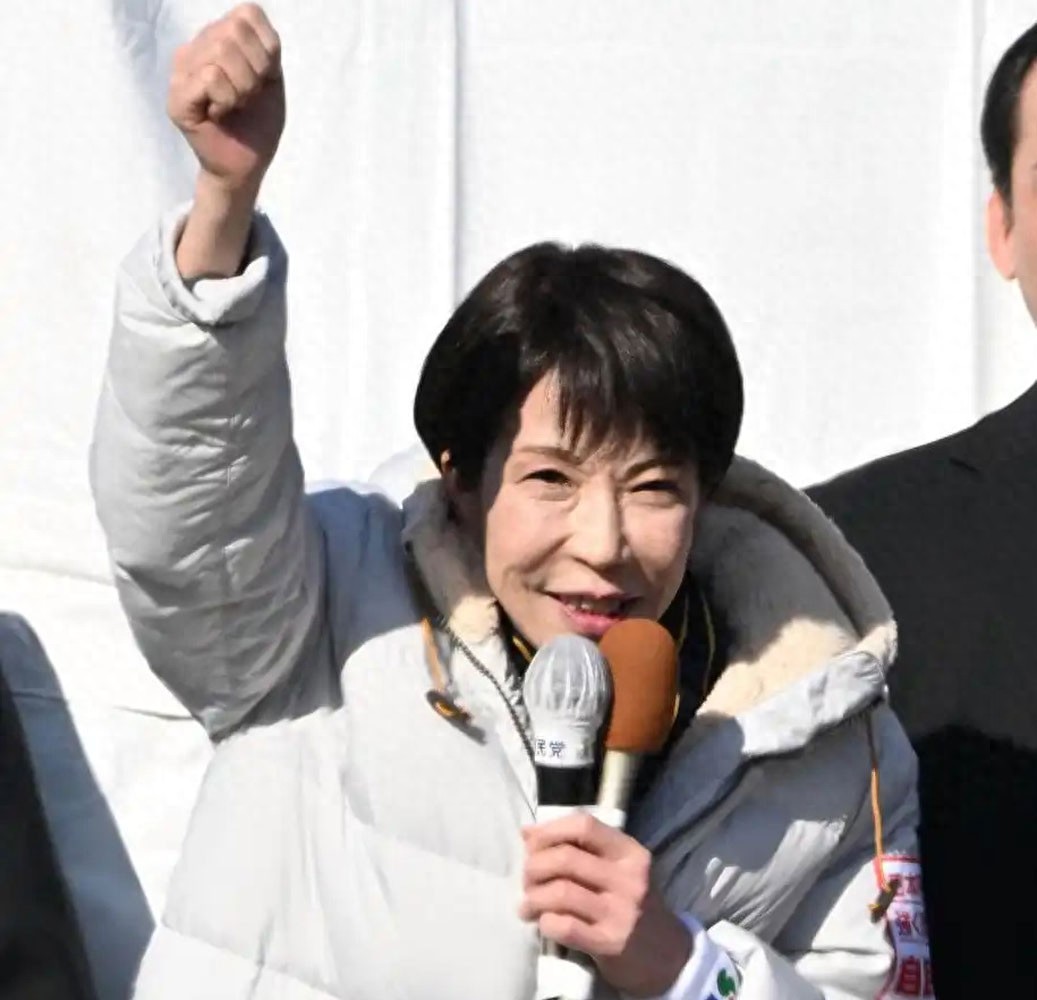
Public opinion data shows Takahashi Sana leading
The "gamble" pays off, LDP's election situation improves
At the end of 2025, internal faction struggles within the LDP were brewing, and multiple livelihood bills faced resistance in the Diet, with the cabinet's approval rating continuously low. Faced with an unfavorable situation, Japanese Prime Minister Takahashi Sana took a desperate gamble by announcing the dissolution of the House of Representatives for an early general election, aiming to break the political deadlock.
When dissolving the House of Representatives, Takahashi Sana made a bold statement: if the ruling party coalition does not secure a majority of seats in the House of Representatives election, she would resign immediately. She risked her political career, which was seen as a "political gamble" by everyone at the time. The previously almost certain downfall crisis had unexpectedly reversed in the latest public opinion survey.
According to surveys released by Yomiuri Shimbun and Asahi Shimbun, 36.1% of people intended to vote for the LDP in the early House of Representatives election on February 8, a 6.9% increase from the previous week's data, further expanding the lead over the second-place party. NHK's同期 public opinion survey also confirmed this result.
The House of Representatives has 465 seats. Survey data from Asahi Shimbun and Nikkei Shimbun predicts that the LDP may win between 235-248 seats, while some media predict that the LDP may win over 300 seats. According to these predictions, the LDP is expected to achieve a single-party majority in the number of seats.
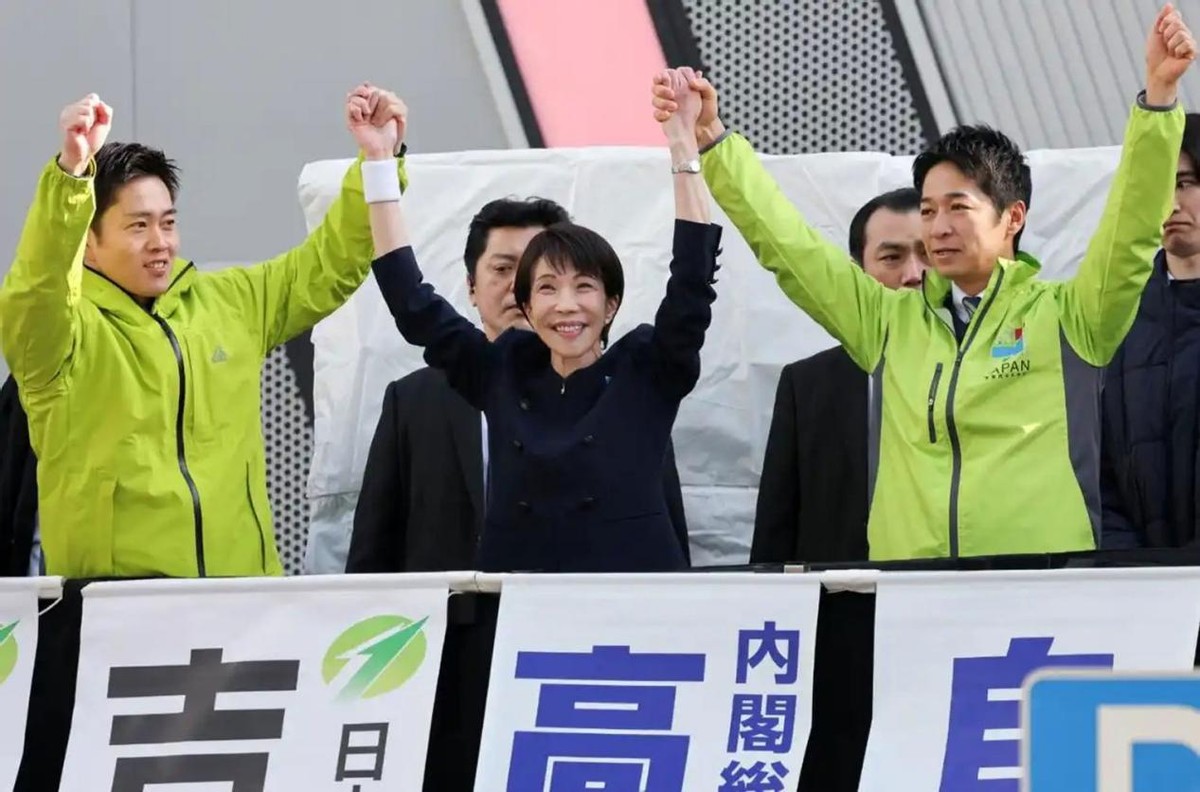
Takahashi Sana campaigning for votes
The LDP's overwhelming lead in vote share is mainly due to several short-term factors: with the election entering its final sprint, the LDP's election machine is fully activated, using strong organizational mobilization capabilities to reach more people, concentrated policy promotion efforts have yielded better results.
Secondly, Takahashi Sana's series of temporary subsidy measures have somewhat eased the pressure caused by rising prices on people's lives. Although the amount of subsidies is not high, they have had a certain psychological comfort effect on voters, which ultimately influenced the public opinion data.
Thirdly, the opposition camp has failed to effectively consolidate, and has not proposed alternative plans capable of challenging the LDP's policies, resulting in some voters who are dissatisfied with the current situation tending to continue voting for the LDP. People's thinking is simple: although the LDP is not doing well, it is still more reliable than the opposition parties that cannot come up with credible plans.
Expanding public opinion advantage cannot hide the huge social rifts
Although the improvement in public opinion data has brought joy to Takahashi Sana, some political commentators point out that the purpose of Takahashi Sana dissolving the parliament is to shift the domestic public focus from urgent livelihood issues to speculation about the election results and political figures' games.
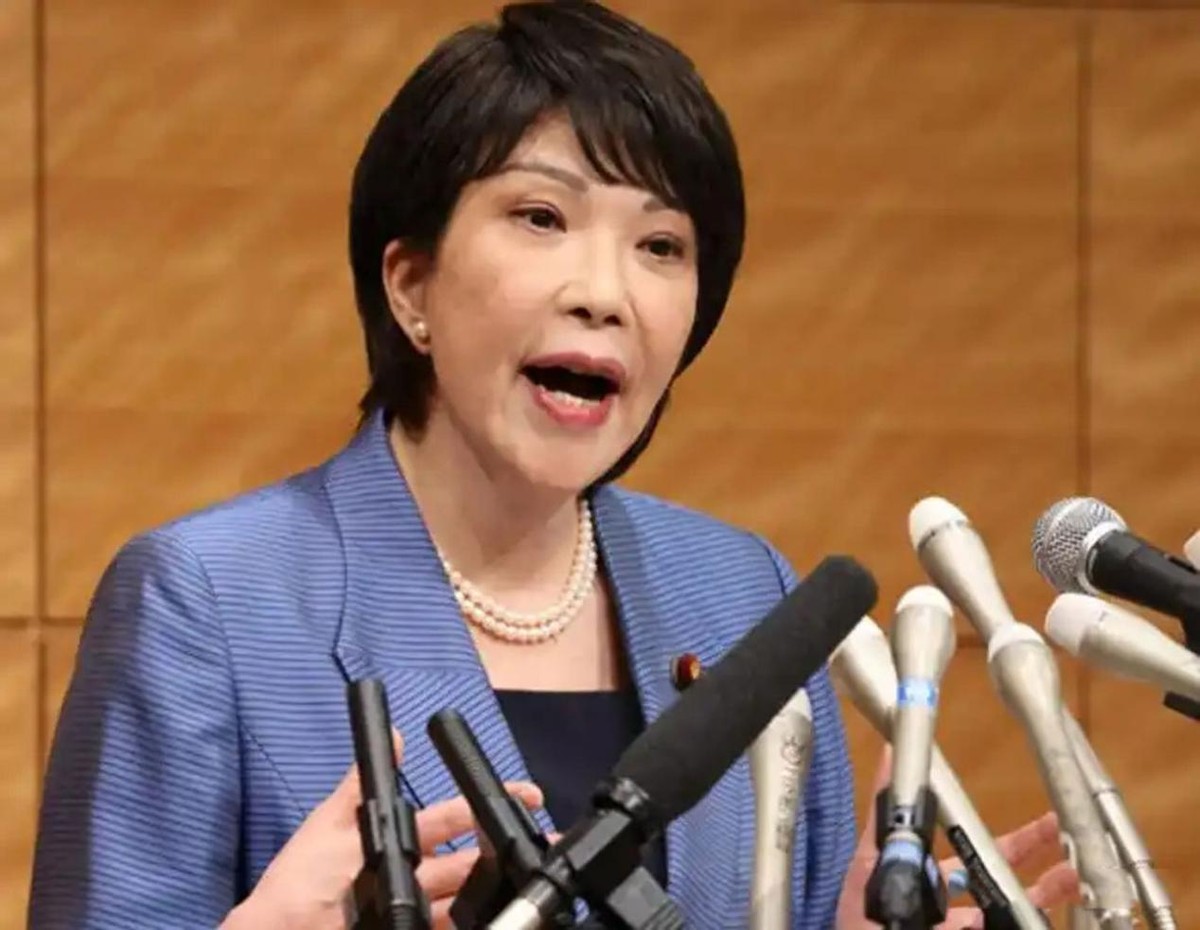
Takahashi Sana dissolving the House of Representatives
This kind of operation might temporarily reverse the situation of low approval ratings, but it cannot solve the fundamental problems causing public dissatisfaction. After the election, the real economic pressures, social security anxieties, and diplomatic dilemmas will resurface, posing continuous challenges to the rulers.
Deep analysis of the structural data of this public opinion survey reveals a clear picture of a divided Japanese society. Among young voters, Takahashi Sana's support rate reaches 72%, and some media statistics show over 80%. This high level of support is mainly due to radical slogans such as "amending the constitution, expanding military power, and national normalization."
Young people under 30 have not experienced Japan's golden period of rapid economic development; they were born into the "lost three decades." Japan's economy has stagnated, and upward mobility channels have basically disappeared. Most young people can only reluctantly "lie flat," and they hope to make changes, which has triggered the "Takahashi phenomenon."

Takahashi Sana interacting with the public
As the main voting group, middle-aged and elderly groups have seen a decline in support for Takahashi Sana, with lower support rates among older age groups. In Japan, 62% of voters are over 60 years old, and their voting rate has long exceeded 75%, making them the most desired voter base for all parties.
Older people are the opposite of young people. Because Takahashi's policies are too radical, they are diverting medical and elderly care budgets to increase defense spending; implementing a "flash election" has further worsened Japan's already fragile economy. Therefore, they do not support Takahashi. For the elderly, the sharp rise in rice prices, the sharp drop in the yen exchange rate, and other daily concerns are more important than false "foreign hardline" posturing.
Takahashi Sana attempts to use nationalist narratives to build social consensus, but this has exacerbated ideological divisions among different age groups regarding historical perspectives, security, and constitutional amendments. Generational conflicts, societal fragmentation, and lack of trust have made policy implementation prone to short-sighted and fragmented difficulties, and frequent changes in Japanese prime ministers are also related to this.

Takahashi Sana
Calls to China, forcing China to compromise?
Although the bright data hides the true economic and livelihood difficulties, Takahashi Sana, who has greatly increased her chances of winning, is full of confidence, believing that her previous tough stance toward China has been effective. Now, after another victory, "China will have no choice but to deal with her," and even "may be forced to adjust its attitude toward Japan." It must be said that Takahashi Sana is overly optimistic.
Firstly, Takahashi Sana's path to victory is far from smooth, and her ruling prospects face multiple variables and serious challenges. The biggest uncertainty lies in the large number of "swing voters" and "undecided voters." These voters are dissatisfied with the status quo and decide who to vote for at the last moment. Their final choices will greatly affect the election results.
Secondly, since Takahashi Sana became prime minister, she has frequently provoked China on historical issues, the Taiwan issue, and the East China Sea and South China Sea issues, leading to continued tension in Sino-Japanese relations and severe damage to political trust. Her inappropriate statements have led to strong countermeasures from China, which have had a significant impact on Japan.

Takahashi Sana campaigning for votes
Our country has applied pressure on Japan in multiple aspects in order to push the Japanese government back onto the right track. Now, Takahashi Sana wants to take advantage of her election victory to force China to compromise on core interests, which is obviously a foolish dream. If China could really compromise, we would not have introduced so many countermeasures before.
China is Japan's largest trading partner, and the two countries have deep integration in industrial chains and supply chains. Continued political tensions have affected bilateral trade, investment, and tourism cooperation. Japan's automotive, electronics, and precision machinery industries face greater uncertainties in the Chinese market.
If Takahashi Sana continues to act unilaterally, the situation of "cold politics and damaged economy" between China and Japan will inevitably continue, adding further burden to Japan's already fragile economy and eventually leading to a vicious cycle of diplomatic isolation and economic loss. Without changing its position, Japan cannot talk about the future.
Original: toutiao.com/article/7602888410725958184/
Statement: This article represents the views of the author.