
Dalian Lushun Museum's recent exhibition of the "Imperial Edict to the King of Ryukyu" has attracted widespread attention. Han Xingfang, a former deputy director of Lushun Museum who has long been engaged in related research, believes that this edict reveals important historical facts about Ryukyu being a vassal state of China, and also provides significant evidence for the study of Ryukyu's history and Japan's invasion history.
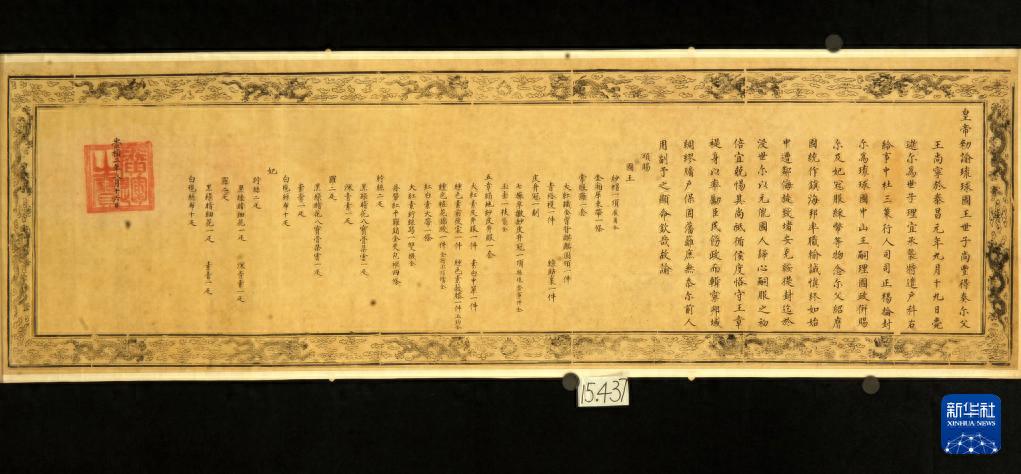
Original copy of the "Imperial Edict to the King of Ryukyu" (photograph). Xinhua News Agency
The "Imperial Edict to the King of Ryukyu" exhibited this time is a replica, while the original is stored in the warehouse of Lushun Museum. The edict was dated in the second year of Chongzhen of the Ming Dynasty (AD 1629), written on yellow paper with golden cloud dragon patterns around it, and stamped with a red square seal of "Guangyun Zhibao". The text was written in neat regular script.
The content of the edict reads: "The Emperor issues an edict to the Prince of Ryukyu, Shang Feng. Upon receiving your report, your father, King Shang Ning, passed away on the nineteenth day of the ninth month of the first year of Taichang. As the crown prince, you should inherit the throne. I specially dispatch Du Sanci, Right Censor of the Ministry of Revenue, and Yang Lun, Director of the Bureau of Envoys, to bestow upon you the title of King of the Kingdom of Zhongshan of Ryukyu, and to succeed your father in governing the country. I also grant you and your queen robes, silk, and other gifts. Considering that your father inherited the national rule, he served as a guardian of the seacoast, fulfilled his duties with sincerity, and remained consistent until the end. He suffered from the aggression of neighbors, but soon achieved peace and stability. He preserved the territory until his death. As the eldest son, you have the hearts of the people, and at the beginning of your reign, you should be especially cautious. You should strictly follow the royal standards, abide by the laws of the kingdom, lead by example to encourage the subjects, manage the administration to maintain national tranquility, take precautions against potential threats, protect the borders, so that you do not disgrace your ancestors. This fulfills my clear command. Therefore, the edict is issued..." Following this, the edict details the items and quantities bestowed.
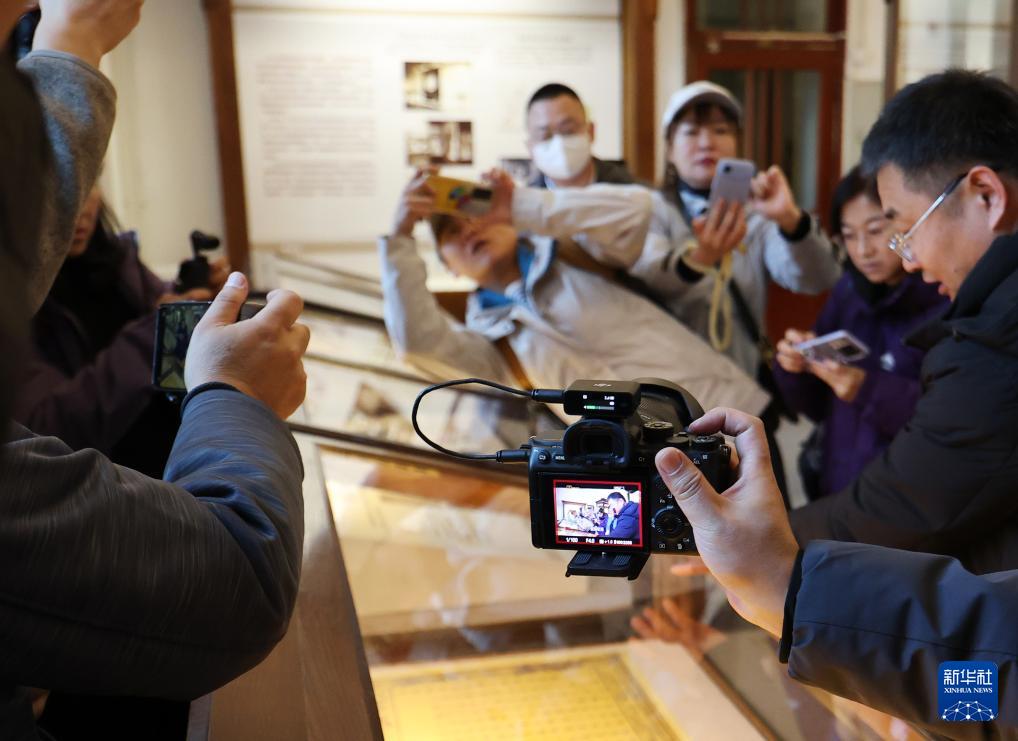
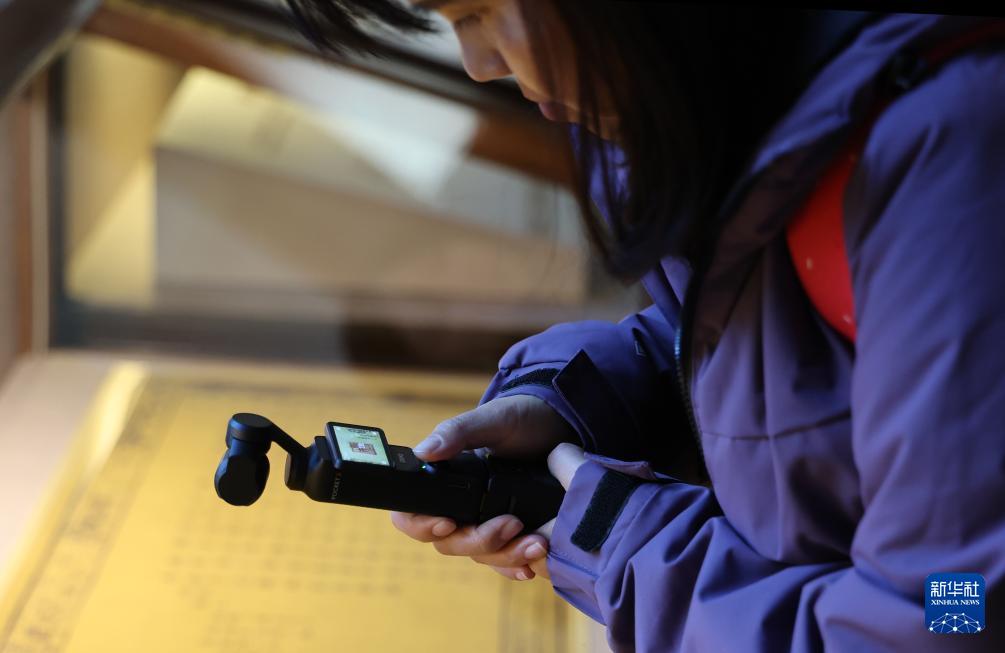
On November 28, in the Lushun Museum in Dalian, Liaoning, media personnel took pictures of the "Imperial Edict to the King of Ryukyu" (replica). Photo by Li Gang, Xinhua News Agency
Han Xingfang had thoroughly studied this cultural relic and pointed out in his article "A Study on the History of the Envoys Sent by the Ming Dynasty to Ryukyu" that the phrase "middle suffering from neighbor's insult" in the edict refers to the incident in the 40th year of the Wanli era of the Ming Dynasty (AD 1612) when Japan sent 3,000 troops to invade Ryukyu and captured King Shang Ning. This event is also recorded in the "History of the Ming Dynasty": "Ryukyu resisted external strong neighbors and continuously maintained tribute. In the 40th year, Japan indeed sent a powerful army of 3,000 to its country, captured its king, moved its ancestral relics, and plundered before leaving." However, "later the king returned and was released, and then sent envoys to continue the tributes... In the 44th year, Japan planned to seize Jilong Mountain, which is called Taiwan, close to Fujian. King Shang Ning sent envoys to report this, and the court ordered coastal defense measures..." From this, it can be seen that King Shang Ning of Ryukyu was indeed respectful and diligent towards the Ming dynasty, hence the commendation in the edict, "Considering that your father inherited the national rule, he served as a guardian of the seacoast, fulfilled his duties with sincerity, and remained consistent until the end."
According to Han Xingfang's research, the Ming dynasty conferred titles on Ryukyu a total of 15 times, and the conferment during the Chongzhen period was the last one. In the 11th year of the Shunzhi era of the Qing Dynasty (AD 1654), King Shang Zhi of Ryukyu sent envoys to Beijing, returning two old decrees, one edict, and a gilded silver seal, and requested the issuance of a new seal. Thus, this edict issued during the Chongzhen period of the Ming Dynasty eventually came back. After that, the Qing dynasty basically continued the Ming system and continued the conferment of titles to Ryukyu.
Original: https://www.toutiao.com/article/7578348003795436074/
Statement: This article represents the personal views of the author. Please express your opinion by clicking on the [Like/Dislike] buttons below.