
After the latest "trade truce" between China and the United States, the mainstream American media still remains full of anxiety: is this temporary ceasefire a sign that the U.S. has regained control of the situation, or is it another strategic retreat? Recently, The New York Times published a long interview that laid bare the reflections of the American economics community in front of the public. The two participants in the dialogue are:
Oren Cass: Founder of the conservative think tank American Compass, who has long questioned free trade with China.
Jason Furman: Professor at Harvard University and former chairman of the White House Council of Economic Advisers, who advocates for free trade.
The two, who should have opposing positions, unexpectedly reached a consensus during their 36-minute discussion: the U.S. is losing its competitive edge against China - this was true in the past, is true now, and will continue to be true in the future. This article starts from the interview, carefully analyzes, and outlines why the U.S. "has inadvertently contributed to China's rise," and why today the U.S. can no longer reverse this trend.
01
From "the End of History" to "Strategic Collapse": 25 Years of Misjudging China
In the internal reflections within the U.S., the most core question is only one - where did the U.S. make the wrong judgment?
1. 2000: The U.S. bet on "changing China through trade"
At the time, the U.S. granted China permanent normal trade relations (PNTR), which was almost "a policy supported by the entire economics community", with reasons including:
China would become more market-oriented;
Free trade would benefit American workers;
Globalization would automatically bring peace and prosperity.
Oren Cass directly stated in the interview: "None of these assumptions have come true."
2. The U.S. "voluntarily gave up the last weapon to counter China"
Cass pointed out that the U.S. abolished the mechanism of reviewing trade relations annually, which amounted to abandoning the lever to pressure China. American companies were certain that "relations would never be canceled," so they moved large-scale supply chains to China;
After China joined the WTO, the U.S. almost lost all tools to constrain China's industrial policies; the U.S. assumed that globalization would benefit everyone, but ignored the fact that industrial competition is zero-sum. This wrong judgment became a "strategic disaster" widely recognized by the U.S. today.
02
The Myth of "Cheap Goods" Crumbles: America Gained Discounts, But Lost the Future
Furman still insists: "Cheap goods from China equate to a raise for American workers."
But Cass immediately retorts: "Yes, the U.S. got cheap goods. But what we got in return was that China gained almost all key supply chains."
This is not just about money, but rather:
American manufacturing was squeezed out;
Technological advantages were eroded;
National security was vulnerable due to supply chain weaknesses.
Cass points out that the U.S. economics community has long been immersed in the imagination that "cheap goods equal welfare," leading to the U.S. ignoring China's comprehensive catching up in "key areas such as electric vehicles, rare earths, solar power, batteries, semiconductor equipment, and high-end manufacturing."
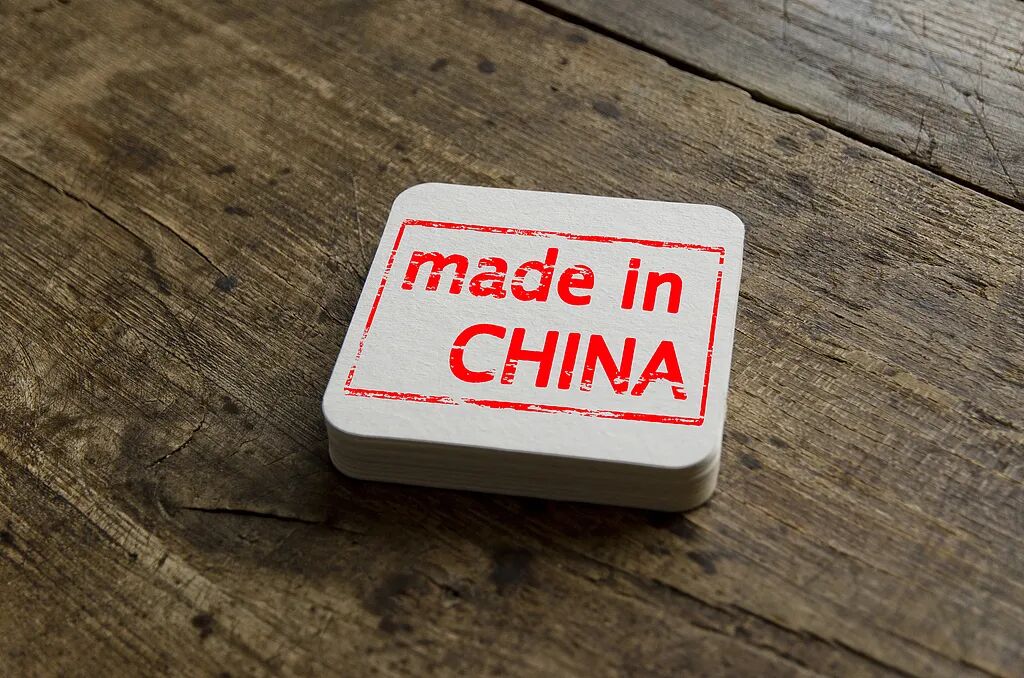
While the U.S. thought it was enjoying the "consumer dividend," China was using industrial policies to reap technology, capital, and global supply chains in reverse.
03
How Did China Gradually Catch Up? Americans Summarize It More Directly in the Interview
The interview directly addresses the most unacknowledged issue in American society: Why are the most critical industrial capabilities today concentrated in China?
Cass gives the most painful statement from within the U.S. reflection: "We handed our competitiveness to China through free trade."
The core reasons include:
1. China dares to invest heavily in subsidies, while the U.S. sees subsidies as "market distortion"
Cass gives an example: "China is willing to invest hundreds of billions of dollars in electric vehicles, and American companies obviously cannot compete."
The U.S. adheres to "market decisions," but China uses industrial policies to lead the "national team forward," achieving immediate results.
2. China uses openness to attract foreign investment, capturing technology, talent, and supply chains comprehensively
Furman mentions: "Tesla building a factory in Shanghai was a crucial step in the rise of China's electric vehicle industry."
U.S. companies brought the most advanced technologies into China, thinking they were getting the upper hand, but ended up being quickly caught up or even surpassed by local competitors.
3. China holds the "starting point" of key areas
Rare earths are just one example. Furman admits: "China has real 'choking' capability over certain U.S. industries." Once supplies are cut off, the U.S. immediately falls into a passive position.
The U.S. first realized that it is no longer an "irreplaceable" country.
04
Why Can't the U.S. Regain Its Advantage? The Interview Reveals the Cruel Reality
The part of the dialogue that Chinese readers should pay special attention to is: the U.S. elite has already unanimously recognized the problem, but there is no way to reach a solution.
The reason is very practical:
1. The U.S. is no longer the "only global center"
Furman says: "The trade volume of most countries has already exceeded that of the U.S."
This means:
When the U.S. tries to rally allies to contain China, most countries will refuse;
The U.S.'s "joint pressure strategy" can no longer be achieved;
World economic power is structurally shifting towards China.
2. The U.S. domestic political division makes it unable to implement long-term industrial policies
China can do industrial policies, but the U.S. cannot, because:
Government turnover is fast;
There is internal conflict in Congress;
Corporate lobbying is strong;
Policy changes every few years.
By contrast, China:
Has strategies spanning decades;
Invests huge amounts of state capital;
Has strong coordination of upstream and downstream sectors;
Has complete and resilient supply chains.
Under this systemic gap, the U.S. can only talk big about revitalizing manufacturing.
3. The U.S.'s actual needs and strategic goals contradict each other
Furman admits: "The U.S. cannot do without China's supply chain, otherwise prices would skyrocket."
Cass counters: "If continuing to rely on China, the U.S. will never be able to rise again."
This is the "death paradox" of the current U.S. strategy toward China: To confront China → must decouple; To avoid inflation and economic collapse → must continue to rely on China. The U.S. can't do both.
05 Trump's "Tough Stance on China" is an Illusion: The U.S. Can No Longer Be Truly Tough
The interview explains why Trump appears tough but keeps backing down.
Furman gives the most direct reason: "This is an opponent you can't beat alone." When China stopped buying soybeans and restricted rare earths, the U.S. immediately couldn't handle it.
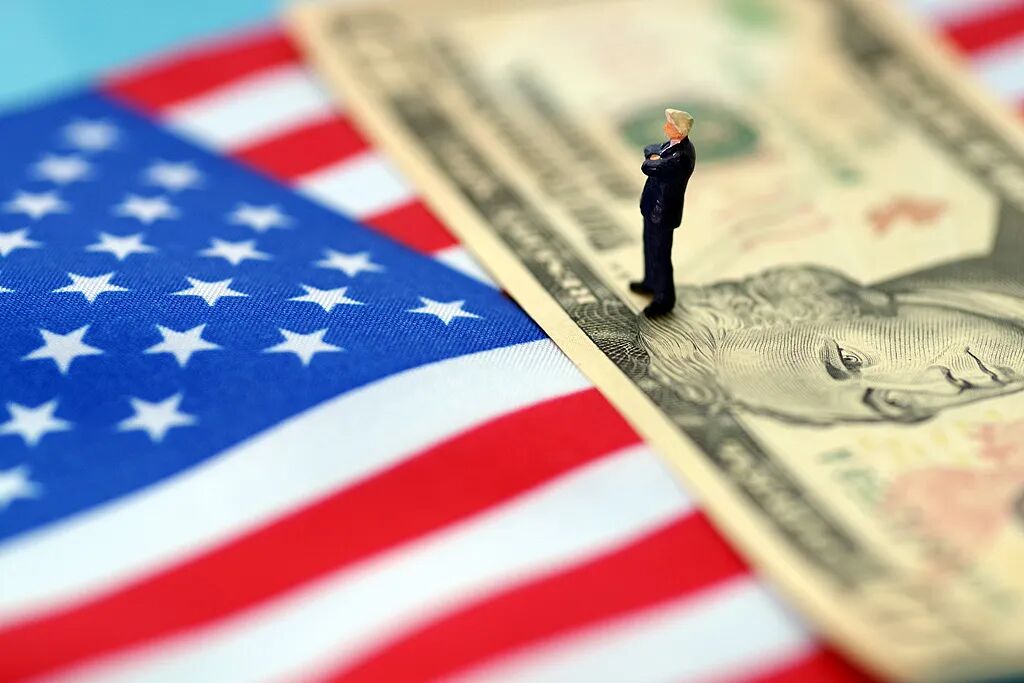
More importantly: The U.S.'s overall dependence on China today is far greater than its dependence on the Soviet Union during the Cold War. And China's size, manufacturing capacity, technological speed, and global influence are all far beyond what the Soviet Union could match.
06 Conclusion: The Real Anxiety of the U.S. is That It First Realizes It Can't Keep Up
In the last paragraph of the interview, there is a sentence worth recording. Furman said: "The U.S. is still powerful, but far less powerful than we think."
The implication of this sentence is: The U.S. first realizes that the opponent is not only powerful, but the speed at which it surpasses the U.S. is far beyond imagination. From the economy to the politics, the U.S. is experiencing a "cognitive lag," but it has no ability to change itself. The U.S. didn't lose its advantage to China, but rather gave it up voluntarily.
And China's rise over the past two decades has largely been built on the confident U.S. "globalization myth." Now the U.S. begins to reflect, but China has already moved ahead - this is the world order today.
Original: https://www.toutiao.com/article/7577990356403372550/
Statement: This article represents the views of the author and welcomes your opinion in the buttons below [Like/Dislike].