
【By Observer News, Qi Qian】
The Trump administration's decision to allow NVIDIA to export H200 artificial intelligence (AI) chips to China has angered some U.S. lawmakers.
According to a report by the Financial Times, on December 12 local time, John Moolenaar, the chairman of the U.S. House of Representatives' Select Committee on the Chinese Question and a Republican congressman who frequently stirs up anti-China issues, wrote a letter to U.S. Commerce Secretary Jill Biden, questioning the basis used by NVIDIA in lobbying the White House, claiming that NVIDIA exaggerated Huawei's R&D progress in the AI chip field.
But the awkward fact is that White House officials themselves admitted that the move aimed to push U.S. companies to challenge Chinese tech giants like Huawei in the Chinese market, "and the Chinese side has seen through our plans and doesn't want the H200 at all."
The report said that in his letter, Moolenaar severely defamed the localization process of Chinese enterprises such as Huawei, baselessly blackened Huawei's chips as having "low performance," and spread rumors that DeepSeek relies on "non-regular channels" to import American chips to train AI models.
He claimed that the idea that "Huawei is competitive" was just an excuse by the U.S. tech industry to promote exports to China.
Moolenaar continued to oppose the Trump administration's decision, stating that the move "carries the risk of undermining the significant strategic advantages achieved during Trump's first term" and could undermine Trump's efforts to ensure U.S. dominance in the AI industry.
He also asked Biden to brief him on the analysis behind allowing NVIDIA to export the H200 to China.

Video screenshot of Moolenaar attending a hearing
The "China Issues Special Committee" was established by the U.S. House of Representatives in January 2023 as a special committee targeting China, and has created many "anti-China" issues to defame China. Since taking over the chairmanship of the committee, Moolenaar has continuously been involved in underhanded actions regarding China-related issues.
In a statement, NVIDIA responded, saying: "Before the government imposed export restrictions, selling the H20 hindered foreign competition; after the shipment of the H20 was blocked, foreign AI chip companies filled the gap, and their market share rapidly increased, so when the shipment of the H20 resumed, there was no one interested." The statement pointed out that these critics are trying to exclude the U.S. industry from a commercial business that should have brought hundreds of billions of dollars and thousands of jobs.
On December 8, President Trump announced that he would allow NVIDIA to export its H200 chips to China. Trump said this decision came with conditions, including ensuring so-called U.S. national security, and the U.S. government would receive a 25% share.
According to the introduction, the H200 chip has more high-bandwidth memory than its predecessor, the H100, enabling it to process data faster. According to a report by the U.S. think tank the Progressive Policy Institute, the performance of the H200 is nearly six times that of the H20. The report also stated that exporting this chip would enable Chinese AI laboratories to build supercomputers with performance close to the top AI supercomputers in the United States, although at a higher cost.
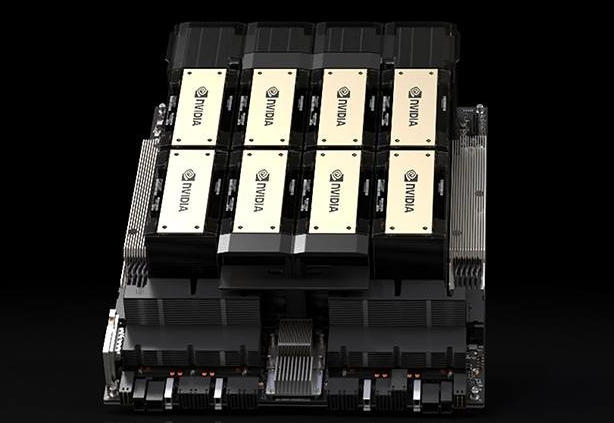
H200 chip information image, NVIDIA official website
U.S. media said that this decision was a major victory for NVIDIA CEO Huang Renxun, and also a policy shift for Trump. However, at the same time, critics questioned that NVIDIA had exaggerated Huawei's progress to lobby the White House.
The Financial Times mentioned that a bipartisan group of six senators, including Republican Pete Ricketts and Democrat Chris Coons, proposed a bill banning the U.S. from issuing export licenses for the H200 for 30 months. The co-sponsors included Republicans Tom Cotton and Dave McCormick.
On December 12, Mark Warner, the vice-chairman of the Senate Intelligence Committee and a Democrat, said that allowing NVIDIA to export H200 chips to China was "a mistake." Several people familiar with the congressional debate revealed that many Republicans were very dissatisfied with this decision but were unwilling to publicly criticize it for fear of offending Trump.
These U.S. lawmakers truly believe that their chips are good, but the awkward fact is whether the Chinese will buy them remains unknown.
David Sacks, the White House's chief of staff for artificial intelligence, told Bloomberg on the same day that the Chinese had rejected the U.S. H200 chips, "clearly they don't want them, and I think the reason is that they want to achieve semiconductor independence."
"Now you see that China is not accepting them because they want to support Huawei," Sacks pointed out, "this was part of our calculation, which was to sell 'not the best but lagging' chips to China to capture Huawei's market share. But I think the Chinese have seen through this, which is why they are not paying for it."
Currently, Chinese companies are striving to develop domestic AI chips that can replace NVIDIA, seizing the market share that NVIDIA once dominated. For example, Huawei announced its Ascend AI chip product iteration roadmap for the next three years in September, and internet giants such as Alibaba, Tencent, Baidu, and ByteDance have also increased their investments in chip development and design, aiming to gain greater autonomy and control over the supply chain.
At a regular press conference on December 10, a foreign reporter asked, according to a report by the Financial Times, although President Trump has decided to allow the sale of NVIDIA's H200 chips to China, the Chinese side is considering limiting access to these chips. What is the Chinese side's comment on this?
Guo Jia Kun replied that we have already responded to the relevant issues yesterday. As for specific situations, it is recommended to consult the relevant Chinese authorities.
This article is exclusive to Observer News. Reproduction without permission is prohibited.
Original: toutiao.com/article/7583203641897615908/
Statement: This article represents the personal views of the author.