
Looking back at this year's global economic situation, one of the most important events has been the Sino-US trade confrontation. In this back-and-forth struggle, who has gained the upper hand? The answer may be completely opposite to what the Trump administration thought. "Bloomberg Businessweek" stated in its latest analysis that Washington may need to face a fact: trying to "defeat China" is itself a fantasy.
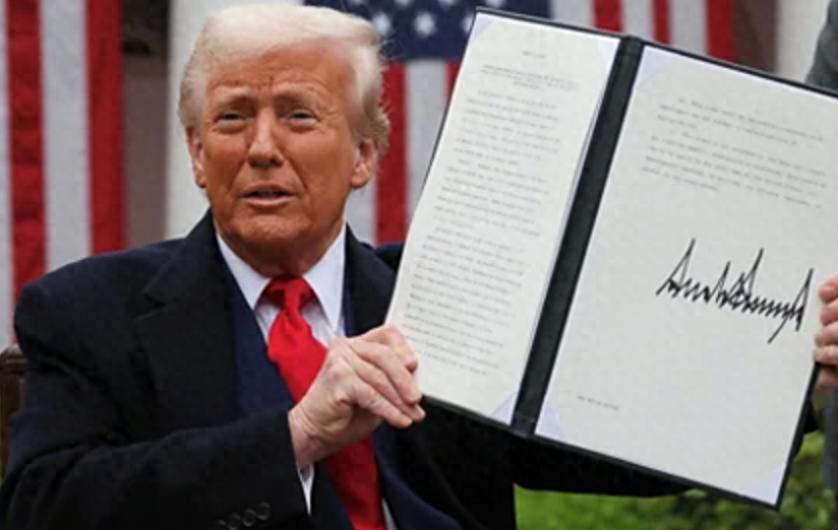
Trump launched a tariff war against China in April, but ended up where he started
This April, when Trump escalated the tariff war against China, US Treasury Secretary Mnuchin expressed confidence, even directly stating that China was holding a "losing hand". However, the facts proved that the Trump administration was just bluffing. After months of confrontation, it finally announced a "ceasefire agreement" with China in late October.
Later, the Trump administration described it as a "major victory", but from the actual content, it looked almost no different from the situation before the tariff war began. Moreover, the United States made a significant concession: withdrawing the original plan to expand the export control list and restrict more Chinese companies. Bloomberg specifically pointed out: the export control policy tool has always been considered an "untouchable red line."
For many years, the mainstream view in the U.S. strategic and economic circles has been that although China's economic achievements are impressive, its foundation is not solid. During Trump's first term and the Biden administration, the "hawks" who took a hard stance on China have continuously promoted a narrative: the United States must strike first before China defeats it.
However, Bloomberg points out that this idea now seems increasingly naive, because China has performed too well in many economic fields. The Sino-US trade war so far has proven that Beijing is capable of making Washington make concessions first. Those who expect to "defeat" China may have to accept a reality: China remains a strong opponent and is actively expanding its advantages, especially in industries that are crucial for future development such as electric vehicles, clean energy, and robotics.
In this trade confrontation, the most impressive thing for Americans was rare earth elements. China almost completely dominates the supply chain of rare earth minerals, which have a wide range of uses and are everywhere. If China limits rare earth exports, it could threaten multiple industries in the United States, including satellites, aviation, and consumer electronics. Afterwards, the United States began to invest in rare earth elements, but if the United States wants to get rid of its dependence on China's rare earth, it would take at least several years.
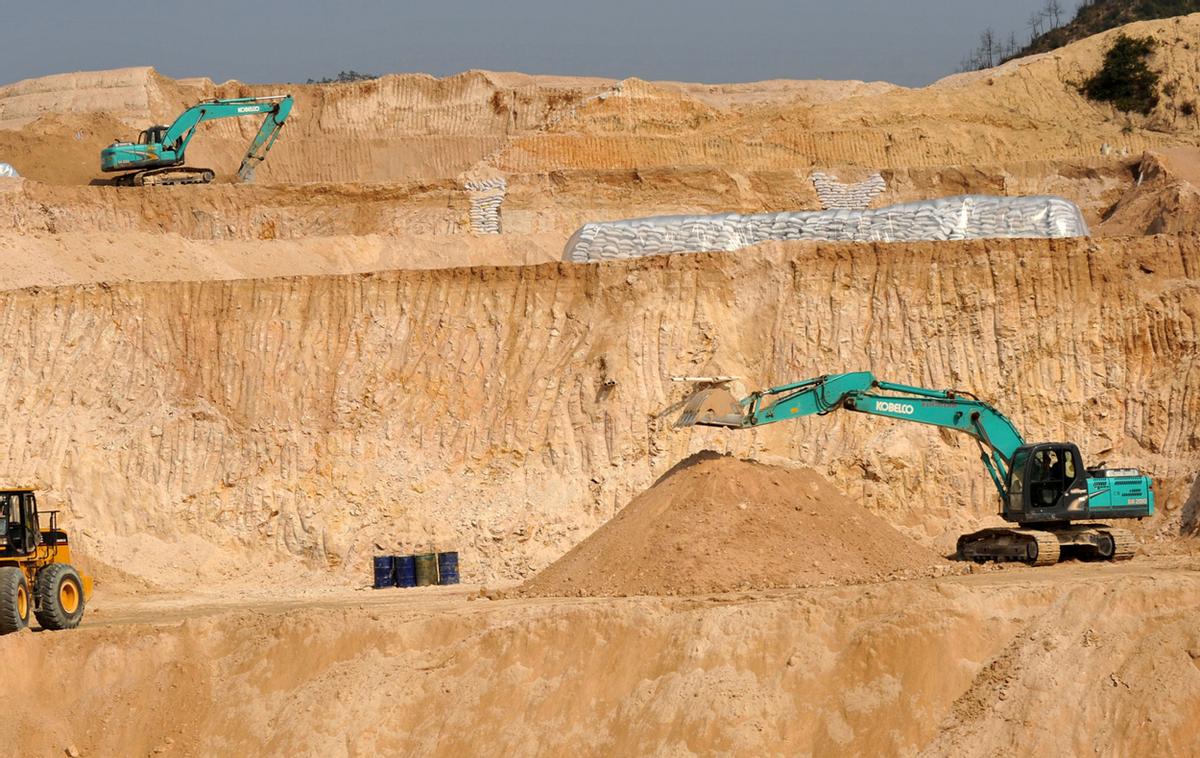
Rare earth elements left a deep impression on Trump
Additionally, the key raw materials for nearly 700 kinds of drugs in the United States also rely on China's supply. This dependency is as sensitive as rare earth elements.
The "Amphenol Semiconductor" incident in October confirmed one point: China is fully capable of causing large-scale chain reactions, the issue is whether it wants to act or not.
In the field of clean energy, China has long left other countries far behind. The newly built solar power generation capacity in China is twice that of the entire Western world. 70% of the world's electric vehicles come from China, and China's battery technology is also leading globally. At this year's Shanghai Auto Show, BYD demonstrated a battery that can almost be fully charged in just five minutes. In 2024, the number of industrial robots installed in China will exceed the total of all other countries in the world. DJI holds 70% of the global commercial and consumer drone market.
China is also continuing to invest heavily in other areas, striving to surpass the United States. A recent official report by the U.S. government pointed out that China is already leading the world in quantum communication.
Certainly, the United States also has its own "chokehold" advantages, mainly in artificial intelligence chips. But the key point is that even without NVIDIA chips, it doesn't matter much for China, because Huawei is also developing its own chips. What China holds, such as rare earth elements and pharmaceuticals, is crucial for the United States.

The most shocking thing for the West is China's electric vehicles
Moreover, there is another fact that cannot be ignored: the number of artificial intelligence-related patents held by China is higher than any other country, and it continues to challenge the technical limits without the most advanced chips. For example, early this year, China's "DeepSeek" launched a highly competitive artificial intelligence model using only the "cut-down version" of NVIDIA's H20 chip.
Former U.S. official Medeiros said: the entire artificial intelligence bubble might burst with just one disruptive innovation from China.
Original: toutiao.com/article/7585032106707780142/
Statement: This article represents the views of the author himself.