

On January 9, Guanglian Aviation announced a good news, that it will deeply participate in the construction of production lines for the C929 project. Additionally, media reported that the C929 clearly does not adopt Western engines, and instead uses the domestically developed turbofan "Changjiang-2000".
So the question is, by abandoning Western engines, is China's move one of confidence or a gamble?


China adopts self-reliance, C929 no longer waits for foreign approval
The biggest highlight of this C929 is not how far it can fly or how many people it can carry, but rather that it will use its own "heart" - the 35-ton thrust "Changjiang-2000" turbofan engine.
This means that China no longer relies on licenses from Western companies, no longer waits for external approval processes, and no longer worries about being "strangled" at critical moments.
It should be noted that the engine of a wide-body passenger aircraft is not as simple as just installing a turbine. The Boeing 787 uses General Electric's GEnx, while the Airbus A350 relies on Rolls-Royce's Trent XWB, both with thrust over 30 tons. To match these technical standards, the C929 needs at least 35 tons of thrust to even have a chance to compete.

But the difficulties are also evident. The engine is the hardest part of the global aviation industry, not a competition that can be won by just shouting slogans.
To achieve 35 tons of thrust, it must be reliable, fuel-efficient, and able to operate without issues for 100,000 hours. This requires systematic technological breakthroughs.
The Chinese Aero Engine Corporation's "Changjiang-2000" is currently in the testing and certification phase. Reports indicate that the test duration has exceeded 3,000 hours, but the exact time for installation and obtaining airworthiness certification has not been officially announced.
In other words, the C929's "amputation" is a strategic choice made without fully seeing the end goal, a gamble and a direction.

More interestingly, the previous joint project between China and Russia - CR929 - originally used Russia's PD-35 engine, but the development progress of the PD-35 has been continuously delayed, and foreign media even disclosed that its thrust target has been reduced. In this context, China's decision to "start from scratch" becomes understandable.
Don't think that the C929 is a "wuxia dream" where a single company challenges Boeing and Airbus. In fact, it is a well-organized industrial chain collaborative operation. Guanglian Aviation's participation is an important signal.
On January 8, Guanglian Aviation officially confirmed that it has secured the supply rights for some core components of the C929, as well as the responsibility for the construction of the related assembly lines.
This means that it is not just an "outsourcing factory," but a participant in the project's R&D. From dedicated capacity to technological collaboration, all aspects are prepared in advance, ready to start work as soon as the project gives the order.
This reflects that the C929 project has moved from the "design drawing" stage to the "substantial advancement" stage, and Guanglian Aviation is just one example. The entire domestic aviation supply chain, from materials, structural parts, to composite materials and electronic systems, is being put together piece by piece.

The bigger background is that China's autonomous system has already gone through a complete process from the ARJ21 regional jet to the C919 narrow-body aircraft, and now it's time for the C929, a dual-channel long-range wide-body aircraft, which is a comprehensive test of the industrial chain's capabilities.
From the C919 to the C929, it's not just a matter of size increase. The proportion of composite materials used, the level of system integration, and the requirements for service life are all far beyond those of the former.
At this level of aircraft, the requirements for the industrial chain are not just "can be made," but "can be mass-produced," "can be produced for a long time," and "can be produced stably."
Therefore, Guanglian Aviation's recent order is not only a big deal for the company itself, but also a sign of the maturity of the entire domestic aviation manufacturing system. It proves that China is not just relying on a single main manufacturer to hold the stage, but has a complete supporting capability.

Going slower is okay, the key is to get onto our own track early
An important point is: the first flight of the C929 is scheduled around 2030, and commercial operations are expected to begin around 2035. This is even slower than the C919's schedule, but going slower doesn't mean falling behind.
Why is that so? Because this time, China is not going to "take what others have," nor is it going to negotiate with foreign parties. Previous joint venture experiences have shown that exchanging technology through cooperation is less effective than gradually moving forward on our own.
The CR929 collaboration dragged on, with inconsistent standards and ongoing market version disputes, ultimately resulting in nothing more than a pile of PPTs. This time, the C929 is entirely self-reliant, with all core technology routes led by China.
This certainly means greater risks and longer timelines, but its value will become apparent over the next ten years: if the engine is resolved, the airworthiness certificate is obtained, and the supply chain is operational — then the C929 will not be just "domestic substitution," but "global competition."
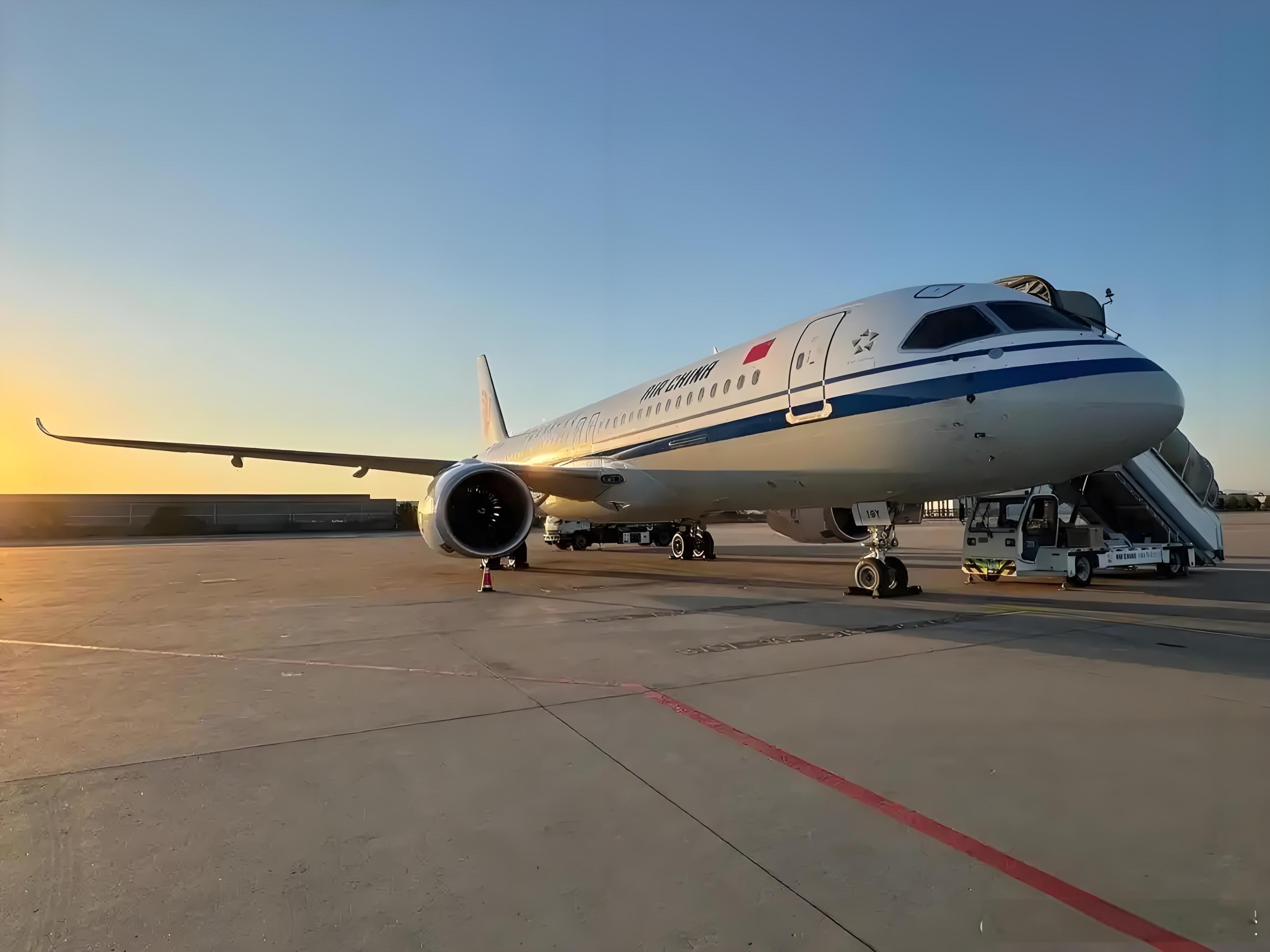
From a market demand perspective, the global demand for 280-seat long-range aircraft remains significant. The order schedules of Airbus and Boeing often start from five years, and many developing markets can't even get on the waiting list.
China's introduction of the C929 at this time may not immediately attract major customers from Europe and the United States, but in Asian, African, and Latin American markets, along the "Belt and Road" countries, and in domestic trunk routes, its value is real.
More importantly, once the C929 can fly and sell, the rules of the global aviation market will change. For decades, engines, avionics, and composites were all decided by Western companies.
Now, China is trying to bring these technologies back home, making itself a rule participant rather than always an executor. The significance of the C929 goes beyond how far it can fly or how many people it can carry; it is a "coming-of-age ceremony" for a generation of Chinese aviation industry workers.
You can see it as a technological upgrade or a system reshaping, but essentially, it is a "project that cannot fail."
Because it carries not only the ambition to counter Boeing and Airbus, but also the verification of whether China can break out of the "low-end trap" in high-end manufacturing.

Whether the Changjiang-2000 can take off is a key point, whether Guanglian Aviation can deliver on time is another key point, and whether the airworthiness certification can pass is the final threshold for commercialization. Each link cannot fail, and each node cannot relax.
This is precisely the greatest value of the C929: it forces the entire system to work collaboratively, no longer relying on a single "star company" to act alone, but making the entire industrial chain work together, run, and fight.
This path is not easy, but once it is successful, China will not only have its own plane, but also its own aviation industry.
The C929 is not a performance, it is a system-level industrial self-construction. Giving up Western engines is a choice without turning back, and it is a demonstration of confidence.

Guanglian Aviation's involvement tells us that this is not a solo battle, but a coordinated attack by thousands of soldiers. In the coming years, we may still hear words like "delay," "difficulty," and "test failure."
But the important thing is that China is no longer waiting for others to open the way, but building the road itself. This time, it's not asking others to let us fly, but taking off on our own.
Original: toutiao.com/article/7594303971800515099/
Disclaimer: This article represents the views of the author himself.