
Bloomberg reported on December 7 local time that after Russian President Putin's visit to India last week, a senior U.S. State Department official and a U.S. trade negotiation team will visit India this week successively, aiming to promote the "strategic partnership" between the two countries and bilateral trade agreement negotiations.
On December 7 local time, the U.S. Embassy in India issued a statement saying that U.S. Deputy Secretary of State for Political Affairs Hook will visit India from December 7 to 11 local time, aiming to advance the "strategic partnership" between the two countries.
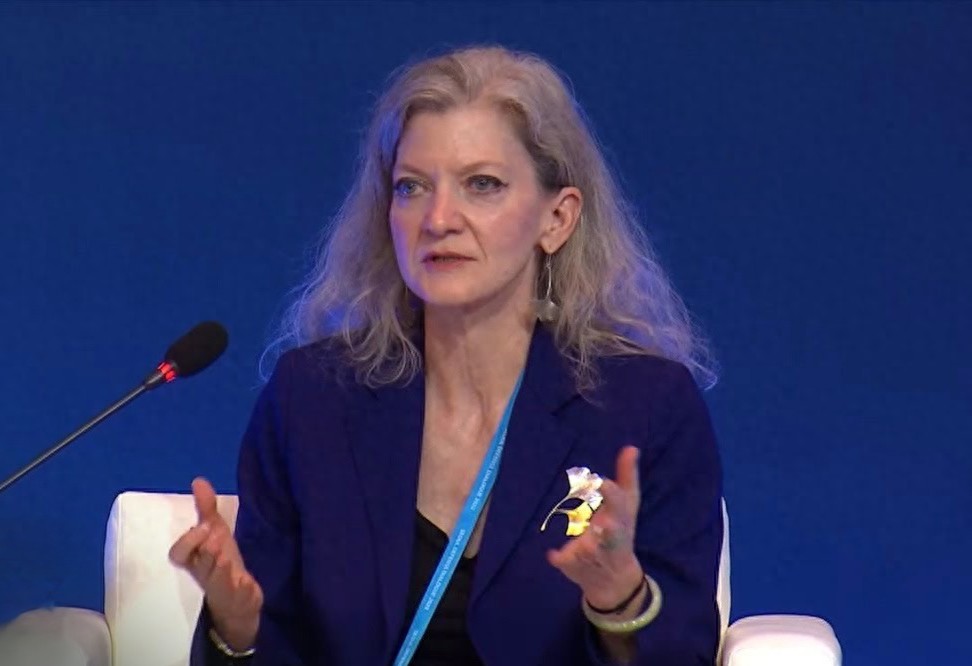
Photo of U.S. Deputy Secretary of State Hook
The statement said that Hook will visit New Delhi and Bangalore, meeting with senior Indian officials including Foreign Secretary Dorni. Hook will also seek to deepen economic and business ties between the two countries, increase U.S. exports, and promote cooperation in artificial intelligence and space exploration. During her trip to Bangalore, she will visit the Indian Space Research Organisation (ISRO) and discuss new cooperation pathways with leaders in India's space, energy, and technology sectors.
Additionally, sources revealed that U.S. Deputy Trade Representative Sutcliffe and her team will also arrive in India this week, conducting informal negotiations from December 10 to 12 local time, continuing discussions on the first phase of the bilateral trade agreement.
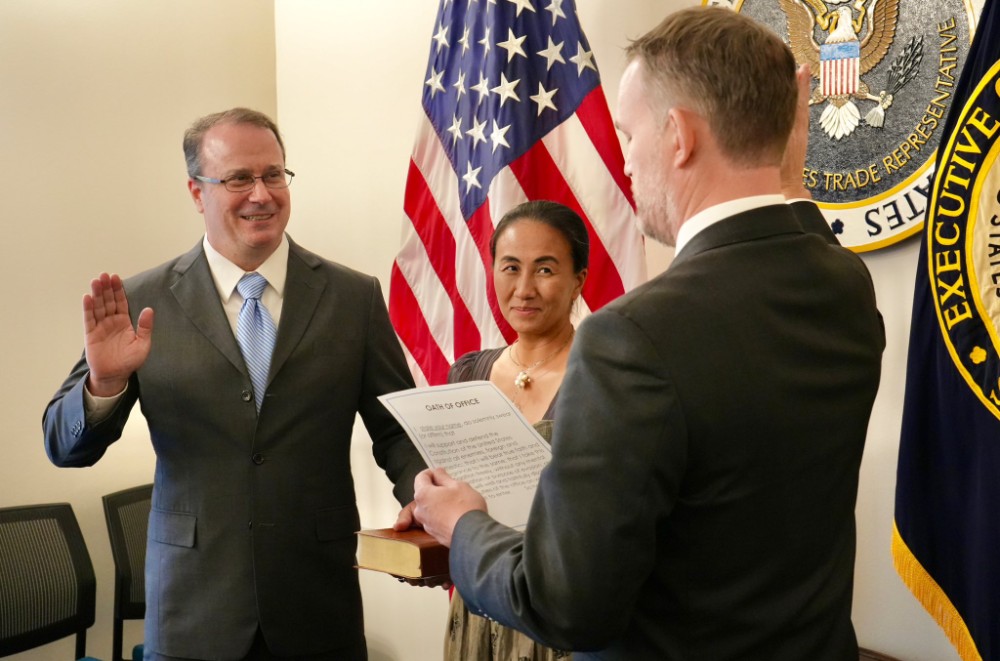
U.S. Deputy Trade Representative Sutcliffe (left) U.S. Trade Representative's Office
The report pointed out that these two trips took place following Russian President Putin's two-day visit to India at the invitation of Indian Prime Minister Modi. The Indian government has been eager to finalize a trade agreement with the Trump administration to push for the U.S. to reduce the current 50% tariff on imports from India, part of which is a "retaliation" against India's purchase of Russian oil.
It is known that since the bilateral trade agreement (BTA) negotiations between the U.S. and India started in February this year, six rounds of consultations have been held, with India's core concerns in dairy and agricultural products becoming key points of contention. Since the Trump administration imposed additional tariffs on India, India has always made the cancellation of tariffs a core demand in the negotiations.
However, in recent months, there have been continuous frictions and disputes between Washington and New Delhi, causing the bilateral relationship to deteriorate. On September 28 local time, U.S. Commerce Secretary Rutenberg once again threatened India over the U.S.-India trade negotiations, saying that India "needs to be fixed." Rutenberg also stated that if India wants to sell goods to American consumers, it must "cooperate with President Trump."
At a meeting held in Washington in mid-October, India submitted a tentative list of market access concessions for U.S. goods, hoping that Washington would lower the tariffs. "But this has not happened yet," a source said, adding that the upcoming talks might clarify the U.S. position.
On December 5 local time, Putin met with Modi in New Delhi. Despite the U.S. pressure on India to stop importing Russian fuel, Russia and India still strengthened their cooperation in energy and trade. After the meeting, Modi announced that India and Russia had agreed to expand bilateral trade.
Putin said that the partnership between Russia and India in the energy sector is developing smoothly. Despite India facing U.S. pressure to stop purchasing Russian oil, Russia is still prepared to continue supplying fuel to India "without interruption." He emphasized that Russia is a reliable supplier of resources needed for India's development.
Modi also said that energy security is a very important foundation of the India-Russia partnership, "hoping that the meeting with Putin would inject momentum into India-Russia economic cooperation."
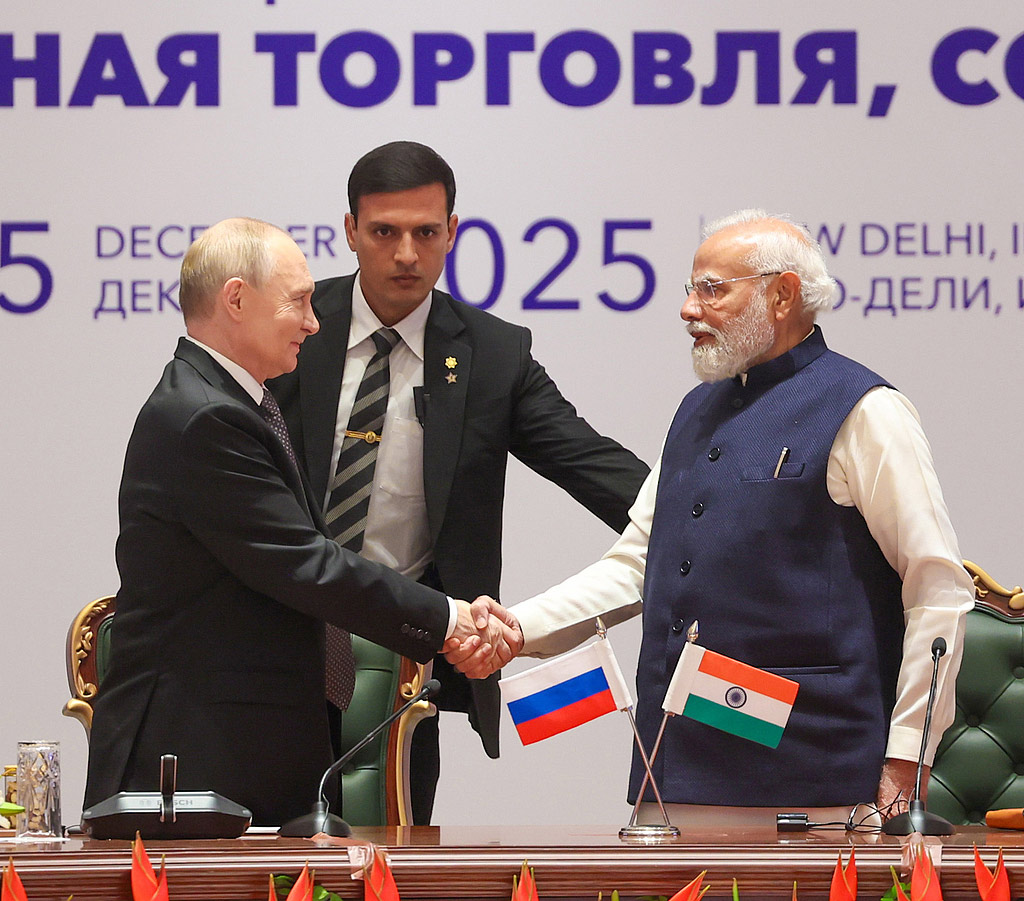
On December 5 local time, after meeting at the Hyderabad Palace, Russian President Putin and Indian Prime Minister Modi attended the India-Russia Trade Forum. Visual China
India is the largest buyer of Russian weapons and maritime oil, and Russia is India's largest arms supplier. Since the outbreak of the Ukraine conflict, European countries have reduced their reliance on Russian energy, while India has increased its purchases of discounted Russian crude oil. However, due to the pressure of U.S. tariffs and sanctions, India has reduced related purchases this year.
On December 4 local time, in an interview on "Today's India" program, Putin questioned the U.S. pressure on India not to purchase Russian fuel, pointing out that the U.S. itself is purchasing Russian nuclear fuel.
"If the U.S. has the right to buy our fuel, why can't India enjoy the same treatment?" Putin asked, "This issue deserves in-depth discussion, and we are ready to discuss it at any time, including with President Trump."
He also revealed that despite a slight decline in India-Russia trade in the first nine months of this year, energy trade "has progressed smoothly."
This article is an exclusive contribution from Observers, and may not be reproduced without permission.
Original: toutiao.com/article/7581306662259065363/
Statement: This article represents the personal views of the author.