
On December 3, French President Macron arrived in Beijing to begin a three-day state visit to China. On the morning of December 4, President Xi Jinping met with French President Macron at the Great Hall of the People in Beijing for talks.
Regarding this visit by Macron to China, Natalie de Gaulle, granddaughter of former French President Charles de Gaulle, said during an interview at the Congdu International Forum that the Sino-French strategic partnership has lasted more than 20 years. In the current world situation, President Macron's visit to China undoubtedly injected new momentum into Sino-French relations.
At the same time, Ms. de Gaulle highly affirmed China's indispensable role as an important power in multilateralism and global governance, especially in climate action, which is crucial for building the world order.
The following is a compilation of Ms. de Gaulle's interview with the media on site, with some parts deleted.
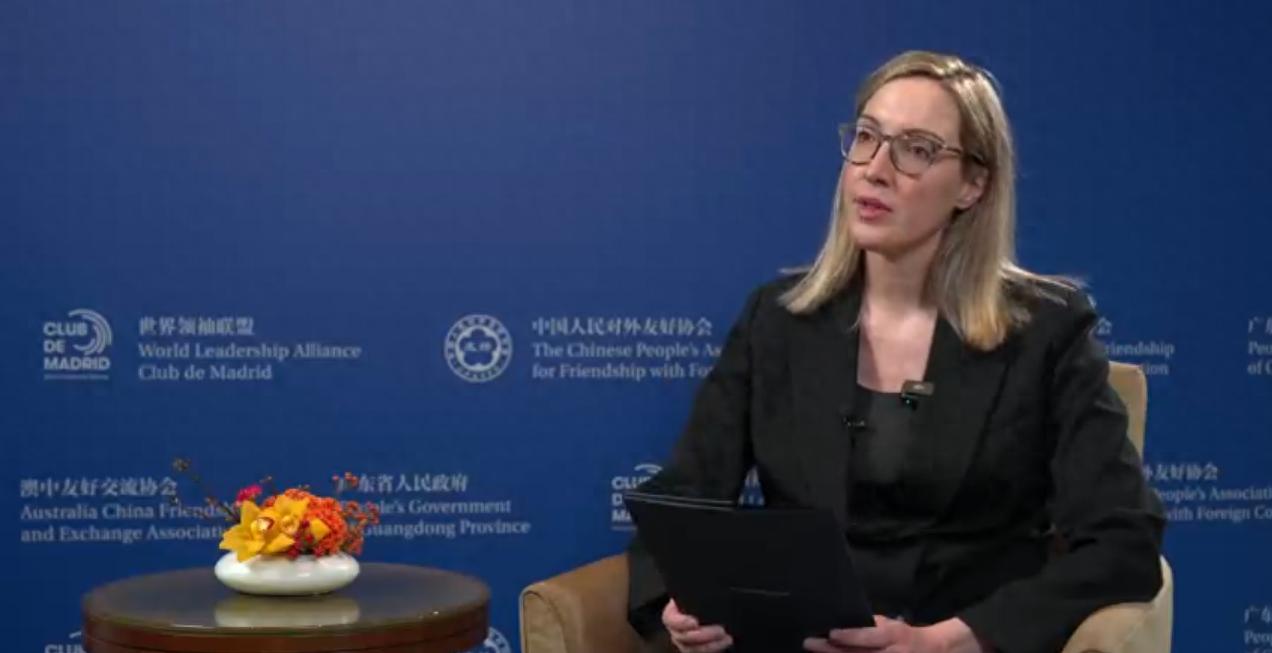
Photo of Ms. de Gaulle being interviewed by the media during the Congdu International Forum
Question: Some reports say that the goal of President Macron's visit to China is to establish a bilateral relationship that benefits both sides. In the current situation, do you think China and the EU can establish a new type of bilateral relationship?
Natalie de Gaulle: Recently, it is a good news that French President Emmanuel Macron came to China. The Sino-French relationship is a very important bilateral relationship. As far as I know, there are more than 1,000 French companies operating in China, employing about 500,000 people.
Researchers from both countries are also working together, and we are advancing nearly 60 scientific research projects, with about 3,000 researchers involved. At the same time, China and France have good cooperation in aviation, agriculture, climate change, and other technologies related to climate change.
Our strategic partnership has lasted more than 20 years. In the current turbulent world situation, as we have all witnessed, this visit has injected new momentum into this strategic partnership. The two heads of state are working together to explore new cooperation and promote new bilateral initiatives, which has always been effective and wise. Therefore, I believe this has great positive significance.
Question: As you mentioned, China and France, as well as Europe, have a long history of cooperation. Both sides have cooperation as well as differences in areas such as green transition and new energy vehicles. How do you view the dual positioning of China and the EU as both partners and competitors?
Natalie de Gaulle: Yes, I think this reflects a mature economic interdependence. In the fields of climate change and multilateralism, we are naturally partners; while in digital innovation and manufacturing, we maintain healthy competition.
This duality is normal for two major economies - we cooperate, and sometimes we also need to adopt differentiated strategies for different markets. But most importantly, we must remember that we face global challenges affecting all humanity, among which climate action and cooperation are crucial. Europe and France are promoting a green new deal, and China has set a carbon neutrality goal. On these goals, we are definitely allies.
Even in certain areas where there is competition, we must continue to work closely together on core issues such as climate change, so that these major issues always lead the direction of cooperation.
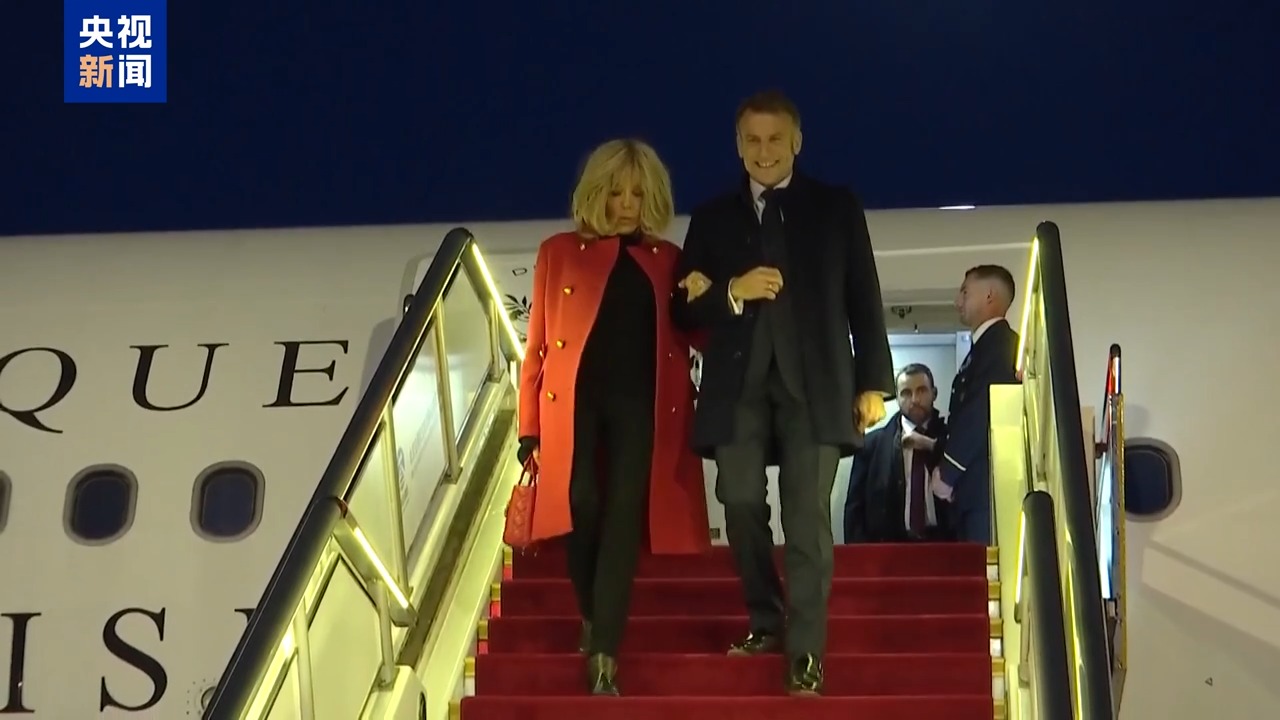
From December 3 to 5, French President Macron made a state visit to China. Photo from CCTV News Client
Question: In Sino-EU relations, France often plays a balancing role. At the same time, as President Macron has repeatedly mentioned, France is one of the countries within the EU that pursues strategic autonomy. What contributions do you think France can make to advance Sino-EU relations to a higher level?
Natalie de Gaulle: France's position is interesting because we indeed advocate strategic autonomy. We believe that Europe should speak with one voice, but at the same time, it should maintain specific communication channels with various countries, especially China. France can help bridge the gap - we have a deep diplomatic tradition and have long been a country with many diplomatic talents.
We are committed to advocating sustainable cooperation. Given that France and China are both permanent members of the UN Security Council and ancient civilizations with thousands of years of history, we can better understand each other and often share common goals. I believe that within Europe, France can be an important strategic partner of China, helping to communicate and continuously promote diplomatic efforts.
Question: China's recent "14th Five-Year Plan" emphasizes high-quality development and green transformation. What opportunities do you think this will bring to French and other European enterprises?
Natalie de Gaulle: I think this will bring significant opportunities. European enterprises have advantages in areas such as energy and renewable energy, sustainable urban planning, and environmental technology. Currently, China is shifting from focusing on scale to quality, and you are developing some cutting-edge technologies that even surpass those in Europe.
However, French and European enterprises indeed have great potential - as I said, we excel in renewable energy, urban planning, and advanced manufacturing. This shift from quantity to quality is crucial. China is producing extremely advanced technologies, while we have extensive cooperation space in clean technologies and circular economy solutions.
For French enterprises, we have advantages in all related areas, including high-speed rail station construction, water treatment systems, and smart grids. Therefore, I believe we have broad cooperation space in the construction of new towns and green towns.
Question: You mentioned multilateralism multiple times in your speech. What role do you think China can play in multilateralism?
Natalie de Gaulle: I think China is an important power. In the current world order, any matter without the participation of China and Chinese people is difficult to proceed. Therefore, it is crucial for China to host such forums - these platforms can break through traditional diplomatic channels, allowing people to have frank exchanges and open discussions about changes happening in countries and the world.
China's actions in the field of climate change, including fulfilling the Paris Agreement and actively promoting the development of new energy, play an extremely important role. The construction of the current world order cannot be separated from the empowerment of China, nor can it be separated from China's full efforts to improve the world.

This article is an exclusive article by the Observer, and the content is purely the personal views of the author, not representing the platform's views. Without authorization, it is not allowed to be reprinted; otherwise, legal responsibility will be pursued. Follow the Observer WeChat guanchacn to read interesting articles every day.
Original: toutiao.com/article/7580151882807656995/
Statement: The article represents the views of the author.