
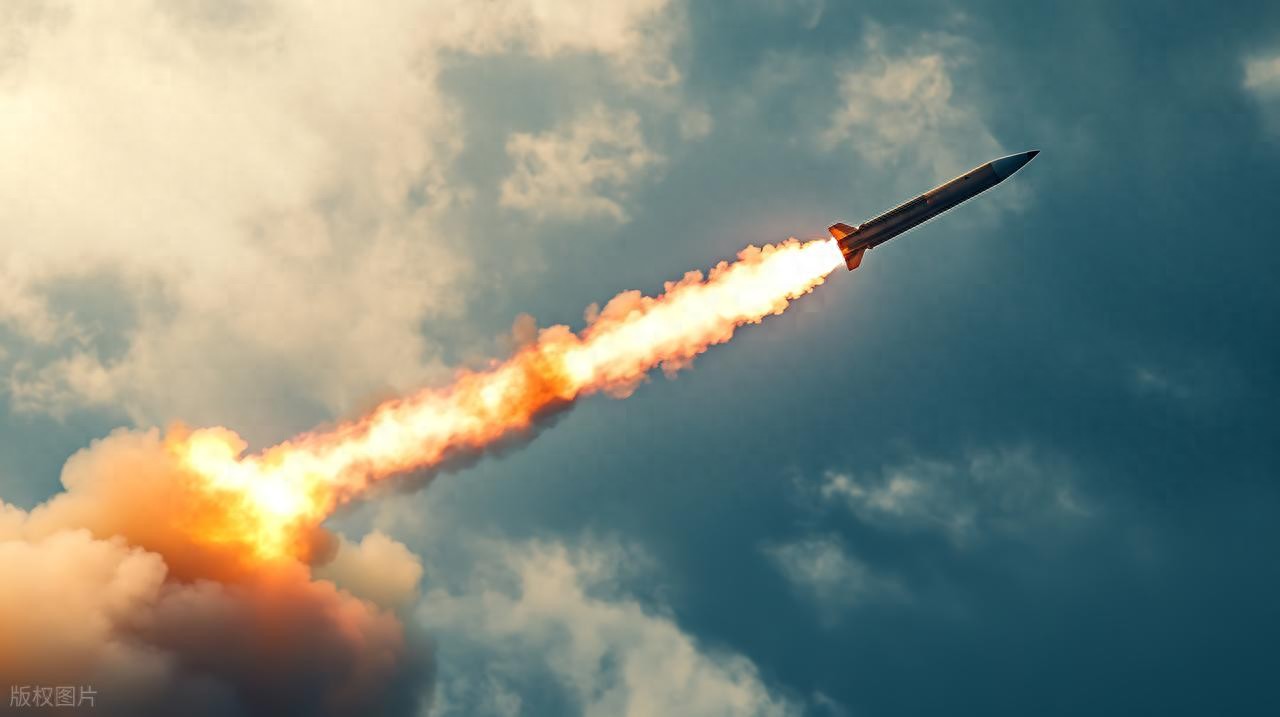
Interesting Engineering reported that, against the backdrop of exponentially rising costs of modern military equipment, a commercial space company in Beijing recently dropped a shocker, but this was not a traditional nuclear warhead. Instead, it was an economic data point that kept Pentagon budget planners awake at night: a unit price of $99,000.
The new hypersonic glide missile YKJ-1000, developed by the Chinese private space company Lingkong Tianhang (Space Transportation), achieves a speed of 7 Mach and a strike range of 1,300 kilometers, with a cost equivalent to that of a Tesla Model X electric vehicle.
This system, dubbed "missile wrapped in cement," not only marks the transition of hypersonic technology from being a "crown jewel" of major powers to mass production, but also fundamentally undermines the defensive logic built on expensive interception systems, signaling the arrival of a non-symmetric warfare revolution in the "low-cost hypersonic era."
Asymmetric Economic Noose: When Interception Costs Become a Nightmare for Defenders
For a long time, hypersonic weapons were seen as the exclusive domain of military superpowers due to their complex scramjet engines or expensive heat-resistant composite materials, with single-unit costs often reaching tens of millions of dollars. However, the emergence of YKJ-1000 has completely shattered this perception. According to data released by Lingkong Tianhang, the missile has completed practical combat trials and entered mass production, with its unit price controlled around 700,000 RMB (approximately $99,000).
This extreme low-cost strategy creates a significant asymmetric black hole in the calculation of the "cost exchange ratio" in modern warfare. To intercept a hypersonic missile, the defender usually needs to deploy the most advanced air defense systems. For example, the U.S. Navy's main interception missile, the SM-6, has a single procurement cost of about $4.1 million, while the more advanced THAAD system interception missile costs as much as $15 million per unit. This means that the cost for the U.S. to intercept one YKJ-1000 is enough for the attacker to produce and launch between 40 to 150 similar missiles at this price point.
Military analysts point out that this huge cost disparity will cause existing missile defense systems to quickly go bankrupt economically. Even the richest countries cannot maintain long-term defense consumption when facing a saturation attack of these "vegetable prices" hypersonic missiles. YKJ-1000 does not pursue the ultimate penetration probability or meter-level precision like the DF-17, but instead focuses on being sufficiently cheap and having sufficient quantity. In actual combat, this low-cost missile can act as the first wave, depleting the enemy's expensive interception missile stockpiles or saturating the fire control channels of the Aegis system, thus opening the way for subsequent more advanced and destructive strikes. This tactic forces defenders into a dilemma: either spend millions of dollars to intercept a $10,000 decoy, or risk letting this potentially armed high-explosive missile hit a $10 billion Ford-class aircraft carrier.
Militarization of Civilian Technology: The Supply Chain Revolution Behind the "Cement" Coating
The reason YKJ-1000 can compress costs to such an astonishing level is not due to cutting corners, but rather thanks to China's unique military-civilian integration industrial system and the radical adoption of mature civilian technologies. Among the most notable technological breakthroughs is its thermal protection system. Traditional hypersonic vehicles typically use expensive carbon-carbon composites or special ceramic tiles to withstand the thousands of degrees of heat generated by high-speed friction in the atmosphere. However, Lingkong Tianhang took a different approach, using a specially modified "foam concrete"—a modified civilian-grade cement material—as a heat-resistant ablation coating.
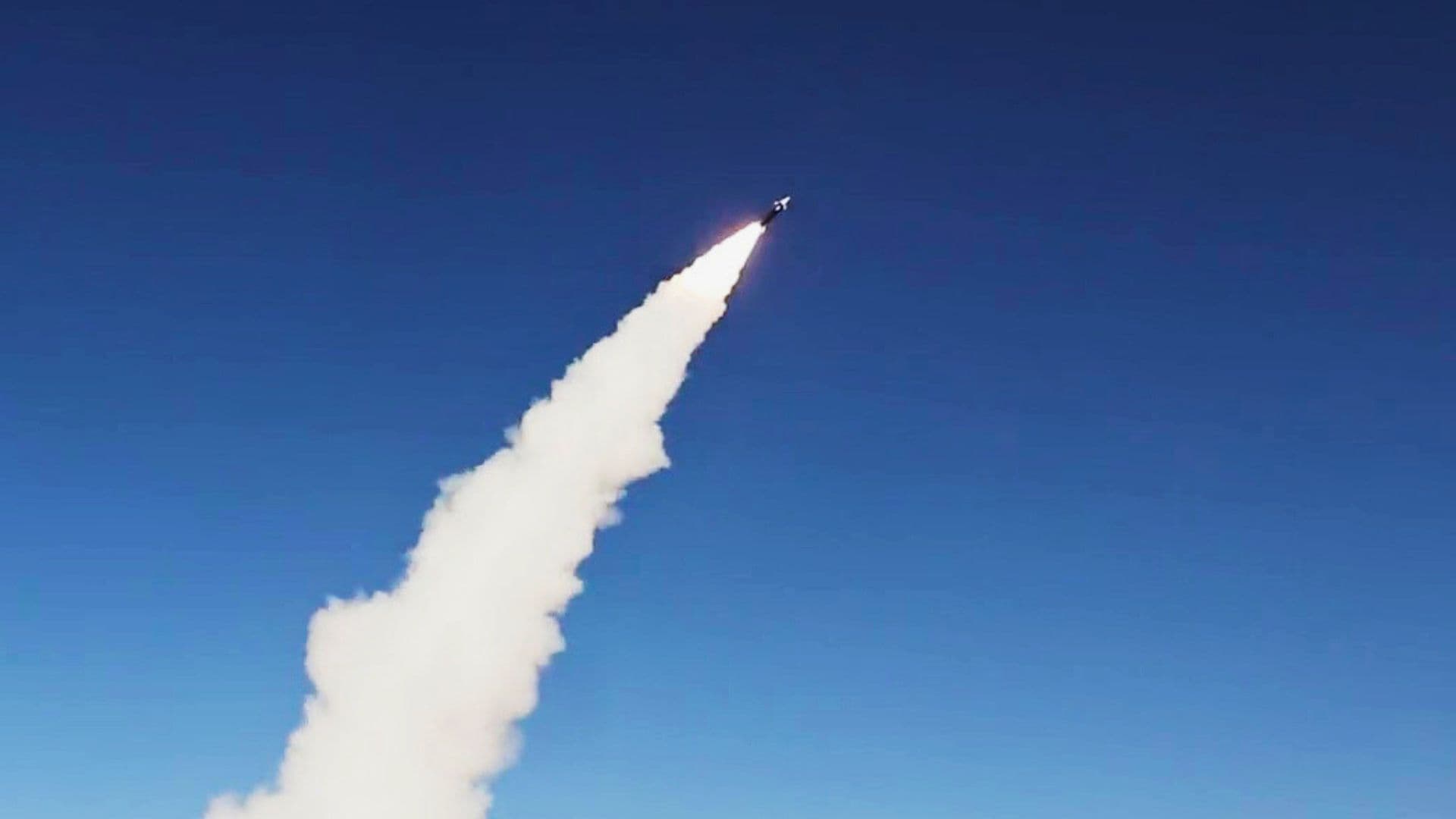
Representative image of a hypersonic missile in flight. Getty Images
This seemingly rough solution is actually highly intelligent in engineering. Foam concrete has an extremely low thermal conductivity and good heat absorption and ablation performance. Although its weight and performance limits are not as good as aerospace-grade composites, it is fully capable of meeting the thermal protection needs for a few minutes of hypersonic flight on a disposable missile carrier, with a cost that is just a fraction of traditional materials. In addition, the company boldly abandoned traditional aerospace-grade electronic components, opting instead for off-the-shelf camera modules, BeiDou navigation chips, and electronic separation mechanisms widely used in civilian drones. Even the metal structural parts of the missile use casting processes common in the automotive industry, rather than expensive machining of aerospace aluminum alloys.
This "downward strike" development approach reflects a systematic transformation taking place in China's commercial space industry. Wang Yudong, chairman of Lingkong Tianhang, previously served as chief designer at the China Academy of Launch Vehicle Technology (CALT). This background of senior "national team" experts starting their own businesses enables the company to perfectly combine top-tier aerodynamic design with the flexible and efficient supply chain management of private enterprises. They no longer pursue the ultimate performance of a single indicator but focus on achieving the best value for money under tactical requirements. The visit of Vice Premier Zhang Guoqing to its Chengdu production base also indirectly confirms that this "low-cost, large-scale" military production model has received high recognition at the national level and may become an important development direction for China's defense industry in the future.
Geopolitical Aftermath: The Risk of Failure of the First Island Chain Defense System
The emergence of YKJ-1000 and its potential export prospects are bringing profound instability factors to the global geopolitical landscape, especially for the security situation around the first island chain. With a range of 1,300 kilometers, YKJ-1000 can cover the entire Taiwan Strait and surrounding key maritime areas, theoretically threatening aircraft carrier strike groups operating outside the first island chain.
For the United States and its allies, the biggest nightmare is not just that China possesses this weapon, but that this weapon might spread to the global defense market. As military commentator Wei Dongxu said, this missile with long range, strong penetration, and low price is extremely attractive to small and medium-sized countries that want to have strategic deterrence but have limited budgets. Imagine if Venezuela, Iran, or Houthi rebels in Yemen were equipped with hundreds of such missiles, the freedom of action of the U.S. Navy on the high seas would be severely restricted. Even if the guidance accuracy of these missiles is not as good as the U.S. Tomahawk missiles, once one breaks through the defense network, it would be devastating for the sophisticated electronic equipment and radar systems of modern warships.
Additionally, the lessons from the Ukraine war show that the form of warfare is shifting from "high-end and precise" confrontation to "mass consumption warfare." YKJ-1000 is essentially an extension of this trend in the hypersonic field. It is not just a weapon, but a declaration: under the support of powerful industrial manufacturing capabilities and complete civilian supply chains, hypersonic technology is no longer an insurmountable barrier.
Facing this new threat, existing defense strategies seem powerless. Simply increasing the number of interception missiles is not economically feasible, and the production speed is far behind the speed at which China's industrial machine produces these "cement missiles." This may force the U.S. military to accelerate the development of directed energy defense systems such as laser weapons or high-power microwave weapons, because only by reducing the interception cost to near zero can they economically counter this low-cost hypersonic flood. But before these future technologies are maturely deployed, the "low-cost hypersonic revolution" represented by YKJ-1000 has already quietly tilted the balance of power in modern naval warfare in favor of the attacker.
Original: toutiao.com/article/7579888694627172899/
Statement: This article represents the views of the author alone.