
(By Observer Network, Zhang Jiadong; Editor: Gao Xin)
According to Bloomberg, on January 28 local time, the chairman of Daimler AG, Ola Källenius, rejected an offer from the Trump administration to move its headquarters to the United States.
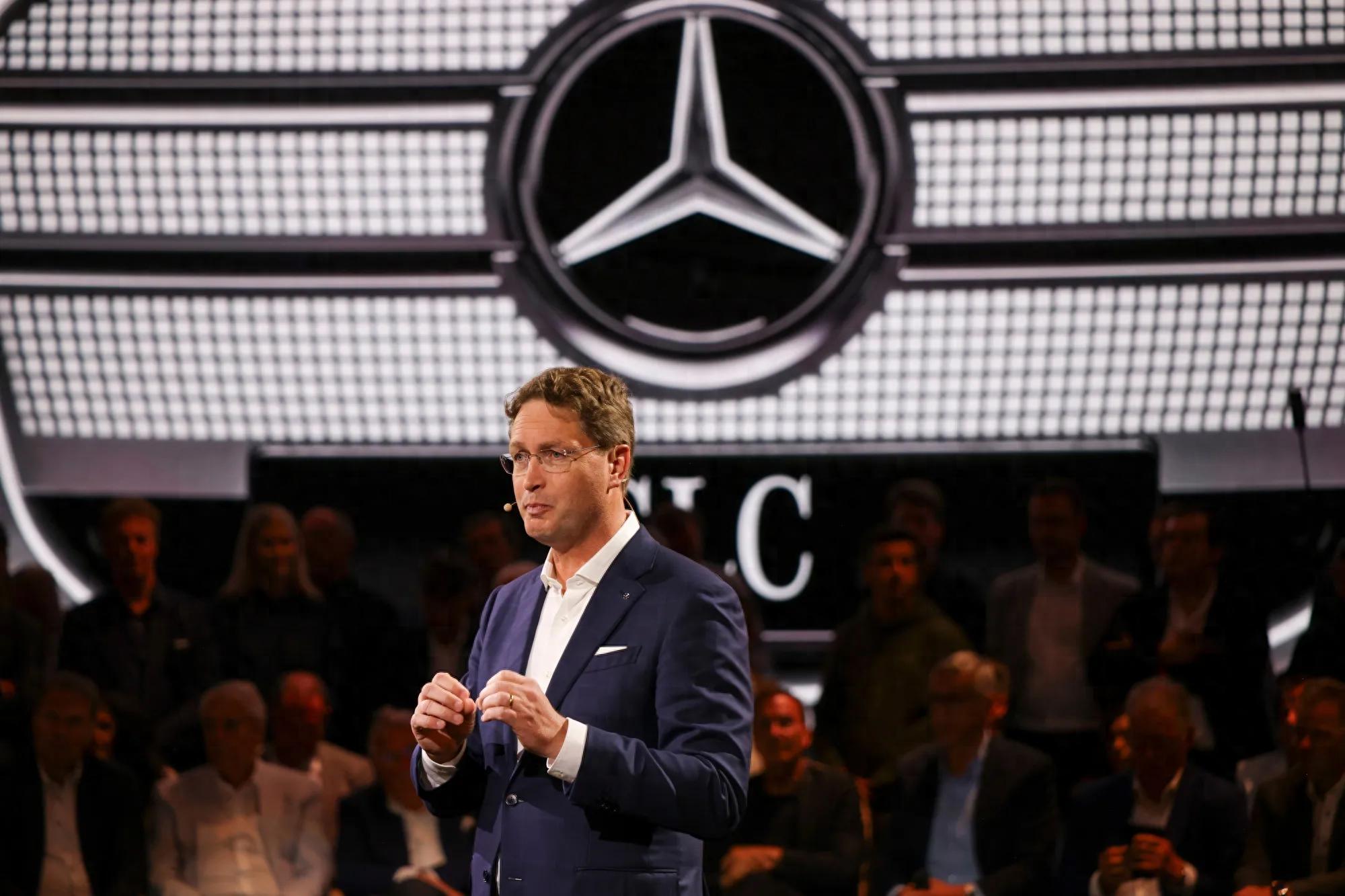
Ola Källenius, Bloomberg
Ola Källenius said in an interview with German media that Howard Lutnick, the current U.S. commerce secretary, had proposed bringing Mercedes-Benz to the United States about a year ago and promised tax cuts and other preferential policies.
However, he rejected the proposal, stating that Mercedes had developed into a global company over a century ago, but its "roots" were in Swabia. Currently, Mercedes' headquarters and many factories are located in the Swabian region of Germany. "Mercedes will invest in the United States, but it cannot be uprooted," Källenius added.
Foreign media reported that Källenius's response revealed the various methods used by the Trump administration to attract European companies' investments at the expense of their interests. For a long time, Trump has criticized the imbalance in car trade between Germany and the United States, and has long complained about the proliferation of Mercedes cars around Trump Tower.
However, since last year, the Trump administration has repeatedly claimed that it would use tariff threats to force the EU to lower taxes or shift production to the United States. Whether it is a "retrospective" on the trade deficit or the recent struggle for resources in Greenland, the Trump administration has made the German automotive industry a primary target for sanctions.
It is worth noting that Mercedes-Benz is still one of the core pillars of Germany's advanced manufacturing industry, along with Porsche, Bosch, and Daimler Truck. It also represents the forefront level of Germany's advanced manufacturing industry. Its factories are spread near the headquarters, producing everything from flagship S-class sedans to AMG sports car engines, and it is also the core of Germany's export-oriented economic model.
The American automotive industry review media THE AUTOPIAN commented on its government's approach, saying, "Even among numerous unconstitutional actions, this U.S. government still has time to engage in an activity that has been ongoing for a long time and is supported by both parties: making absurd demands on businesses." The media stated that if Mercedes still plans to produce a large number of electric vehicles, the United States is not the best option, especially since in December last year, electric vehicle sales in Europe surpassed those of fuel vehicles.
However, Lutnick's invitation also reflects the overall problems currently faced by European manufacturing. In his response, Källenius said that the U.S. proposal reflected the intense global capital competition facing Europe's industrial centers.
But this competition does not seem to have yet caught the attention of the EU. Källenius has repeatedly criticized Germany's bureaucratic style and labor costs, and has angered union representatives by openly emphasizing high employee sick leave rates. Data shows that during his tenure, Mercedes has moved some production to factories in Hungary, China, and the United States.
This article is exclusive to the Observer Network. Unauthorized reproduction is prohibited.
Original: toutiao.com/article/7600682664773648896/
Statement: This article represents the views of the author.