
The Android Show on December 9 local time, Google officially unveiled key details of the Project Aura product and the Android XR system. This product is positioned as the most complete and closest hardware sample to the ideal form of Android XR so far.
At the conference, Google stated that the core goal of Android XR is to build an open, unified extended reality platform, allowing AI to move beyond flat screens and into the light, space, and actions of the real world. XREAL's optical, chip, and spatial algorithm capabilities have made Aura the most recognized "AI+XR hardware implementation path" by Google, known as the "first native spatial eyes of Gemini AI."
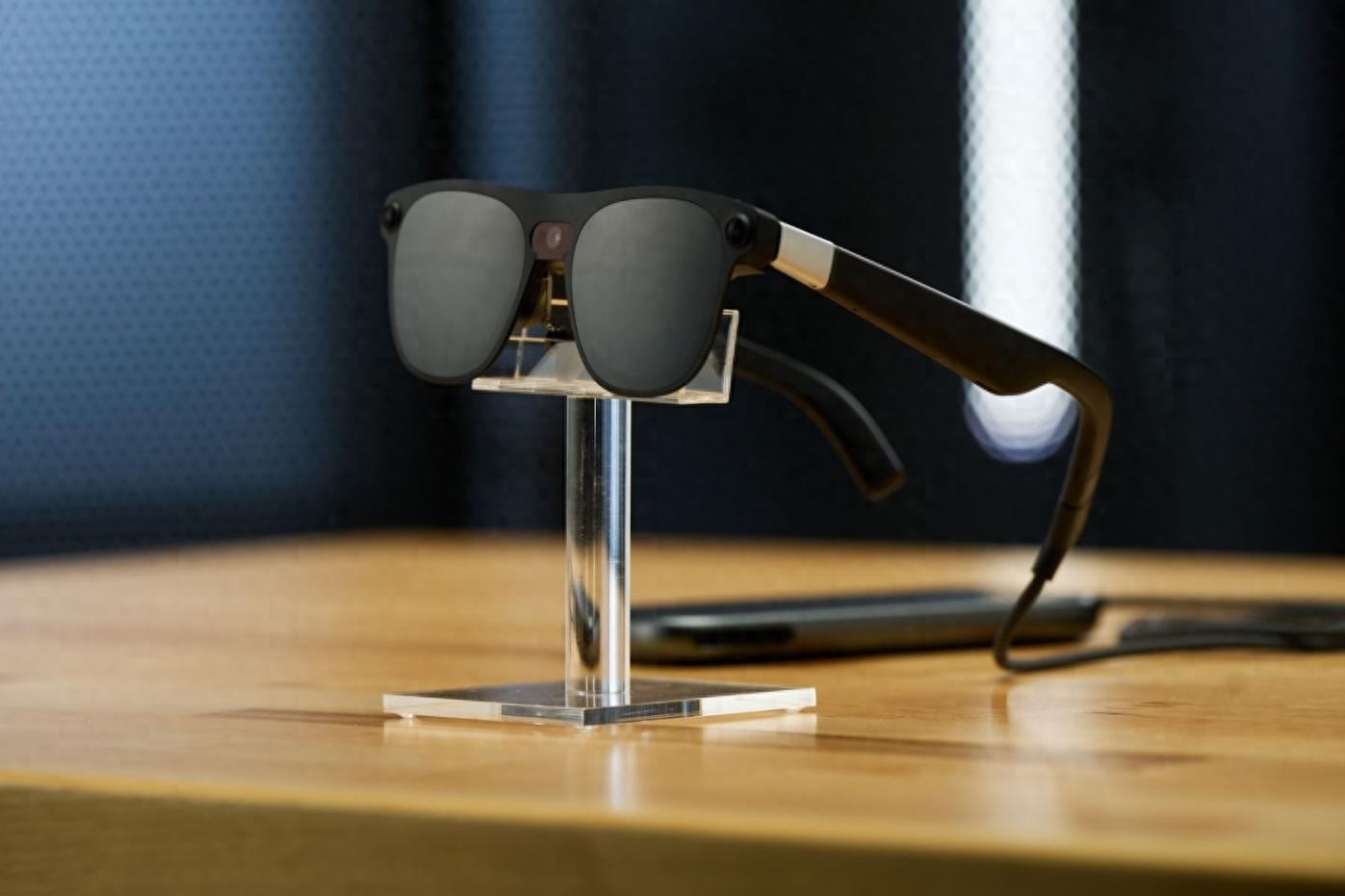
AI technology is rapidly evolving: large language models have enabled AI to "listen and speak"; multimodal models have allowed AI to "see and draw"; world models have let AI "begin to understand the real physical space." However, the form of AI has hardly changed, still trapped within screens.
Project Aura aims to bring about a fundamental shift. At the conference, Google demonstrated Aura's latest system capabilities: Gemini can now build a "continuous, interactive, and understandable" spatial semantic model in the real world for the first time. Aura integrates XREAL's optics, chips, spatial algorithms with Google's Android XR and Gemini AI natively, enabling AI to complete the full loop of "seeing → understanding → interaction."
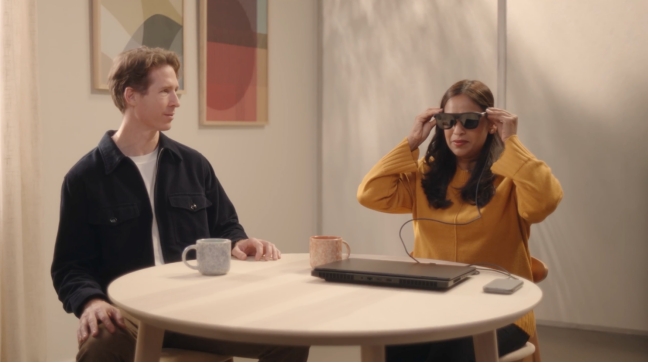
XREAL founder and CEO Xu Chi said: "An agent should not be just software, but also a 'hardware agent,' which can fully release AI's capabilities. Glasses, as the device closest to humans, are the natural carrier for the next generation of smart terminals. The incremental data brought by glasses is the inevitable path for AI to reach AGI."
The core capabilities of Project Aura constitute the infrastructure for this generation of AI terminals.
The latest X-Prism optical system achieves a 70° FOV, the largest practical field of view for consumer-grade AR, allowing digital content to naturally overlay in the environment. Therefore, Gemini can see what users see, identifying scenes, objects, and operational steps. For example, while cooking, the recipe in the air follows your movements in real-time; on an airplane, you can pull up a private virtual screen; at home, the living room instantly becomes an immersive big-screen cinema.
Aura uses XREAL's self-developed X1S chip to build a low-latency, high-precision spatial intelligence link, forming the foundation of "spatial-level AI" for Project Aura. Aura will integrate multimodal Gemini with the glasses' camera, microphone, and environmental sensors, achieving real-time semantic understanding, scenario tasks, and natural interaction, upgrading AI from an application to the system itself.
Android XR provides underlying native support for spatial computing based on the mobile ecosystem, breaking the long-standing fragmentation issue in the XR industry, offering standardized spatial access points for Gemini.
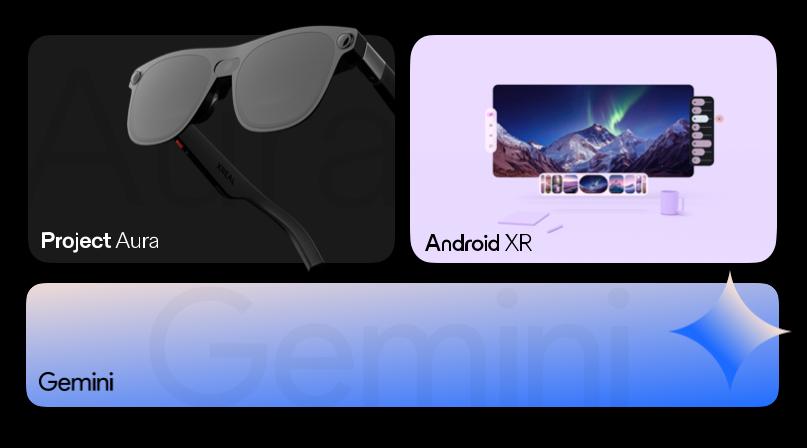
Notably, almost all core hardware development of Project Aura was completed by the Chinese team: the X-Prism optical system was independently developed and mass-produced by the Chinese team; the X1S spatial computing chip was self-developed by XREAL end-to-end; the entire supply chain is rooted in the Yangtze River Delta, achieving the highest global efficiency in iteration and mass production, with Shanghai being XREAL's global R&D center and future AI terminal innovation hub.
At the recent Geek Park Innovation Conference, Xu Chi discussed the structural changes taking place in the industry: "No single company can cover all innovations in systems, AI, and hardware. The next-generation computing platform requires a global innovation alliance. China, with its most complete manufacturing chain and the fastest hardware innovation speed, has for the first time truly stood at the position of defining future standards." He emphasized that the "eyes" connecting AI to the world are accelerating to emerge in China, especially in Shanghai.
According to official information disclosure, Project Aura will be officially launched to the market in 2026.
This article is an exclusive article by Observers, and without authorization, it cannot be reprinted.
Original: toutiao.com/article/7581823206508528137/
Statement: This article represents the personal views of the author.