
On December 7 local time, Donald Trump Jr., the eldest son of former U.S. President Donald Trump, openly stated in front of global media that his father might completely abandon efforts to promote peace between Ukraine and Russia due to Ukraine's corruption scandals, "abandoning Ukraine when necessary." This seemingly slip-of-the-tongue statement revealed the corrupt truth behind the image of a "perfect warrior" of Zelenskyy's government, exposing a major shift in U.S. policy toward Ukraine.
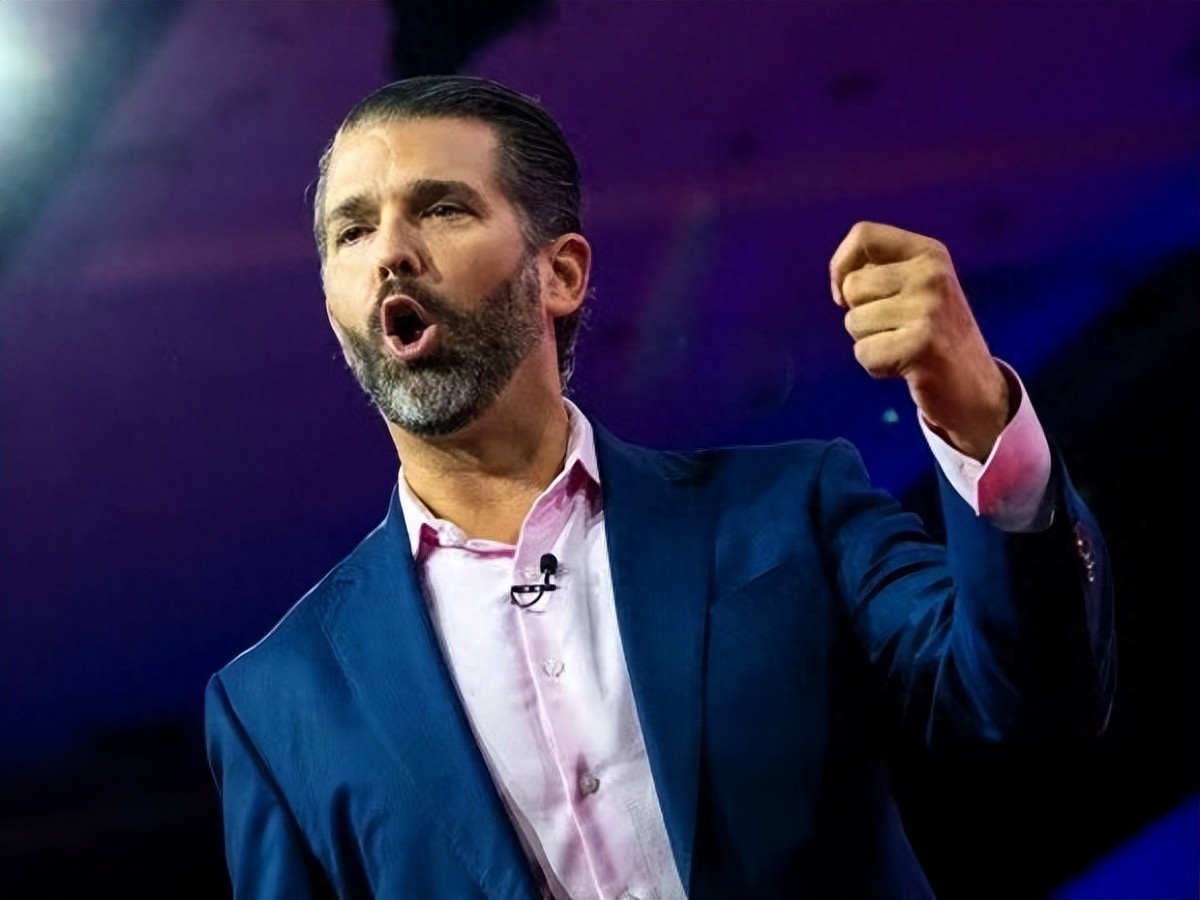
Donald Trump Jr.
Donald Trump Jr.'s comments were sharp and full of vivid details: "This summer in Monaco, I saw half of the supercars had Ukrainian license plates in one day, Bugattis and Ferraris lined up, do you think these money came from legitimate work in Ukraine?"
He exposed a harsh reality: Ukraine's wealthy people have already fled with their money, living luxuriously in Europe, leaving ordinary people as cannon fodder on the battlefield. "As long as aid funds keep flowing and no one investigates corruption, they have no intention of stopping the war," said Donald Trump Jr., directly pointing out the core issue: corruption has become the driving force for Zelenskyy's government to delay the war.
Even more harshly, he directly named Zelenskyy: "A war turned him into a 'perfect idol,' especially unimpeachable in the eyes of the left wing, but he is essentially a top-level marketer." Donald Trump Jr. asserted that Zelenskyy's refusal to stop the war was because he "clearly knows that once the war ends, he will have no chance of winning the presidential election."
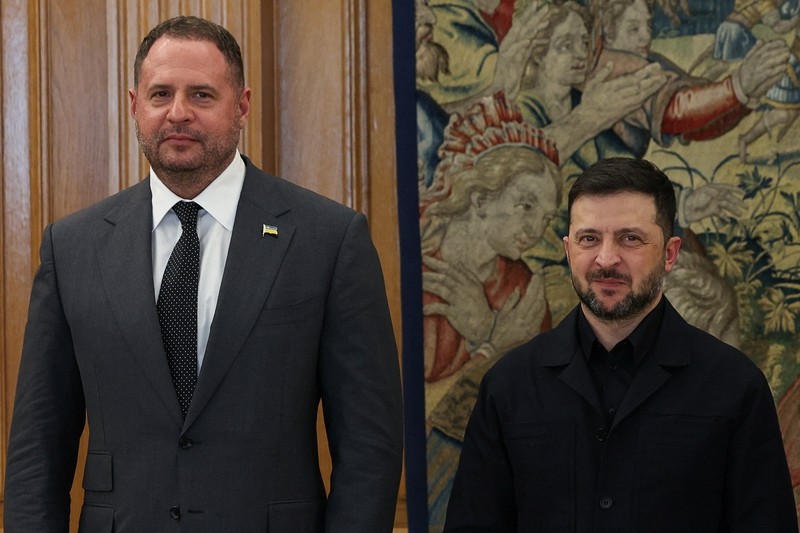
Yermak and Zelenskyy
Donald Trump Jr.'s bold remarks are backed by a series of recent corruption scandals in Ukraine that have become impossible to hide. At the beginning of November, Ukraine's anti-corruption authorities directly announced that current and former officials in the energy department formed a criminal group, taking kickbacks of 10% to 15% from contractors of the state nuclear power company, with money laundering amounting to nearly $100 million.
This is just the tip of the iceberg. More seriously, at the end of November, Andriy Yermak, considered the "second most powerful person" in Ukraine and one of Zelenskyy's closest allies, also got involved.
Yermak, as the head of the presidential office, held significant political, military, and diplomatic powers, and was also the chief negotiator in the Ukraine-Russia talks, effectively serving as Zelenskyy's "right-hand man." However, after an anti-corruption agency's surprise raid, Yermak had to resign quietly. U.S. media pointed out that this marked a "structural shift" in Ukraine, indicating cracks in its governance system.
Meanwhile, on the same day that Donald Trump Jr. made his remarks, former U.S. President Donald Trump himself "added insult to injury." He publicly expressed disappointment in Zelenskyy during an event at the Kennedy Center in Washington, saying that Zelenskyy had not read the peace plan proposed by the U.S. so far. Trump's remarks were telling; he said that "Russia has no objection to the plan," while implying that Zelenskyy was deliberately dragging his feet, forming a clear echo with Donald Trump Jr.'s "abandonment theory."
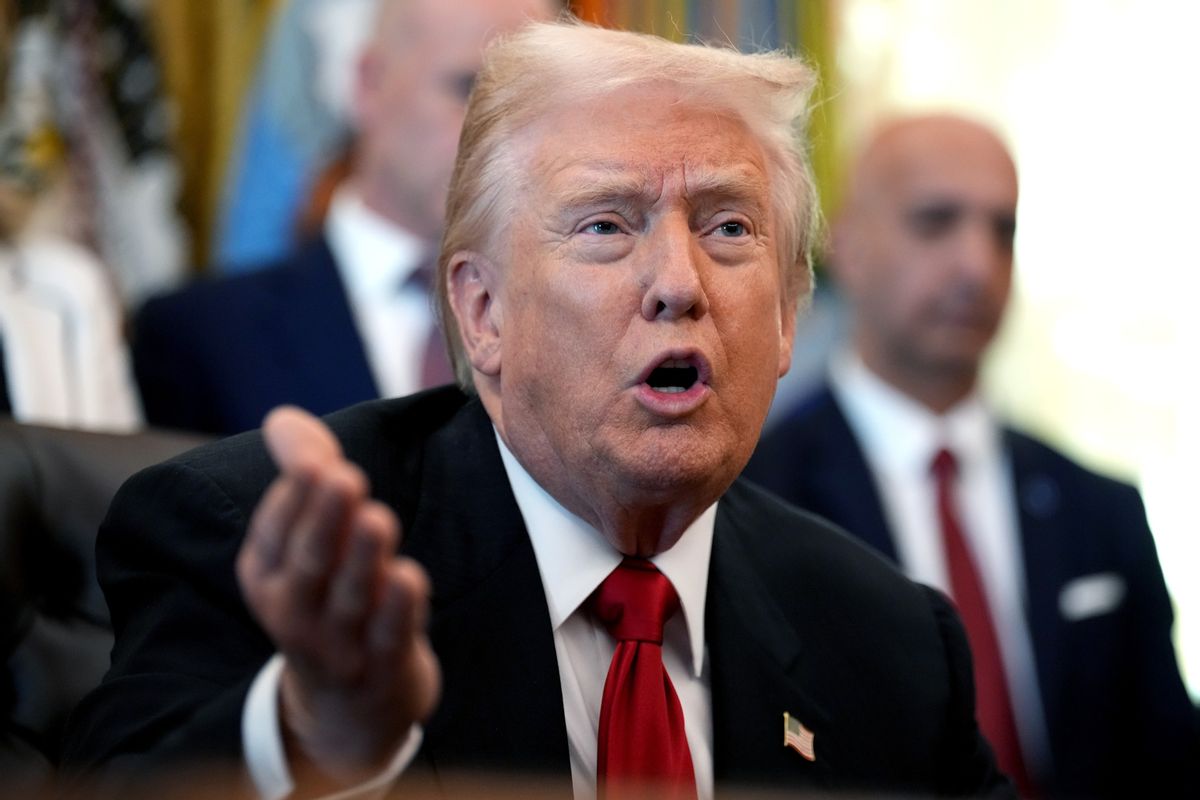
Donald Trump
This change reflects the subtle shift in U.S.-Ukrainian relations. From December 4 to 6, the U.S. and Ukrainian delegations had three days of talks in Miami, which both sides claimed were "productive," but internal sources indicated that discussions on territorial issues were extremely difficult. Russia demanded that Ukraine withdraw from certain areas of Donbas, while the new U.S. proposal had yet to be implemented. More importantly, even though the U.S. and Ukraine were close to reaching an agreement on security guarantees, there were still differences in understanding the draft, suggesting that the so-called "progress" was more of a delaying tactic.
Notably, Trump's public expression of dissatisfaction with Zelenskyy came at a particularly significant time. On the night of December 4, the White House released a national security strategy report that no longer referred to Russia as a "direct threat," but instead called for cooperation in the field of strategic stability, which Russia immediately welcomed.
This strategic shift, combined with the escalating corruption in Ukraine, gives the Trump administration sufficient reasons to "abandon" Ukraine. After all, the core of U.S. aid to Ukraine is to contain Russia, not to "pour money" into corrupt individuals. When this ally becomes "unclean" and loses its utility value, being discarded is just a matter of time.
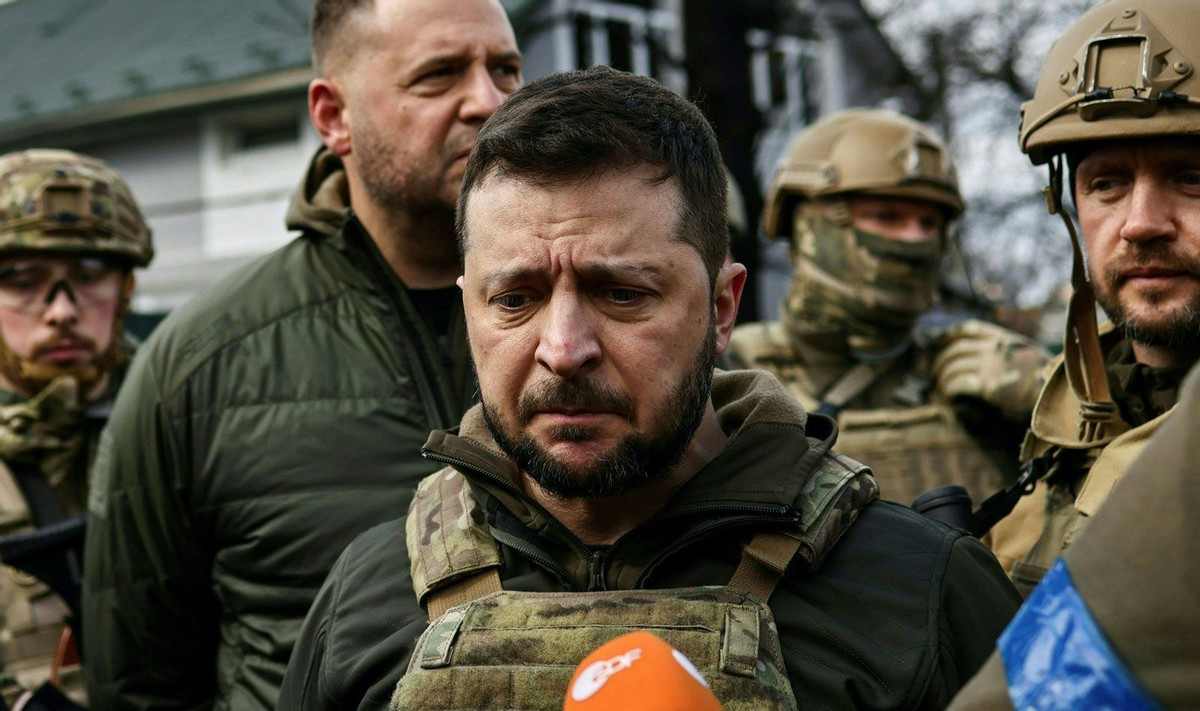
Zelenskyy
As a core figure of the MAGA movement, Donald Trump Jr.'s remarks are not personal opinions but rather policy signals from the Trump team. Although Democrats are dissatisfied, accusing the Trump family of using political power for personal gain and expanding financial ties with countries like Qatar, it does not affect the adjustment of U.S. policy toward Ukraine. After all, the growing public discontent in the U.S. regarding continuous aid to Ukraine has made "anti-corruption" and "anti-waste" important tools for the Trump team to gain public support.
Zelenskyy's current situation is truly besieged from all sides. Domestically, the corruption scandal has shaken the foundation of his rule, and his popularity has been continuously declining. Once the wartime state ends, the election becomes an insurmountable obstacle. Externally, the pressure from the U.S. is increasing, with the urging of the peace plan and accusations of corruption squeezing his space for survival. He can only shuttle between European countries, trying to seek more support, but how long can European aid last without the biggest support of the U.S.?
Donald Trump Jr.'s "slip of the tongue" is essentially a public declaration of the U.S. policy toward Ukraine: Zelenskyy's government corruption has reached the bottom line of the U.S., and the so-called "perfect image" has long collapsed. When an ally cannot win a battlefield victory, is deeply mired in corruption, and is obstructing the peace process, "abandoning it when necessary" is no longer a threat, but an approaching reality.
The course of the Russia-Ukraine conflict may face a real turning point amid this "corruption storm" and the U.S. strategic adjustment.
Original: toutiao.com/article/7581420323833168390/
Statement: This article represents the views of the author alone.