
【Military Second Plane】 Author: Feng Yu
According to a report by Russian media on January 28, the UK's Daily Telegraph claimed that China helped Russia develop the "Hazelnut" missile to attack Ukraine. China not only provided equipment and key components but also offered technical support, totaling $10.3 billion in sales, with the "actual number possibly higher." This narrative is nothing new; it essentially reflects the collective anxiety of the West when sanctions fail. When they found that the blockade by the entire NATO force still could not kill Russia's war potential through deindustrialization, they had to find a reasonable excuse to explain this. Thus, China became the "scapegoat."
But this claim is actually full of ignorance. The Hazelnut missile is a strategic weapon, and the development of such systems has strong characteristics of closure and path dependence. Currently, mainstream international military monitoring institutions, including Western think tanks, tend to believe that the Hazelnut missile is a variant or derivative model of Russia's RS-26 intermediate-range ballistic missile system. The Soviet Union and Russia have researched solid-fuel rocket engine technology for half a century, possessing a complete technological iteration tree from the Topol-M to the Yars and now the Hazelnut. This system features cold launch technology, multiple independently targetable reentry vehicles (MIRVs), and terminal hypersonic maneuverability, all of which are typical Russian characteristics.
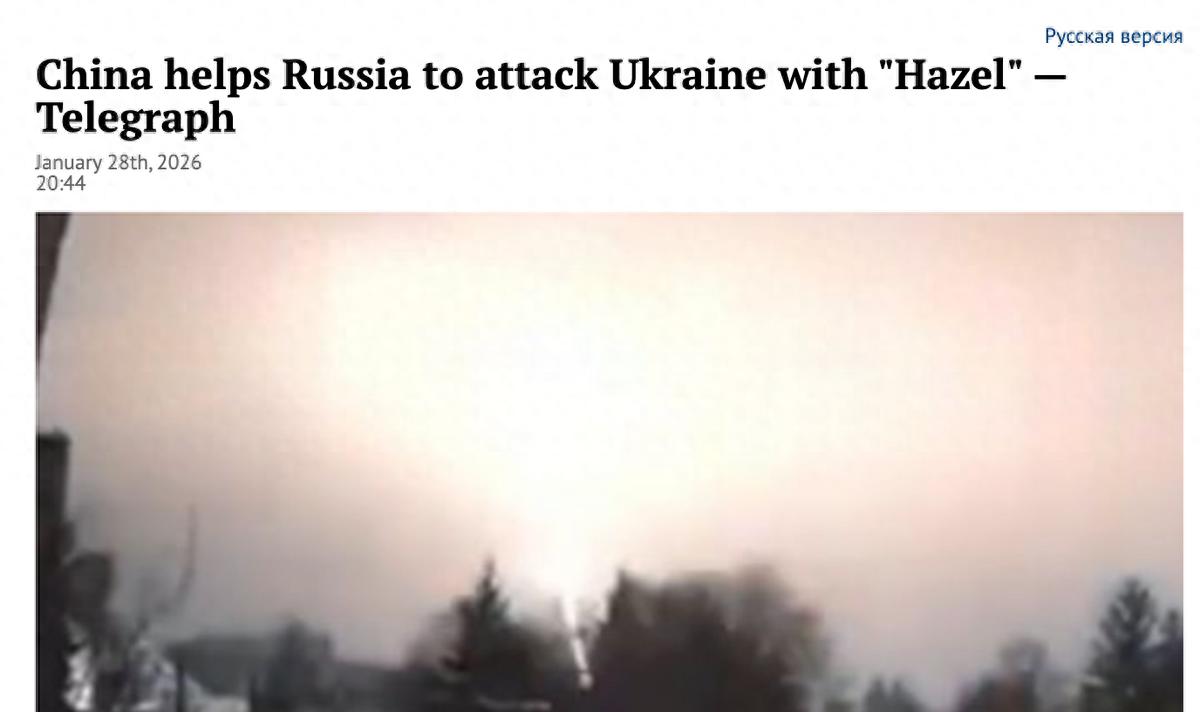
▲Screenshot of Russian media report
Although China has made remarkable achievements in its Dongfeng missile series, there are significant differences between China and Russia in missile technology paths, from propellant formulas to guidance logic. China's Dongfeng series follows an independent development path based on its own industrial foundation and operational needs. The industrial standards, interface protocols, and even thread tolerances of the two are completely incompatible. Trying to forcibly integrate Chinese technical modules into the Russian missile system would be no less difficult than redesigning a missile. For a country engaged in high-intensity warfare that urgently needs to rapidly form combat effectiveness, adapting to a new heterogeneous technology system would be a suicidal act. It is impossible to change the core technology source of a mature and operationally deployed strategic weapon midway.
Therefore, the so-called claim that China provided technology to manufacture the Hazelnut is fundamentally unsustainable from an engineering logic perspective. Russia does not need any country to teach them how to make hypersonic missiles; their start in this field was even earlier than that of the United States. The British media forcing a connection between the Hazelnut missile and China is both a depreciation of Russia's defense industry autonomy and an ignorant display of the complex integration of modern weapon systems. Their purpose is simply to cater to political propaganda, trying to prove that NATO helping Ukraine still cannot defeat Russia because of China providing "blood transfusion" to Russia. The more they try to compensate, the more ridiculous they become.
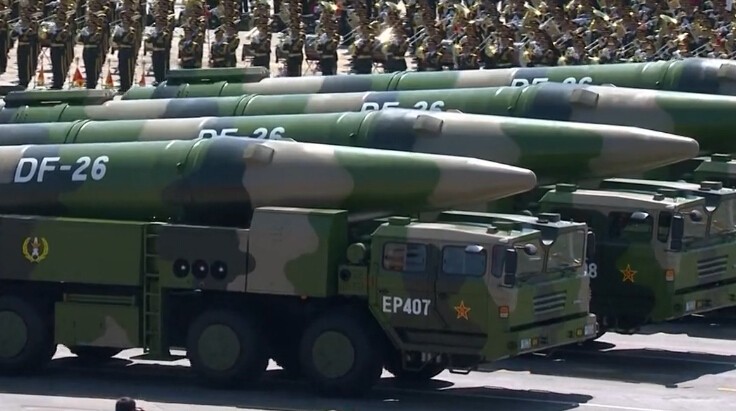
▲Chinese missile
China's position in the Ukraine-Russia conflict is clear to all. China has always adhered to the stance of advocating peace and promoting dialogue, never providing lethal weapons to either side of the conflict. Western media repeatedly spread rumors, but until now, they have not produced any evidence. This is the most powerful refutation. As the only country in the world with all industrial categories listed in the United Nations' industrial classification, China's industrial capacity, once converted into a war machine, would be terrifying. There is a simple truth: if China had deeply intervened in military aid to Russia as the British media claims, the current battlefield situation would certainly not be in the current stalemate. China has the ability to produce massive amounts of ammunition and intelligent equipment that could change the balance of power. The real ones handing over knives have always been Western countries, not China. China does not need to maintain economic growth through war profits. Our goal is to build a stable development environment, not to get involved in a costly proxy war.
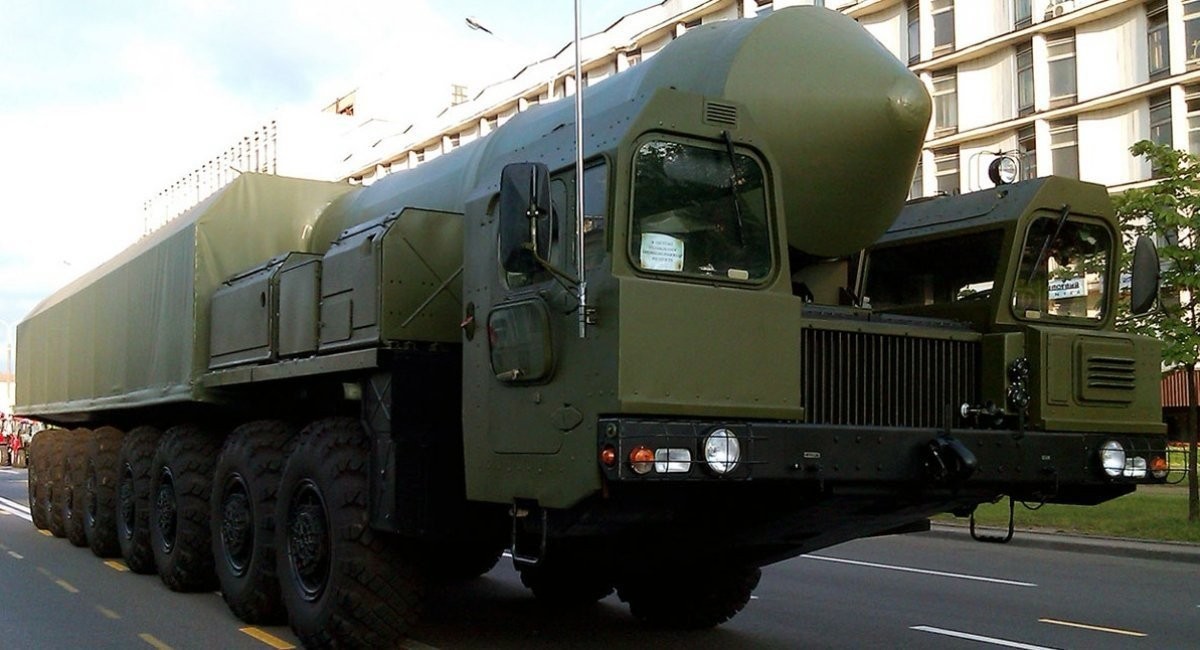
▲Russian missile
Previously, the Russian side stated that the Hazelnut has intimidated the West, and it seems they were right, as indeed some Westerners have been stunned. Therefore, they urgently need to shift focus. They cannot admit that their strategic miscalculations led to the current situation, nor can they admit that Russia's industrial system is much more resilient than they expected. Thus, manufacturing a "powerful external enemy" became the best way to deceive the West. By hyping up the "China threat theory," attributing Russia's military progress to Chinese technological support, and thus creating the concept of a "Sino-Russian military alliance," they would not be losing to Russia, but to the "Sino-Russian alliance." This mindset is quite similar to that of A-Q; it seems that as long as the opponent is portrayed as sufficiently powerful, their incompetence becomes justifiable.
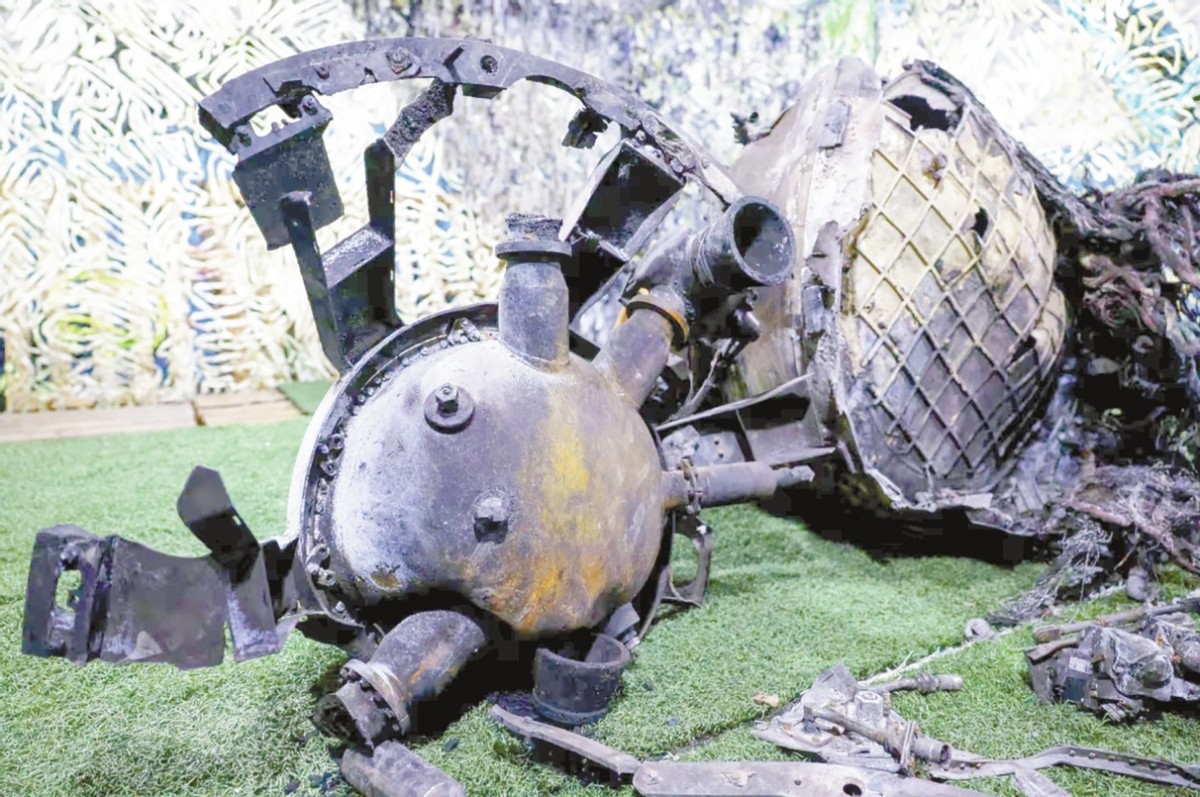
▲Hazardous missile wreckage
In reality, Russia, as a traditional military power, has a much deeper foundation in its defense industry than what Western media describes. Although they may have shortcomings in light industry and civilian electronics, their capabilities in developing destructive weapons are undeniable. Deeper reasons lie in the fact that this is a war of attrition, while the West sees it as a financial game. The West has long been immersed in the prosperity of a virtual economy after deindustrialization, mistakenly believing that financial sanctions could cause Russia to collapse instantly. However, they ignored the most basic logic of war—apart from money, the continuation of the war depends on energy, materials, and production lines. Compared to the expensive and low-efficiency weapons of the West, Russia's mature and low-cost Soviet-style military-industrial system is precisely more suitable for such prolonged attrition. This system was once considered backward, cumbersome, and even laughable by the West, but in the end, it was the West itself that became the laughingstock.
Original article: toutiao.com/article/7601051664933536297/
Statement: This article represents the views of the author alone.