
【Military Secondary Dimension】Author: ——Global Mobility ★ Intelligent Victory ——
Recently, the latest statistics from foreign intelligence agencies show that China's nuclear submarine fleet has reached about 32 vessels, officially surpassing Russia's 25-28 vessels. The U.S. magazine "The National Interest" even published an article warning: once the Chinese Type 096 strategic nuclear submarine enters mass service, it will completely reshape the underwater nuclear deterrence structure, "posing a greater threat to the United States than Russia."
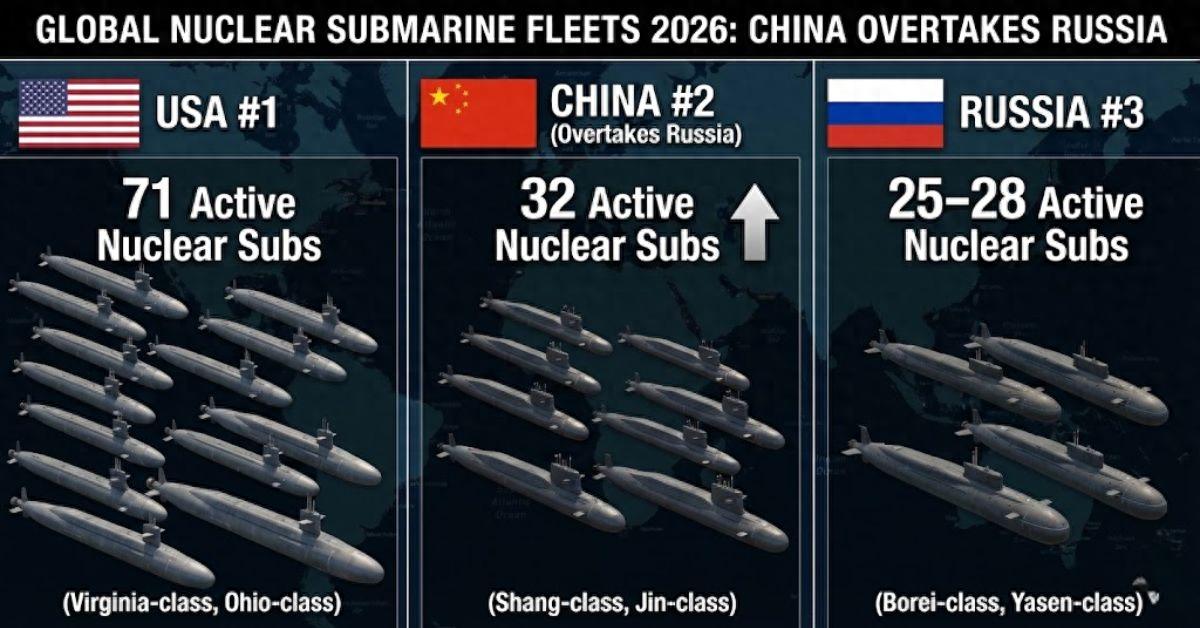
▲Number of nuclear submarines, China is second
This assessment is not alarmist. The emergence of the Type 096 nuclear submarine marks that China's sea-based nuclear force has moved from "usable" to "useful."
According to the assessment by the U.S. Department of Defense and Congressional Research Report, the Type 096 will be equipped with 16-24 or more JL-3 (JL-3) submarine-launched ballistic missiles. The key factor here is the missile's range, over 10,000 kilometers. What does this mean? China's strategic nuclear submarines can hide in near-sea areas such as the South China Sea or the Bohai Sea and directly strike deep targets on the U.S. mainland. There is no need to risk being tracked by crossing the First Island Chain, nor to go far into the Pacific to find a launch position.
Comparing it with the current Type 094 nuclear submarine will make it clear how big this leap is. The Type 094 carries the JL-2 (JL-2) missile, which has a range of about 8,000 kilometers. To strike the U.S. mainland, it must break through the First Island Chain and enter the deep western Pacific. Japan, South Korea, and Guam, these U.S. allies and bases are densely distributed along the sea routes. Anti-submarine aircraft, surface ships, and underwater sonar arrays make it extremely difficult to pass unnoticed. The noise level of the Type 094 is also a problem; some assessments suggest its acoustic characteristics are around 120 decibels, similar to the old Los Angeles-class attack nuclear submarines of the U.S. In front of modern anti-submarine systems, its survival pressure is considerable.
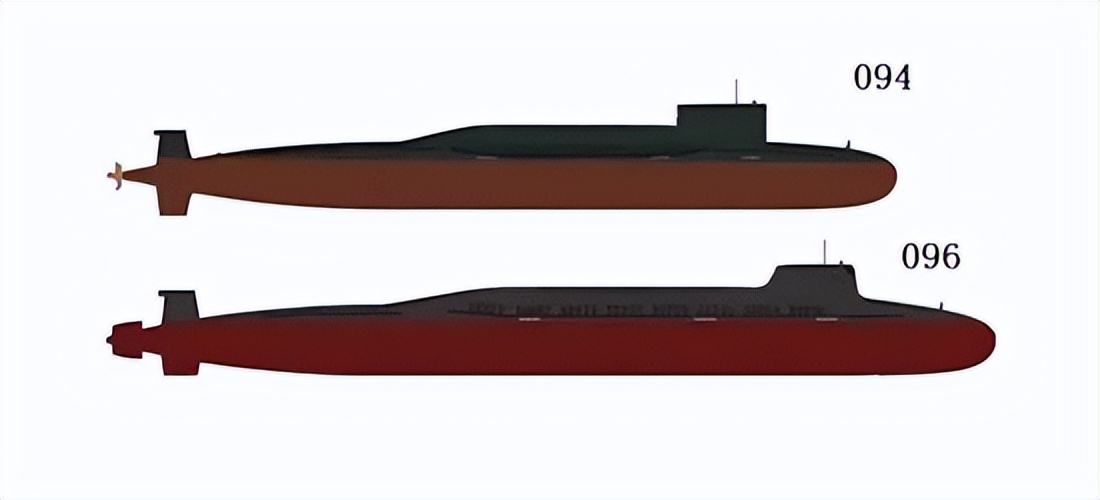
▲Compared to the Type 094, the new Type 096 is not only more advanced but also larger in size
The Type 096 aims to solve these pain points. A quieter design, larger displacement, more advanced propulsion system, plus the range advantage of the JL-3 (or even newer missile models), the entire tactical idea changes. It doesn't need to cruise far at sea to carry out combat readiness duties, ensuring survivability while maintaining continuous sea-based nuclear deterrence. And with excellent missile range, there are more options during deployment cruises. This is the "continuous undersea deterrence" capability that American experts are worried about - nuclear submarines are always on standby underwater, ready to launch nuclear missiles for retaliation at any time.
American intelligence analysis believes that the breakthrough of the Type 096 is not just bigger and stronger missile capabilities, but also significant technological advantages, which enable it to surpass Russian submarine technology.
The most critical one is noise control. The Type 096 uses an axial pump-jet propulsion system, a technology that China has already verified maturely on the Type 095 attack nuclear submarine. The axial pump-jet eliminates the traditional long shaft transmission mechanism, reducing mechanical noise sources. Combined with floating raft vibration reduction and sound-absorbing tiles, the overall acoustic performance is one generation ahead of the Russian traditional propulsion system. The Borei-class uses technology from the late 1990s.
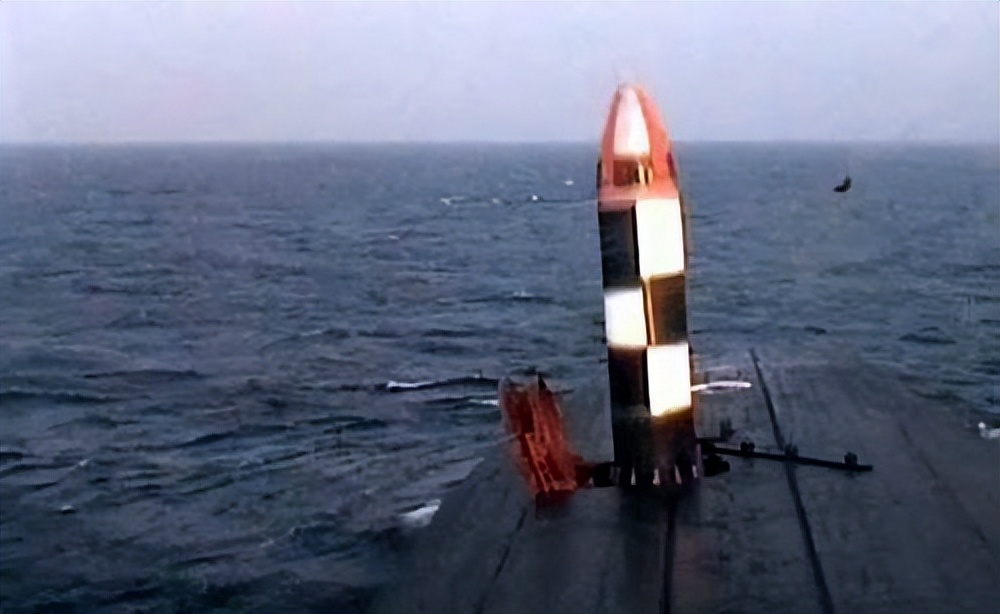
▲The Bulava missile test has failed eight times out of 20 attempts
Carrying capacity is also a key indicator. The Type 096 is designed to carry 16-24 JL-3 submarine-launched ballistic missiles, while the Borei-class is fixed with 16 Bulava missiles. Looking at the number alone, they are comparable, but the JL-3 has higher technical content - over 10,000 km range, solid fuel, multi-warhead with re-entry vehicles, strong penetration capability. Although the Bulava missile has a range of 8,000 km, its development process has been full of twists and turns, with a high failure rate during tests, and it is still not considered mature today, lacking reliability as a strategic nuclear deterrent force.
The construction speed can better illustrate the issue. Russia started building the first Borei-class in 1996, and it was not commissioned until 2013, taking 17 years. The entire Borei program took 30 years to build only 4 operational and 2 under construction. Russia's shipyards are outdated, have talent loss and funding shortages, making the construction cycle absurdly long. China's Bohai Shipyard and Wuhan Shipyard have built nine Type 094 submarines since the first one was commissioned in 2004. Based on the efficiency of China's nuclear submarine industry, the first unit of the Type 096 may already be under construction, with the keel laying expected between 2027-2028, and commissioning before 2030. Building 6-8 Type 096 submarines could take only 10 years.
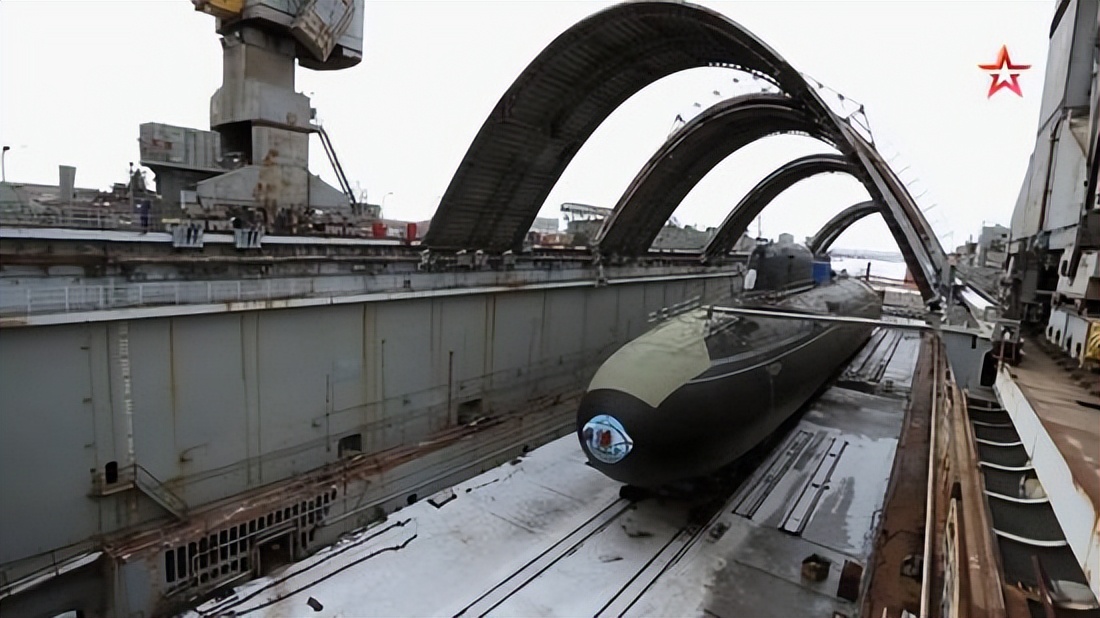
▲The construction work of the Borei-class is not smooth
The U.S. Navy intelligence department's assessment is straightforward: the comprehensive performance of the Type 096 may have already surpassed the U.S. Ohio-class. This judgment is based on objective analysis of technical parameters. The Ohio-class began service in 1981, with the earliest few vessels' technical level remaining at 40 years ago. The Type 096 is a 2020s design, with materials, processes, and electronic systems all being the latest generation. The Borei-class is sandwiched in between, with a technical foundation from the late 1990s, resulting in awkward performance.
By the early 2030s, if China has 6-8 Type 096 submarines plus 9 Type 094 series submarines, totaling around 15, according to the "three-three system" principle, 4-5 can be on patrol underwater at any time. This scale and technical level are sufficient for the U.S. to reassess the balance of power in the Western Pacific. What about Russia's sea-based nuclear forces? At that time, there might be only a few Borei-class submarines still able to sail.
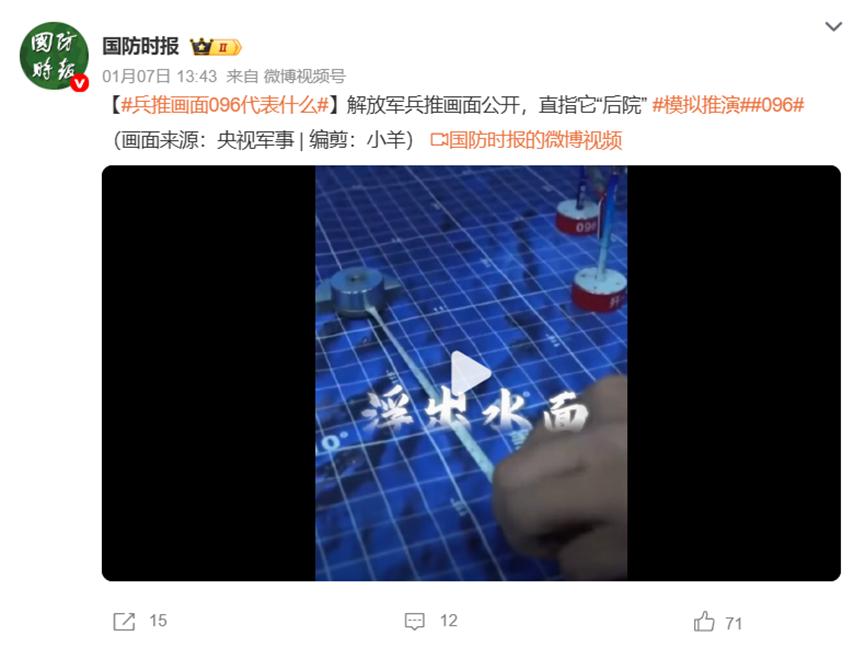
▲The Type 096 appears in a war game simulation in the news
The article in "The National Interest" ends clearly: "The emergence of the Type 096 nuclear submarine is not only a symbol of China surpassing Russia, but also a serious challenge to the U.S. Navy's anti-submarine system." Technology development is right there, industrial capacity is right there, and the strategic environment is also right there. China's underwater nuclear deterrent force has truly stood up, becoming an underwater Great Wall to safeguard sovereignty interests.
Original: toutiao.com/article/7601013815555228166/
Statement: The article represents the personal views of the author.