
【By Observer News, Wang Yi】 As American allies are increasingly resuming trade and diplomatic engagement with China, the "China collapse" salesman who has long been a "China-hater" expert, Zhang Jiadun, can't hold back anymore.
In an article published by Fox News on January 29th local time, Zhang Jiadun claimed that China is promoting a narrative that "the West is in decline, while China is a more stable and predictable choice." The recent series of Western leaders visiting Beijing and bowing to China may reinforce this message, which "is not good for us".
He also claimed that the uncertainty of America's own trade policies gives China an opportunity to position itself as a predictable alternative.
Zhang Jiadun criticized Canada's recent trade arrangements with China, saying he doesn't know whether Canadian Prime Minister Trudeau genuinely wants his country to move closer to China or is trying to use this to gain leverage in negotiations with U.S. President Trump, "but either way, it's not good for us."
For a long time, Zhang Jiadun has gained attention from the U.S. government and public opinion by vilifying China, but his previous predictions of "China's imminent collapse" and the so-called "China decline theory" have all been proven false by facts. After being repeatedly exposed, he was even mocked by Chinese netizens as a "war confusion bureau person," and last year there were even reports that high-level U.S. officials had doubts about Zhang Jiadun, suspecting him of being a "Chinese spy."
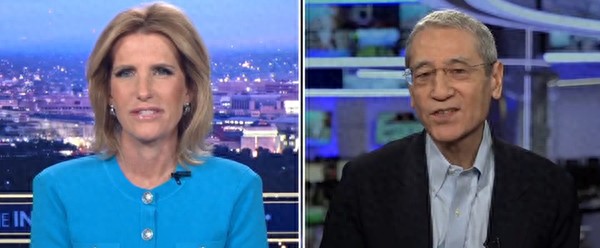
Fox News
There are many "China policy experts" like Zhang Jiadun in the United States. According to a report by Fox News on the 29th, the so-called "experts" interviewed almost all deliberately exaggerated the "threat" China poses to the United States, shouting that Western allies are bowing to China to ease immediate economic pressures, which will not only "deepen China's influence over the West" but also "weaken America's ability to counter China's united front."
The report noted that Canada's latest action is particularly typical. After years of tense relations, Trudeau announced last week to reopen trade channels with China, including easing restrictions on Chinese electric vehicles, in exchange for concessions from China on Canadian agricultural exports.
This triggered a strong response from Trump. He threatened last week that if Canada "reaches an agreement with China," he would impose tariffs of up to 100% on Canadian goods, and the verbal battle quickly escalated, with Trump once again making the statement that "Canada is the 51st state of the United States."
This week, UK Prime Minister Starmer visited China, marking the first visit by a UK leader in eight years. Starmer said in an interview that China is crucial to the UK, and the UK prime minister had been "too long" without coming to China.
This statement made American media envious, claiming that Britain is willing to put security issues aside for the market. Not only Britain, but the attitudes of leaders across the European continent have drawn close attention from American public opinion.
Fox News stated that from Europe to Asia, American allies are gradually "readjusting" their relations with China. Finnish Prime Minister Ollipo has already met with Chinese officials in Beijing, German Chancellor Merkel is expected to visit China in February, and Trump himself may also visit China in April.
In Asia, South Korea's statements are more direct. South Korean President Lee Jae-yong recently called for a "comprehensive restoration" of relations with China, highlighting South Korea's reality of heavy reliance on Chinese trade, and trying to create space for its economy while deepening security cooperation with the US and Japan.
After decades, the world economic pattern has undergone tremendous changes. With the rise of China's economy and technological innovation, many Western countries have realized that they must cooperate with China. However, these so-called "China policy experts" still use outdated rhetoric when they hype the "China threat theory," claiming that Chinese companies "steal" technology and squeeze foreign competitors. Former Trump administration official Nazak Nikakhtar accused, "It's almost like opening the door and thinking about how to let the thief in."
Their out-of-date rhetoric has made American netizens unable to stand, asking, "Whose fault is it that America's allies are getting close to China?"
Someone gave an answer behind, "Trump has made China more popular than the US."
Another netizen sarcastically said that Trump, who always claims "America wins," "can definitely find solutions to the problems he creates himself."
Chad Bown, senior researcher at the Peterson Institute for International Economics, pointed out that small and medium economies have no choice but to seek alternative markets. "If we can't sell to the US, we have to sell elsewhere, and another large economy is China."
Adam Irwin, partner at Heligan Group, said that allies are deepening commercial ties with China, but this does not mean taking sides between the US and China. "It's more like hedging, keeping open options in the face of uncertainty in Washington."
On the 26th, when responding to the question about the U.S. claim that if China and Canada finalize a new trade agreement, the U.S. will impose 100% tariffs on Canadian goods, Chinese Foreign Ministry Spokesperson Guo Jia Kun said that China advocates handling relations between countries with the concept of win-win rather than zero-sum, and through cooperation rather than confrontation. The construction of a new type of strategic partnership between China and Canada reflects the spirit of equality, openness, peace, and shared benefits, and does not target any third party. It conforms to the common interests of the people of both countries and is beneficial to world peace, stability, and development.
This article is exclusive to Observer News. Without permission, it cannot be reprinted.
Original: toutiao.com/article/7600978860322144811/
Statement: The article represents the personal views of the author.