
China's proposals were completely ignored by the neighboring country, and even a permanent ban was issued. If this situation continues to develop, the final outcome may indeed be as China said.
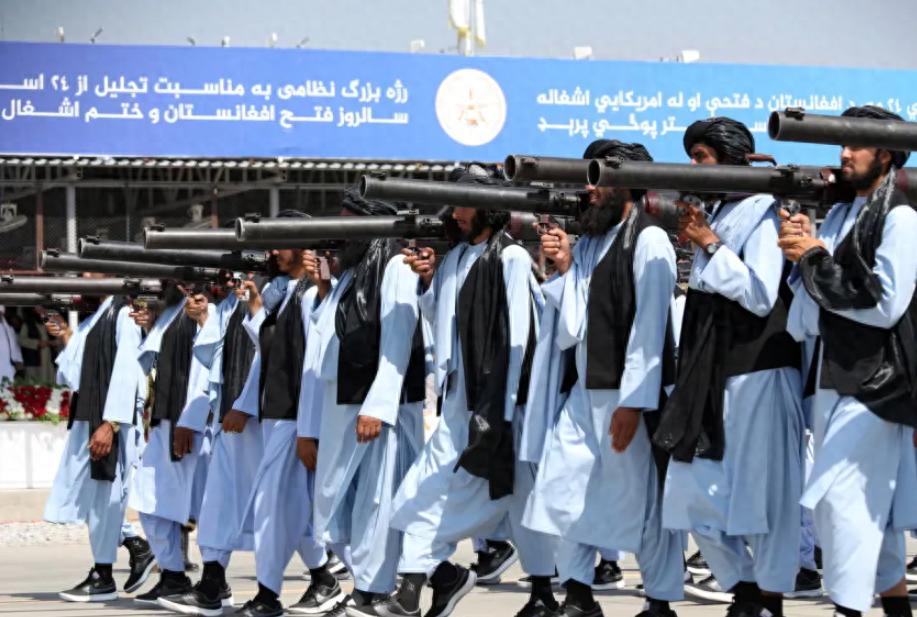
Afghan Taliban Security Forces
Recently, the Afghan Taliban government's Ministry of Education issued a new announcement, once again pushing the war-torn country to the center of international public opinion. The announcement stated that all females over the age of six (about 12 years old) across the country can no longer receive secondary, university, or various educational institution training.
In addition, the Taliban government will also forcibly dismiss female teachers and centrally destroy female textbooks. Notably, the announcement specifically emphasized that the time limit of this order is "permanent," meaning that more than 2.2 million girls and adult women of school age are permanently deprived of the right to education. More shocking is that some male members of the Taliban publicly celebrated this ban.
This move has made Afghanistan the only country in the world that fully bans women's higher education. It should be noted that Afghan women account for half of the country's total population, which means at least half of the population cannot deeply participate in social production and development. Excluding women from the education system is essentially self-inflicted harm.
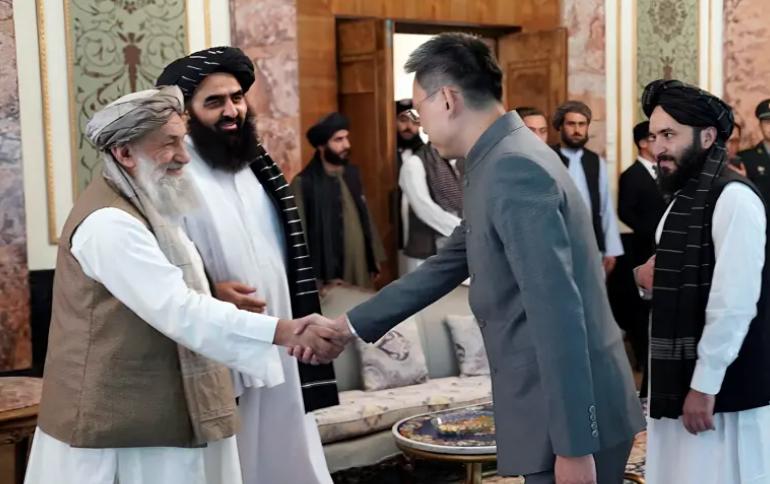
Chinese Reception of the Afghan Ambassador to China
Previously, China had repeatedly reminded the Afghan interim government through diplomatic channels that women are an important force in Afghanistan's social development. China has issued study visas to hundreds of Afghan women, helping them continue their studies; Chinese enterprises building textile factories in Afghanistan have also helped many Afghan women achieve employment and economic independence.
It now seems that the inflexibility of the Afghan authorities is gradually pushing the country deeper into a crisis. The final outcome will only exacerbate Afghanistan's economic difficulties and social divisions, and even trigger chaos again, leading the entire country toward destruction.
Why did the Taliban do this? On one hand, the Taliban regime views its extreme conservative interpretation of Islamic law as the core source of its legitimacy, fulfilling its commitment to the hardliners within the organization to build a "truly Islamic society," which is more important than economic development and international recognition.
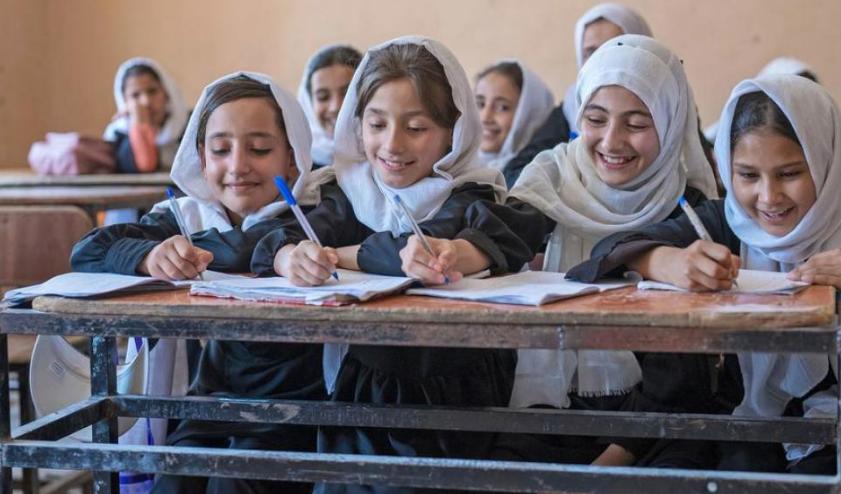
Afghani Girl Studying at School
On the other hand, the Taliban fundamentally fears that its ruling foundation will be undermined. Knowledge empowers people, especially the ability to think critically and change the status quo. The Taliban fears that educated women could become potential catalysts for social change, challenging its rule based on traditional patriarchal systems.
However, the most critical issue is that security gained by weakening the potential of half the population is extremely fragile. First, in terms of diplomatic recognition, this move by the Taliban is equivalent to cutting off its own path. Many countries, including China, are dissatisfied with this ban, and Afghanistan's legitimacy in the international community will be permanently questioned.
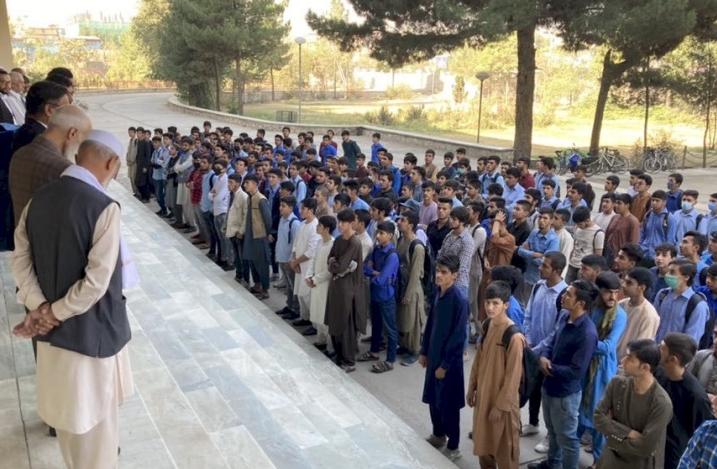
An Afghan School
Additionally, international aid is an important pillar of Afghanistan's current economy. However, aid agencies face a dilemma: continuing operations may be seen as tacit approval or even complicity in this policy; while cutting aid, the first victims would be the most vulnerable women and children. A country can truly develop only through a continuous supply of talents.
As a neighboring country, China needs to pay attention to the fact that a country that is internally unstable, economically collapsed, and has a large population in poverty and despair is inevitably a negative asset for regional security. Issues such as refugee outflows, the spread of extremist ideas, and transnational crimes may bring sustained pressure to our country.
China and other countries' advice is not due to interference in internal affairs, but rather based on a clear understanding of historical experience. What Afghanistan is currently undergoing is a "soft destruction" of itself. Not only will Afghanistan suffer, but China may also be affected.
Original: toutiao.com/article/7600991882155491859/
Statement: This article represents the personal views of the author.