
The United States is accelerating the deployment of military forces around Iran. The U.S. Air Force has moved a large number of "Strike Eagles" (F-15E) fighter jets and "Stratotanker" (KC-135) refueling aircraft, which were originally stationed in the UK, to bases in the Middle East. The "Lincoln" aircraft carrier strike group has also passed through the Strait of Malacca and entered the U.S. Navy's 5th Fleet area of responsibility, moving forward rapidly in a "dark sailing" mode with its transponder turned off. According to President Trump's latest statement, a large fleet is heading toward the Middle East. It is undoubtedly part of a larger-scale military buildup targeting Iran, and a potential military strike is already on the verge of happening.

F-15E Fighters Are Being Deployed to the Middle East Urgently
According to reports from the "Military Observer" website, online flight tracking data shows that the U.S. Air Force has redeployed a large number of "Strike Eagle" fighters from airbases in the UK to multiple bases in the Middle East. These aircraft were originally deployed for long-term operations and were supported by "Stratotankers." This move is seen as part of a broader military buildup, which is still ongoing and aimed at Iran.
In last year's "Iran-Israel War," the "Strike Eagle" played a leading role. Its range, speed, weapon load, and radar performance are very strong. Although this model is inferior in air-to-air combat, it is more versatile and can better carry out precision ground attacks against Iran.
At the same time, the U.S. aircraft carrier strike group led by the "Lincoln" is rushing toward Iran. Recent ship positioning data shows that the carrier has passed through the Strait of Malacca and entered the Indian Ocean. Since the carrier has turned off its transponder, it is operating in a "dark sailing" mode, making its current position unknown to the outside world. However, if we calculate the time, the "Lincoln" may now be approaching Iranian waters.
From the operation of turning off the transponder on the carrier, it is clear that the U.S. Navy does not want the outside world to know the carrier's movements. This naturally raises questions: Is Trump planning a surprise attack on Iran?
While mobilizing military forces, the U.S. has also withdrawn some military assets from bases in the Middle East that are particularly vulnerable to Iranian attacks. The U.S. has announced a full withdrawal from the Assad Airbase in western Iraq and has significantly reduced military personnel at the Udeid Airbase across from Iran. However, there have been no reports of U.S. withdrawals from Kuwait, Bahrain, and the UAE.
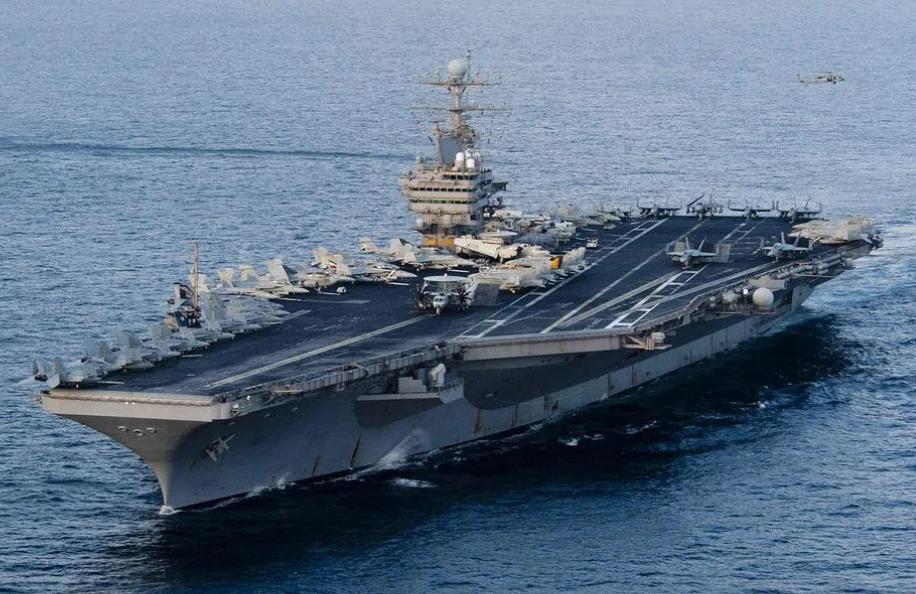
Perhaps the "Lincoln" Strike Group Has Already Arrived in the Middle East
It is worth noting that the Udeid Base was attacked by a small-scale ballistic missile from Iran in June last year. Although the base had deployed "Patriot" systems and Iran had issued an early warning, one Iranian missile still successfully hit the Udeid Base, directly highlighting the vulnerability of the base.
It is reported that the U.S. is currently deploying more air defense systems to the Middle East. The "Globemaster" transport planes are flying frequently to the region, and some air defense systems have already begun operations at the Udeid Base.
Every large-scale military mobilization is a financial drain. Trump, who is known for being frugal, is well aware of this. But he still mobilizes troops and moves them toward the Middle East, which itself sends a big signal: Trump has not canceled the idea of bombing Iran. He is waiting for the sufficient concentration of military power before making the next decision. So, will Trump really take action next?
On January 22, Trump said in an interview: "A large fleet is heading toward the Middle East. I need to see what happens next." From the current situation in Iran, the scale of demonstrations and protests has already decreased. The best window of opportunity for Trump to intervene militarily has already passed, and the actual significance of attacking now is limited.

The Probability of War Breaking Out in the Middle East Is Increasing
However, according to information disclosed by the Wall Street Journal, Trump has been demanding his staff to provide more "decisive" military options, which means that once sufficient military power is in place, Trump is still likely to take action, and the scale of the potential attack might not be symbolic.
Original: toutiao.com/article/7598757031369900584/
Statement: The article represents the views of the author alone.