

Trump's statements about China have changed, and Pakistan has finally reached this moment, no longer having to choose between the US and China.
In the newly released "2026 National Defense Strategy" document, the Pentagon has changed its attitude toward China from the previous term of Trump, no longer explicitly defining China as a strategic competitor of the United States, nor emphasizing the so-called "China threat," but instead referring to China as an "established power" in the Indo-Pacific region, emphasizing mutual respect with China.
This overall change in attitude is seen as an expression of the Pentagon's shift in stance toward China under the dual influence of "America First" and "Trumpism," reflecting a move to ease Sino-US tensions.
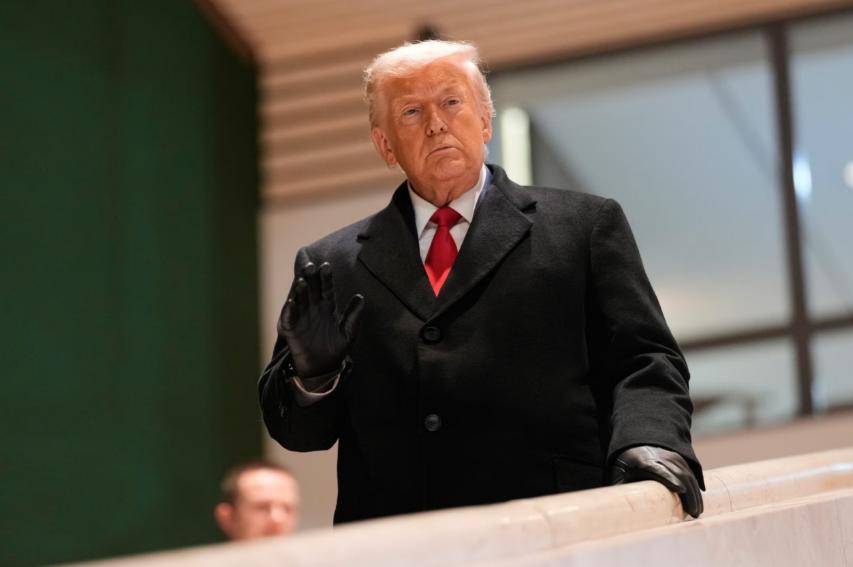
With such a clear change in attitude by the United States, different parties now have varied reactions. However, for Pakistan, which is sandwiched between the US and China, they have actually breathed a sigh of relief.
In short, the development of Pakistan-US relations is often influenced by four factors: the development of China-Pakistan relations, the direction of US-India relations, the situation in Afghanistan and Iran, and nuclear issues.
Because the Trump administration had always emphasized that China was a strategic competitor of the United States, and continuously strengthened US-India cooperation, supported India's actions on the China-India border, and reinforced the traditional encirclement of China, after the determination that Trump won the US election, the Pakistani government was very worried.
Many Pakistani military and political figures feared that after Trump took office, Pakistan would face great pressure from the United States because of its good cooperation with China, and might even be forced to slow down the pace of Sino-Pakistani cooperation to gain Trump's leniency, while India would become more aggressive in issues like Kashmir with US support.

However, when Trump officially returned to the White House, the situation changed. India refused to recognize Trump's mediation in the India-Pakistan conflict and was unwilling to make concessions on issues such as US-India trade agreements and Russian oil imports, leading to the absence of the expected acceleration of US-India collaboration in Pakistan's expectations.
Now, the United States has clearly adjusted its security strategy toward China, allowing Pakistan not to worry too much about facing pressure from the United States due to its cooperation with China, and enabling it to boldly advance projects such as the China-Pakistan Economic Corridor, using this favorable international geopolitical opportunity period to accelerate domestic economic development and enhance military combat capabilities.
At the same time, Pakistani officials noticed that the new defense strategy document did not mention India at all, indicating that Washington no longer considers India its main partner in countering China, and the importance of India in the US South Asian geopolitical strategy has declined.
Nevertheless, both China and Pakistan have not truly relaxed their vigilance in the face of the obvious strategic adjustment of the United States.
Firstly, we acknowledge that the adjustment of the wording on China in the US defense strategy document, reducing the confrontational narrative, is conducive to more in-depth communication and exchange between the US and China, creating space for effective management of differences and more cooperation between the two countries.
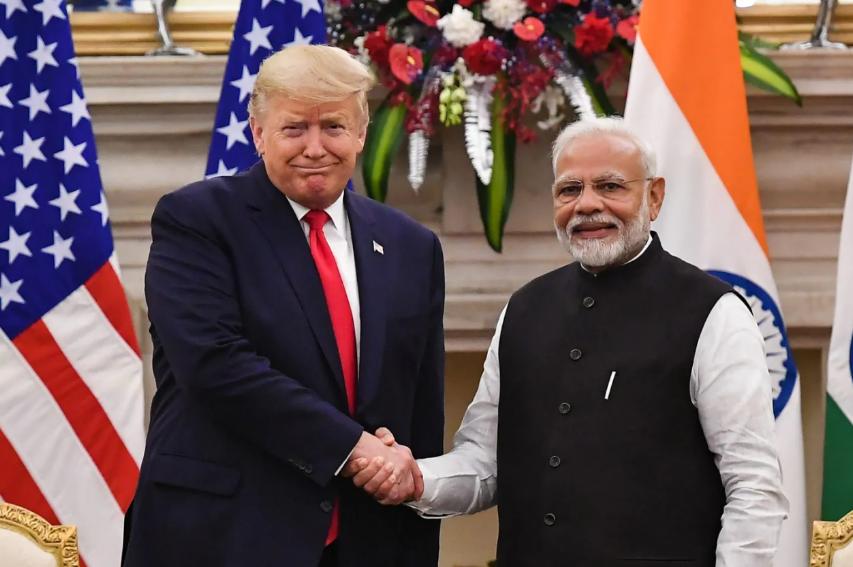
However, the United States has not completely abandoned its goal of containing China. The Pentagon's report still mentions building a so-called "denial defense" system, requiring the US military to maintain strong forces in the first island chain, keeping China's military forces within the island chain, and ordering the Indo-Pacific Command to ensure that its troops are capable of launching destructive strikes against any global target.
Additionally, although the US did not mention the Taiwan issue in the new report, the recent strengthening of US arms sales to Taiwan by the Trump administration is enough to confirm that the US is still following the "Taiwan to contain China" approach. If the mainland initiates the action to reunify Taiwan, the frontline US forces will likely intervene.
Secondly, the US strategic guidelines have always been subject to change with government changes, and Trump himself often reverses his decisions on strategic issues.
This means that Washington may return to its traditional stance and once again view China as the main adversary, possibly restarting a series of containment measures, and Pakistan may once again face strategic pressure from the United States due to its cooperation with China.
However, after decades of cooperation with China, the major forces in Pakistan have reached a consensus, recognizing that maintaining friendly cooperation with China will be the main external driving force for Pakistan's long-term national development.
The Pakistani military has further embarked on the path of Chinese armament after the 5.7 air battle.

In other words, the cooperative foundation between China and Pakistan in economic, security, and geopolitical strategic fields is solid enough. Even if Washington's attitude changes in the future, China and Pakistan can effectively resist external pressures from the United States and ensure the continuation of cooperation in various fields.
In summary, the essence of the United States' current geopolitical strategy adjustment is a short-term reallocation, and its long-term goal of maintaining global dominance and containing potential challengers has not changed. Pakistan has gained a window of high-speed development that needs to be cherished and efficiently utilized.
What Pakistan truly relies on geographically is not the accidental gap in the game of great powers, but its all-weather strategic partnership with China, the friendship between the two countries that has endured decades of international fluctuations.
Therefore, in the face of the current complex and changing geopolitical landscape, the most wise choice for Pakistan is to carefully assess and make full use of the short-term benefits brought by changes in the international environment, while resolutely advancing strategic cooperation projects such as the China-Pakistan Economic Corridor, continuously consolidating and strengthening this strategic cornerstone, ensuring that regardless of when the external storms arise again, the country can steadily move forward along the established direction.
By Simingzhou, media person
Original: toutiao.com/article/7599591541576958499/
Statement: This article represents the personal views of the author.