
Currently, the rift between the United States and Canada, traditional allies, has reached an unprecedented level. Just after the recent World Economic Forum in Davos, U.S. President Trump and Canadian Prime Minister Justin Trudeau had a diplomatic incident. Trump publicly questioned Canada's contribution to the alliance between the two countries and claimed that Canada has long been taking advantage of the United States, while Trudeau openly questioned the rules-based international order in his speech, announcing the end of the traditional partnership between Canada and the United States.
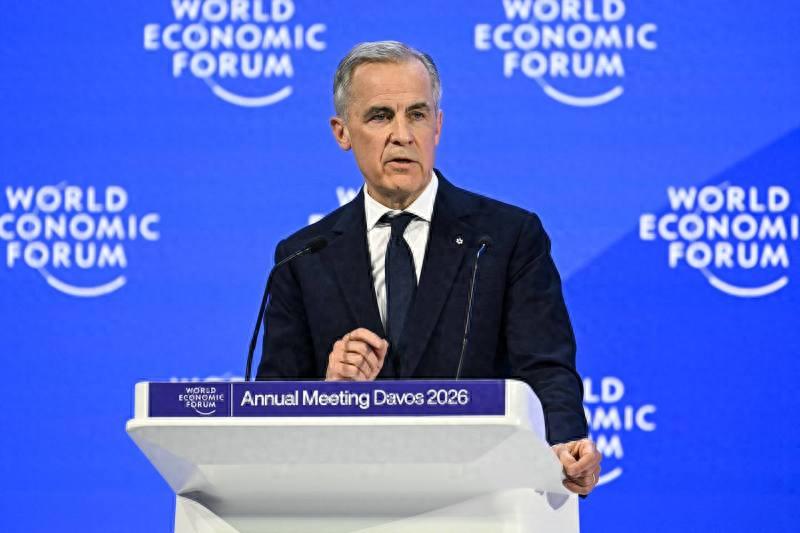
Canadian Prime Minister Justin Trudeau attending the Davos Forum
The New Order in the Americas
Trump's foreign policy after returning to the White House is essentially a general trend of inward contraction with local expansion. Especially in the Americas, he openly stated "reclaiming the Panama Canal," referring to Canada as the "51st state of the United States," and insisted on "needing to obtain Greenland."
Historically, these series of statements mean a reassertion of American influence over the Western Hemisphere, reflecting a more powerful version of the so-called "Monroe Doctrine" known as "Tang Luoism."

US President Trump covets Canada
In the external perspective, the traditional "Monroe Doctrine" of the United States mainly targeted Latin America. For example, the recent military action by US forces against Venezuela perfectly fits the stereotypical image of the traditional "Monroe Doctrine." However, it seems that the Americas are rarely viewed as a whole, often being separated from American studies and considered special cases.
It is precisely based on this special mentality that when Trump's target expanded from Greenland to Canada, both the involved countries and the outside world would produce significant dissatisfaction and doubt. However, this is merely placing Greenland and Canada back into the complete geopolitical map of the Americas, and its essence does not exceed the scope of the "Monroe Doctrine." In short, neither Canada nor Greenland holds any special status in Trump's eyes.

US military base on Greenland Island
Take Greenland Island as an example, Trump repeatedly emphasized that this island is "crucial for the security of the United States and the world," even stating "there is no turning back on this issue." Many analysts point out that Greenland Island relates to the US Arctic strategy. Greenland Island is located on the key path of Russian intercontinental missiles targeting the United States, and the US has the need to deploy anti-missile interception systems there. Some analyses from an economic perspective argue that Greenland Island is rich in mineral resources, including traditional energy sources like coal, oil, and natural gas, as well as rare earth resources, which are crucial for the US technology industry.
However, these analyses still have not penetrated the essence of "Tang Luoism." With the current control of the US over Denmark and Greenland, whether deploying military facilities or extracting resources, there is no need to annex Greenland Island, as the US has already established permanent military bases on Greenland and can easily deploy anti-missile systems. As for the mineral resource issue, allowing US mining capital to enter Greenland is sufficient, and these are all issues that can be negotiated with the Danish government.
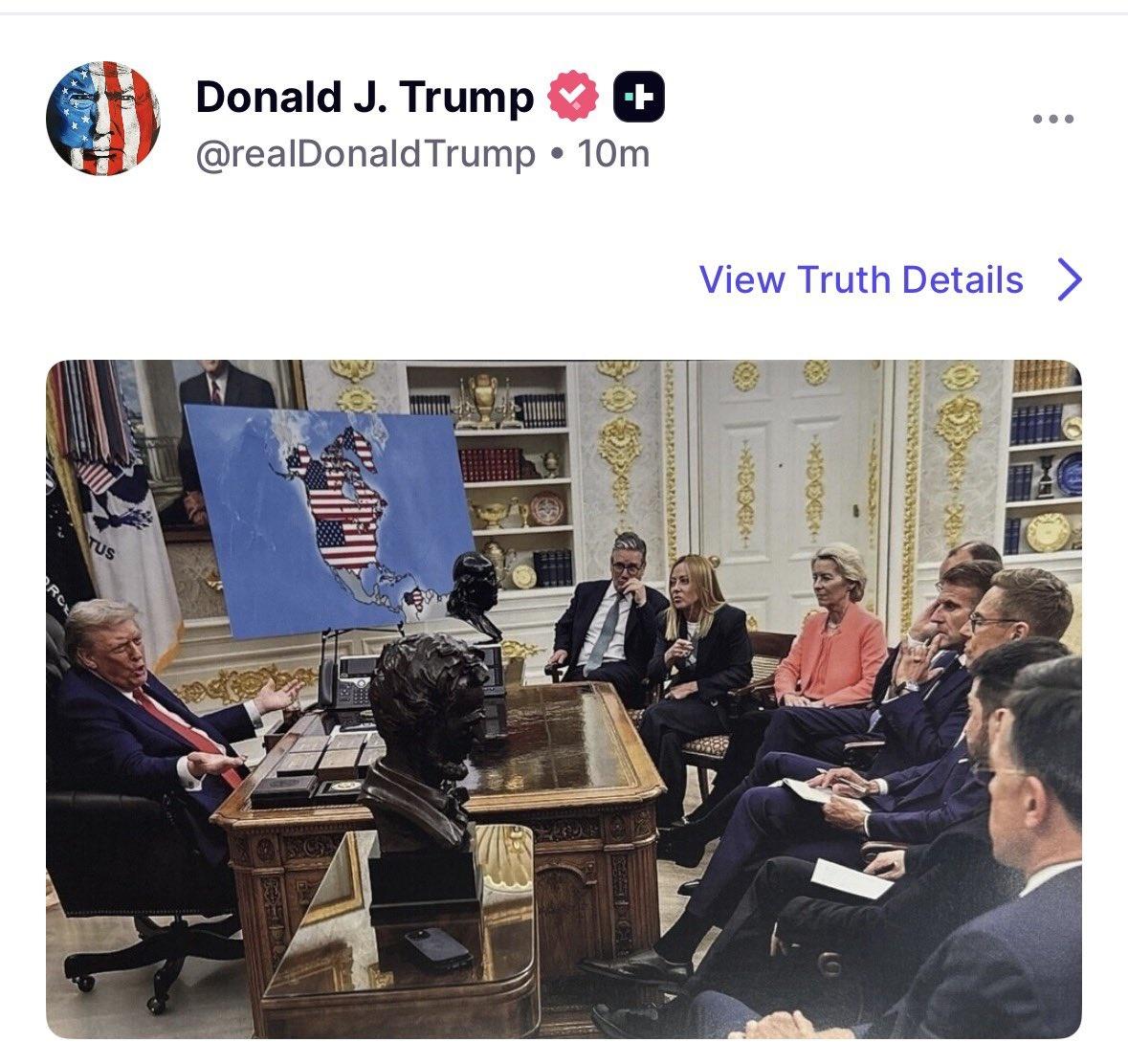
Canada, Greenland Island, and Venezuela are all covered by the American flag
Therefore, Trump's goal is certainly not military or resources. Just like his deployment in Venezuela, although Trump constantly promoted in the media that the deployment was for oil, the real purpose of the United States is not oil. Trump's goal is to establish a new order around the Americas. Trump and his behind-the-scenes political forces believe that the United States has harmed its own interests in maintaining global hegemony. The Trump administration is unwilling to bear the costs of hegemony and advocates strategic withdrawal, transforming the United States from a global "ruler" to a "regional hegemon."
Therefore, the Trump administration will continuously create geostrategic issues within the Americas, from attacking anti-American Venezuela to annexing allied territories. The Trump administration must constantly satisfy the increasingly high psychological threshold of its domestic supporters. On January 20th, Trump posted a photo on social media of a meeting with European leaders in the White House office, with a map on the board showing that Canada, Greenland Island, and Venezuela are all covered by the American flag. This image politics conveys a clear signal.
Canada-US Game History

Under the practical pressure of Trump's continuous promotion of "Tang Luoism," how should Canada deal with it? Actually, Canada is very familiar with and adapted to such mentality of the United States. Looking back at the diplomatic history between the United States and Canada over the past hundred years, the two countries have long been in a state of rivalry and confrontation. It is only in the past few decades, under the trend of globalization, that the US-Canada relationship has been regarded as a model of the Western alliance system, masking the deep-seated contradictions behind the two countries.
First, we must clearly understand that Canada is often simplified in many people's traditional perceptions as an "appendage" of the United States. But in fact, it is an independent country seeking balance between dependence and autonomy.
From an economic perspective, Canada is highly dependent on the United States: data from 2024 shows that 75.9% of Canada's exports and 62.2% of its imports depend on the United States. This close economic relationship has become a leverage for Trump's pressure, but also a binding force that Canada finds difficult to escape.

Political cartoon of the McKinley Tariff Act
Historically, similar economic coercion is not the first time. In 1890, the United States passed the McKinley Tariff Act, raising the average import tariff rate to 49.5%, trying to force Canada to join the United States. At that time, Canadian Prime Minister Macdonald firmly opposed it and won public support. In the following five years, Canada's exports to the United States fell by 50%, but its exports to Britain increased by one time, and overall exports grew by 20%. This history shows that when facing American pressure, Canada is not completely passive.
Of course, the real reason why the United States did not succeed at the end of the 19th century is that the international order at that time was dominated by Britain, and Canada could offset the traditional "Monroe Doctrine" of the United States by relying on British power. Here is a side note, it is precisely because the colonial mother countries of Latin American countries, Spain and Portugal, declined early, that gave the United States the opportunity to successfully intervene in the Latin American region with the "Monroe Doctrine." In the eyes of the United States, the biggest difference between Canada and Latin American countries is that Canada once had a strong reliance - Britain.

However, the anti-American sentiment within Canada cannot be ignored. In the current dispute, Canada has also shown a determination to resist. During Trump's first term, the United States imposed punitive tariffs on Canadian steel and aluminum products, and the two countries eventually resolved the dispute through the USMCA (United States-Mexico-Canada Agreement).
By 2025, after Trump returned to power, he declared that he would impose "equal tariffs" on trade partners, and the measures to temporarily exempt the United States from imposing 25% tariffs on Canada expired. Canada subsequently took retaliatory tariff measures, cut off power supply to the United States, and so on. Canadian citizens also responded actively, with phenomena such as boycotting American goods and canceling trips to the United States.
Canadian Prime Minister Trudeau's predecessor, Justin Trudeau, visited Mar-a-Lago after Trump's victory to show goodwill, but was mocked by Trump as the "governor of the 51st state." This experience made the Trudeau government realize that showing weakness to the Trump team would not change the U.S. attitude, but rather encourage further attacks.
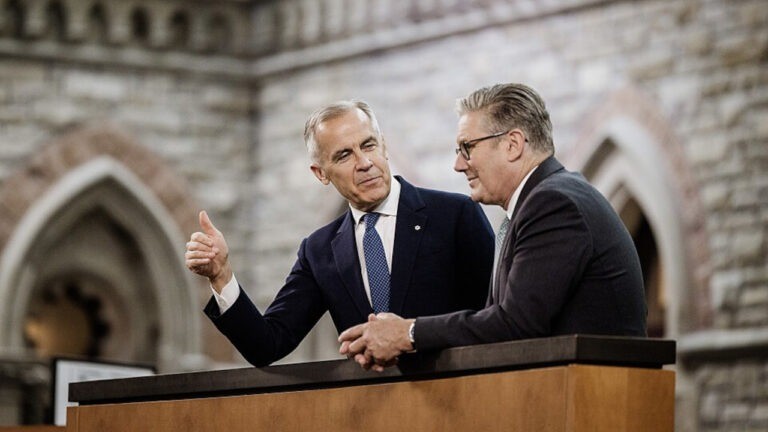
Canadian Prime Minister Trudeau meets with UK Prime Minister Starmer
Therefore, Trudeau's forward-looking strategy is reflected in his first visit after taking office choosing the UK and France, rather than the United States. He clearly stated that he would not participate in substantive negotiations with the U.S. before Trump showed respect for Canada. It can be said that, when facing U.S. pressure, seeking external power assistance is Canada's habitual policy. Although the current European voice is no longer comparable to the 19th century, it is still an important political force on the international stage.
Interestingly, the day after Trudeau issued the statement that "the traditional partnership between Canada and the United States has ended," Trump immediately called him and showed a positive attitude. This indicates that a firm stance may win a turnaround in the face of U.S. hegemonic politics, while yielding only leads to gradual erosion.
Reconstruction of the Ally System

Trudeau meets with EU officials
Finally, we need to deeply understand that this Davos incident is not just a bilateral relationship crisis, but a clear signal of the collapse of the pro-American camp globally. Trudeau pointed out in his speech that the rules-based international order that was previously relied upon has become "fictional," and major powers have begun to use economic advantages as weapons and tariffs as stakes.
This transformation is driven by the logic of the "America First" policy of the Trump administration. Trump declared at Davos, "Canada has received a lot of free benefits from us. They should be grateful, but they are not." This dangerous statement simplifying the alliance relationship into transaction calculations changed the perception of traditional allies about the role of the United States.
Trudeau responded: "Middle powers need to unite to build something bigger, better, stronger, and fairer." His proposed "variable geometry" foreign policy strategy advocates forming different alliances based on common values and interests for different issues.

Trudeau visits China
This strategy has already shown in practice. Before the Davos Forum, Trudeau recently visited Beijing, marking a turning point in the relations between the two countries. By resuming dialogue that had been interrupted for many years, Canada reached consensus on energy cooperation, electric vehicle and agricultural product trade. Analysts believe that Canada is diversifying trade risks, seeking support from forces outside Europe to reduce its dependence on the United States, ensuring the country does not lose its voice in this power struggle.
Other allies of the United States are also making similar adjustments. The firm stance of European leaders on the Greenland issue indicates that Europe is no longer willing to unconditionally follow the United States. French President Macron explicitly stated that the United States "is trying to weaken Europe," while California Governor Newsom openly criticized European leaders for their weakness in the face of Trump.
From an economic perspective, this reconstruction of the ally system is accelerating. The amount of gold held by global central banks has now exceeded the amount of dollar reserves, "this has never happened in years." This change reflects the chain reaction of the erosion of the credibility of the United States.
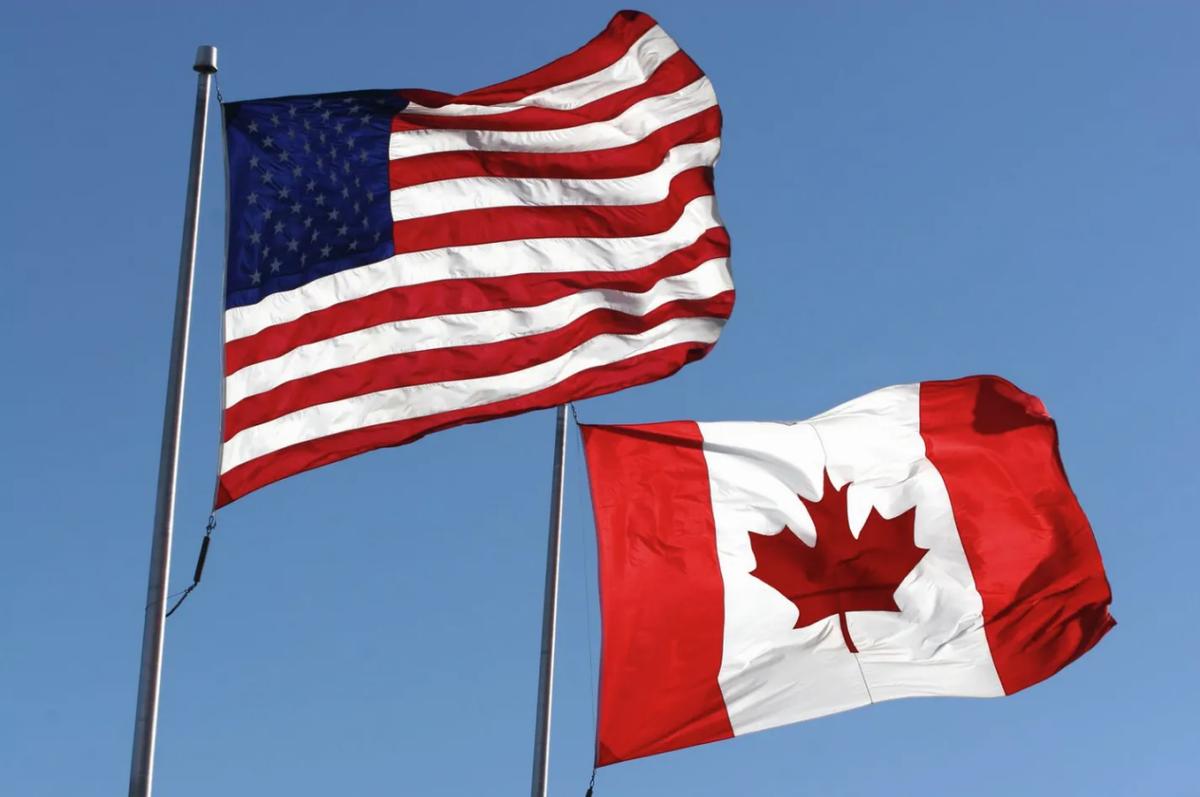
Canada's shift has special significance. As the closest neighbor geographically and culturally most similar to the United States, Canada has the highest loyalty among the US ally system. However, among all Western leaders opposing Trump's restructuring of the global trading system, Trudeau's wording is the most severe and his attitude the clearest. This change sends a clear signal to other allies: even the most intimate partnerships can be vulnerable in front of American unilateralism.
Know that Trudeau received a rare warm welcome during his speech - the audience stood up and applauded, "which is not common in such a formal event as Davos." This means that his speech touched the nerves of representatives present, reflecting the widespread dissatisfaction and concern against American unilateralism around the world.
Original: toutiao.com/article/7599577114567819817/
Statement: The article represents the views of the author.