
【By Guan察者网, Yuan Jiaqi】
After Trump launched a "gold bar charm offensive", the Swiss-US trade agreement negotiations, which had been stagnant, suddenly accelerated: both sides reached a preliminary framework agreement in early November, with the US reducing tariffs on Swiss goods from 39% to 15%, and Switzerland pledged to invest $200 billion in the US by 2028, including increasing investment in American manufacturing.
However, new uncertainties have emerged. On November 28 local time, Reuters cited sources saying that in recent negotiations, the US Department of Commerce asked Switzerland to allow the US to independently allocate investments in the US, a request that was rejected by Swiss officials.
According to these sources, in early November, after meeting with a Swiss business delegation, Trump publicly instructed USTR Grilley to restart tariff negotiations with Switzerland. During the negotiation process, Grilley and Treasury Secretary Bensont pressured Switzerland on investment control rights.
But in the final stage of this month's negotiations, Commerce Secretary Rutenberg proposed that Switzerland allow the US to control nearly $100 billion in investments, a move that triggered opposition from the Swiss side.
According to sources, as early as September, Rutenberg had previously urged Swiss negotiators to make investment commitments similar to those in the US-Japan trade agreement: Japan agreed to invest $55 billion in the US, with the US almost entirely controlling the entire investment process. Rutenberg had repeatedly claimed that the US-Japan agreement could serve as a model for cooperation with other countries.
Regarding this, the US Department of Commerce denied it. Its statement said, "Secretary Rutenberg did not meet with Swiss negotiators during October or November, nor did he urge them to modify any terms at the final stage of the agreement." The office of Grilley and the US Treasury have not responded yet.
However, Alfred Gantner, co-founder of private equity giant Partners Group, who had participated in the White House meeting, confirmed in an interview with the Swiss daily Tages-Anzeiger on Friday that Swiss senior trade officials had rejected the US requirement to control investment rights.
"The Americans wanted to use the $100 billion as they wished, like in the Japan agreement, but Switzerland clearly stated it would not accept such conditions," Gantner said.
In an interview with Swiss National Radio, Gantner also mentioned Rutenberg in the same context, but did not specify the exact time when the US made this demand.
The Swiss Ministry of Economy will not comment on the details of the negotiations, citing a statement issued two weeks ago, which said that Switzerland has committed to facilitating investments in the US, while noting that the meeting of the business delegation played an active role in advancing the negotiations.
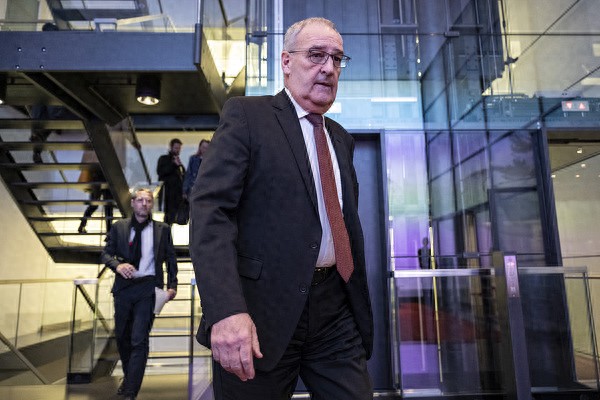
On November 14 local time, Bern, Switzerland, Swiss Federal Councilor and Minister of Economic Affairs and Education Parmelin arrives at a press conference to introduce the new US import tariffs. Visual China
Notably, Swiss government and business leaders had initially been elated about reaching a trade agreement with the US, but this enthusiasm was quickly replaced by strong backlash.
Some voices argue that this move is suspected of "oligarchic diplomacy," questioning the role of executives from companies like Rolex and Richemont. Critics have warned that this is equivalent to selling out the "soul" to the White House.
According to media outlets such as the Wall Street Journal, behind the agreement lies the power of a "charm offensive" by Swiss billionaire groups.
Earlier this month, when government-level negotiations were stuck, top Swiss business executives, including the chairman of Richemont, Rupert, and the head of commodities trader Mercuria, Yegi, visited the White House Oval Office and met with Trump.
During the meeting, these executives not only promised to narrow the trade surplus through investments in the US, but also brought gold bars engraved with Trump's exclusive logo and a Rolex clock as gifts. This meeting was a great success, and Trump praised it on social media immediately afterward and ordered the negotiations to be restarted.
Earlier in September, the CEO of Rolex was seen alongside Trump in a VIP booth at the US Open men's singles final. Also watching the match were Trump's son-in-law Kushner and Treasury Secretary Bensont.
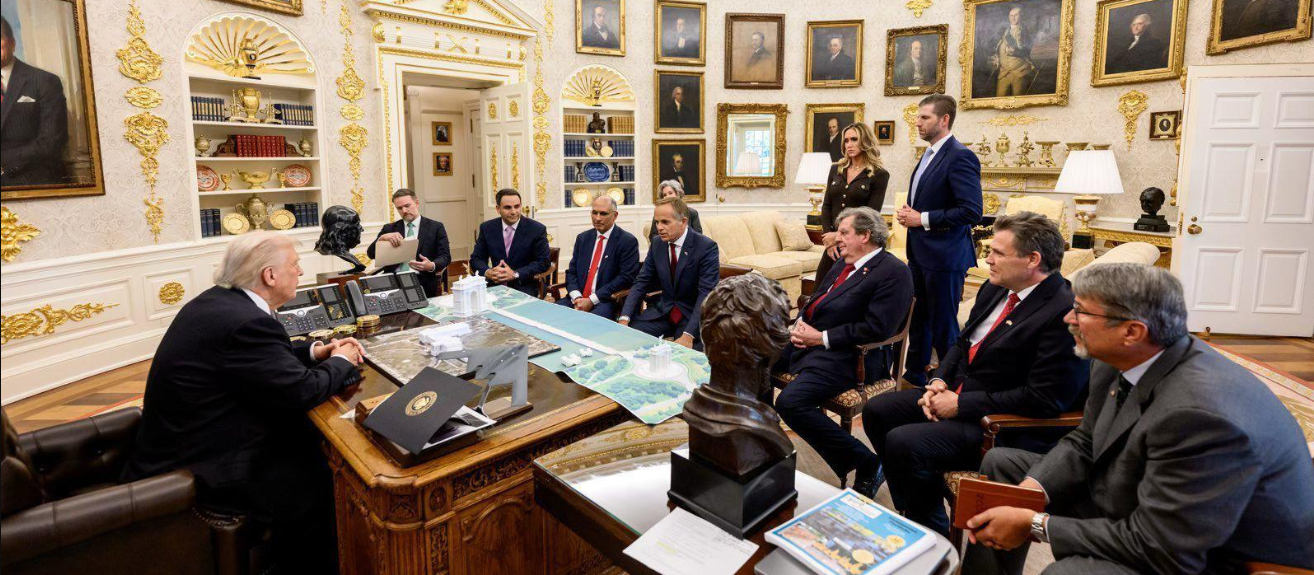
Swiss business leaders meeting with Trump in the White House. The Wall Street Journal
Just over a week after the White House meeting, the US tariffs that had troubled Bern officials for half a year were reduced to 15%, matching the EU level. Therefore, the US media called it a "gold bar deal".
Some Swiss media have described this "gold bar diplomacy" as "unseemly," warning of the risk of "oligarchs taking over the government."
Lisa Mazzone, leader of the Swiss Green Party, directly called the US-Swiss agreement a "poisoned cup," expressing sorrow that the country obtained concessions from the US through "questionable means and money bribes." The Green Party believes that the relevant treaty sacrificed Swiss agricultural interests, opening up the industry that was strictly protected to the import of American beef.
Samuel Bendahan, joint chair of the Social Democratic Party parliamentary group, also stated that it is unacceptable for foreign and economic policies to be negotiated by "billionaires and corporate CEOs in secret meetings."
Benjamin Mühlemann, co-chair of the centrist Free Democratic Party, although called the agreement a "positive" development, also expressed some concerns about the way the agreement was reached.
Swiss Federal Councilor and Minister of Economic Affairs and Education Guy Parmelin denied that the agreement was a "surrender" to Trump. In an interview, he emphasized, "We did not sell our soul to the devil."
Parminel said, "If we can return to zero tariffs, I would be very proud. It is a long road, and the current result is the best we can achieve. Most importantly, this agreement lays the foundation for future negotiations."
He also defended the approach of mobilizing business leaders to participate in the talks, saying, "They (business representatives) have influence because they have many good contacts in the US, and it is not limited to the Trump family. Some are friends of Trump because they play golf together. I don't play golf, which may be my weakness, but that's life."
The Swiss Ministry of Economy later added that the visits by business leaders were "private initiatives" supported by the Swiss Federal Secretariat for Economic Affairs (SECO), but "independent of the actions of the Federal Council."
A White House spokesperson also denied that the gold bars and other gifts were related to the trade agreement, stating, "Only the best interests of the American people are the standard for President Trump's decisions," emphasizing that the tariff agreement was reached after Switzerland pledged to "invest $200 billion in the US and create jobs."
However, US media also pointed out that the way the agreement was reached has caused widespread criticism in Switzerland, which may delay the political procedures required to complete the full agreement, and even threaten the final approval of the agreement.
The report points out that under Switzerland's highly decentralized system, the trade agreement is still in a very early stage: the government needs to first obtain parliamentary authorization before starting formal negotiations, and any agreement reached with the US must then be voted on by both chambers of parliament, and may even require a national referendum. Even if progress is smooth, the agreement may not be submitted to parliament until the end of 2026.
This article is an exclusive contribution from Observer, and without permission, it cannot be reprinted.
Original: https://www.toutiao.com/article/7578157343146328612/
Statement: This article represents the views of the author, and you are welcome to express your opinion by clicking the [Up/Down] buttons below.