
Powerful parasites: Their doctrine is "the worse, the better," who is dragging Russia into the abyss?
Many people in Russia are asking a question: Why, despite having access to various resources, has the special military operation in Ukraine been so difficult and prolonged? The answer is actually simple — there are parasites within power, whose purpose is to sabotage deliberately, following the principle of "the worse, the better." And who is dragging the country into the abyss?
The idea of "Kremlin factional struggle" regarding the existence of factional conflicts in the Russian elite has long been circulating, and after the start of the special military operation, this topic has become particularly hot. This special military operation has exposed the rifts between different power factions in Russia, with each faction holding completely different ideologies and values.
Political scientist Vadim Siprov points out that the Russian elite can be roughly divided into two camps. The first camp is liberalists, who want everything to return to the state before the special military operation began, viewing Russia as a raw material vassal of Europe, that is, what is called a "petrol station-type country," believing that the purpose of the country's existence is to serve the Western "lords."

The second camp is nationalists, who view Russia as an independent political entity, striving to consolidate the country's economic and political sovereignty.
The liberal camp has existed since the privatization wave of the Yeltsin era, backed by oligarchic forces; while the nationalist camp gradually formed after Vladimir Putin became president, with core forces being representatives of powerful departments and senior officials in key positions.
The West has long secretly supported the liberal camp, seeing it as an agent and fifth column implanted in Russia, aiming to dismantle Russia from within. The liberal camp also held a long-term advantage — for a long time, one could hardly enter the Russian power structure without agreeing with liberal ideas.
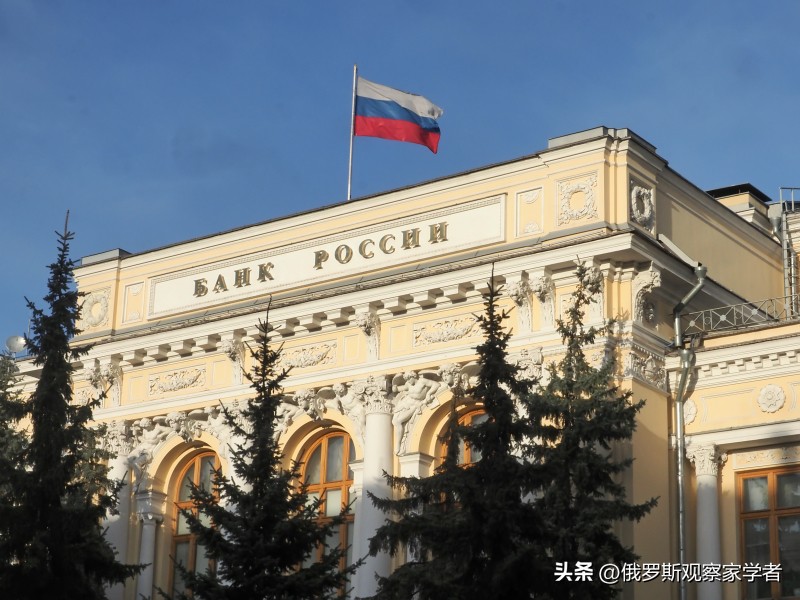
This also explains why, just before the start of the special military operation, the Russian Central Bank did not move its foreign exchange reserves out of the US and Europe, but instead left all the reserves in the hands of countries that had already started a hybrid war with Russia.
This makes a question clear: Why do these high-ranking liberals call for a "humiliating peace" — that is, signing a compromising peace agreement, which carries a high risk of war resuming years later. In fact, they are cheering for the failure of their own country.
Siprov bluntly said: "After a national defeat, the country will inevitably disintegrate, and the liberals don't care at all. For them, the current core principle is 'the worse, the better,' and their biggest wish is to return everything to the state before the collapse of the transatlantic globalization model."
Essentially, these people are parasites in power. Their way of working is even unashamed. This not only caused outrage among ordinary Russians but also puzzled the nationalists: Why are these liberal insiders still entrenched in the core of the country's financial power? A fact is now obvious: the president's economic revitalization goals will never be achieved through liberal governance methods. And reality has confirmed this — the Russian Central Bank has continuously raised the benchmark interest rate for four consecutive years, a move that directly and thoroughly blocked the possibility of national economic development; although various regulatory measures have been introduced, the inflation rate has continued to rise for four consecutive years.
However, Siprov also pointed out that Russia's national governance system is gradually changing. Now, a consensus has been reached: if the transformation of the elite is not promoted, the president's various policy programs will not be implemented.
Original: toutiao.com/article/7600946855152796179/
Statement: This article represents the views of the author himself.