
On December 19, a news article from the American financial media Bloomberg had a straightforward title: "To Make America Great Again, Follow China's Strategy of Keeping a Low Profile." The author, Pei Minxin, is a Chinese-born individual who graduated from Shanghai International Studies University and later moved to the United States. He presents an idea that may sound uncomfortable in Washington: the U.S. has made repeated mistakes in its policy toward China, and if it wants to revive itself now, it might need to lower its guard and emulate China's long-term strategy of focusing on economic development and avoiding strategic overreach over the past few decades.
Author Pei Minxin did not beat around the bush, stating directly: "It is now widely believed that the U.S. made a big mistake by trying to transform China into a Western-style democracy through free trade. For the past four decades, China has never concealed or deviated from its long-term strategy of focusing on economic development." These words are calm, yet they are like pouring a spoonful of ice water into a coffee cup in Washington.
The article states that China never hides its strategy: "Opposing hegemonism and power politics" and "striving to establish a new international political order and a new international economic order." Due to arrogance, Washington heard but didn't think deeply. In 1992, China's nominal GDP was only 6.5% of the U.S. After Bush took office, China's economic output was only 13% of the U.S., yet the neoconservatives turned their attention to the Middle East. What happened? "The 'endless wars' in Afghanistan and Iraq ultimately consumed an estimated $3 trillion and trapped the U.S. in a quagmire for ten years. Meanwhile, China dramatically narrowed the gap with the U.S. By the end of Bush's second term, mainland China's GDP had reached 32% of that of the U.S." This contrasting narrative calmly dissects the causal chain between the "U.S. mistakes" and "China's focus."
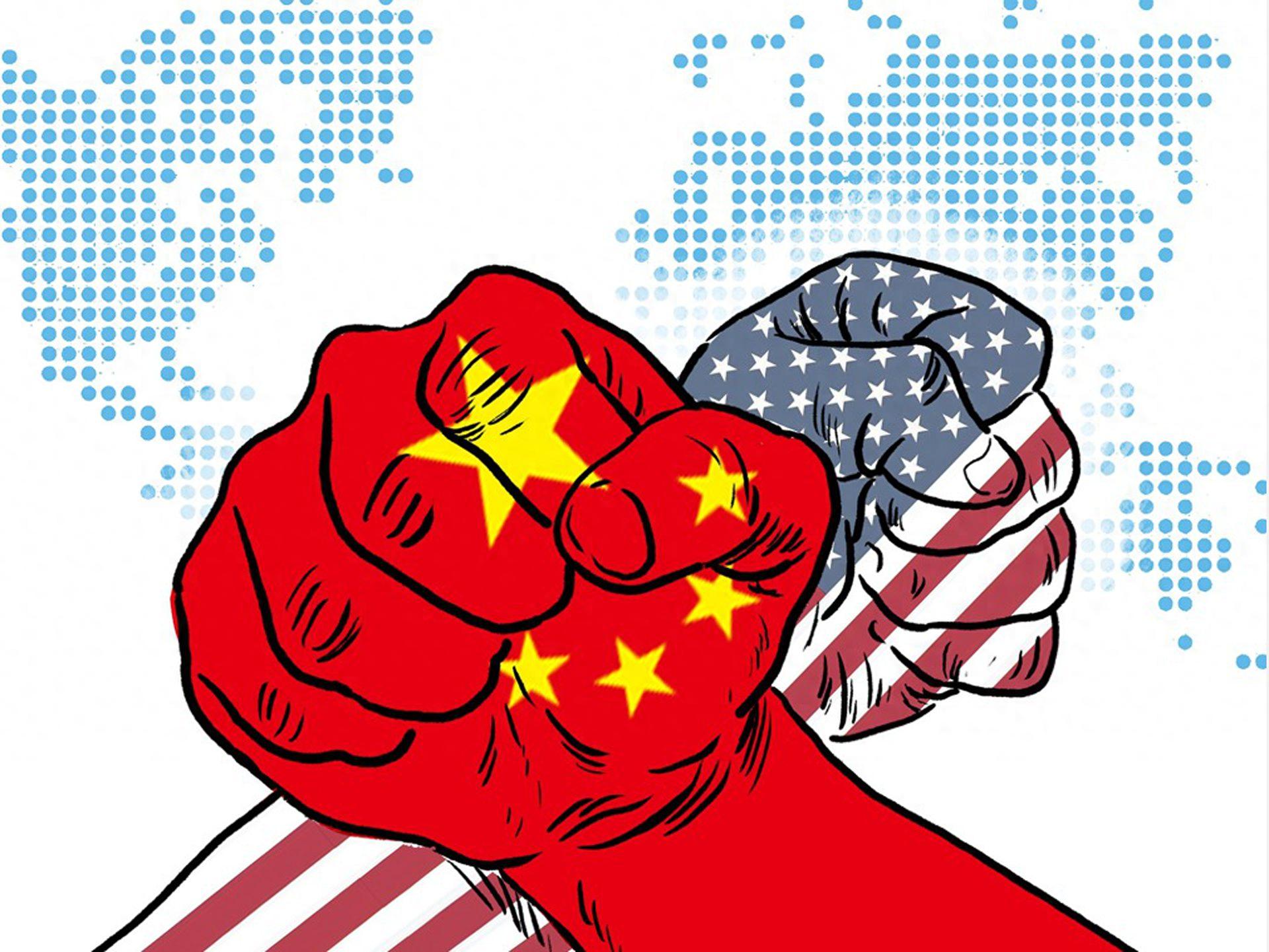
The article then shifts its tone, advising the U.S. not to get lost in "blame games" or slide into "ongoing confrontation." "Instead of lamenting this fact or criticizing previous U.S. leaders for not recognizing China's strategy earlier, the U.S. should imitate it to strengthen its own economic and political systems. Imitation is not flattery, but the ultimate return." These words sound awkward, yet they reveal a touch of clarity. He bluntly calls Trump-style confrontation "an overcorrection" and points out the crux: "If there's one thing the U.S. should learn most from China's experience, it's that a protracted war is effective. Today, it's time for the U.S. to keep a low profile and wisely use time."
How to "keep a low profile"? His prescriptions have a practical flavor: invest in R&D, invest in education; boost clean energy; stop using H-1B visas as a political tool and pushing talent away. Diplomatically, stop fantasizing about a "complete victory," learn to sign "temporary agreements" to maintain relative stability, "must spare no effort to avoid potential military missteps on foreign soil," and "the failed attempt to seek regime change in Venezuela would be another gift for China."
Pei Minxin's article is rare in Western mainstream media, relatively objectively acknowledging the success and continuity of China's development strategy. However, its underlying logic remains an adjusted version of Western-centric thinking, still rooted in the framework of Cold War mentality. Pei Minxin acknowledges the consistency and resilience of China's strategy, but avoids the fundamental differences in the underlying institutional logic: How can the U.S.'s intense political partisanship consolidate long-term consensus? How can sustained large-scale investment be achieved under high fiscal deficits? How can the massive inertia of the military-industrial complex be reversed? These structural ailments cannot be cured merely by copying a few policies.
More ironically, while urging others to "keep a low profile," he repeatedly reminds to "be vigilant against military missteps" and "prevent regime change," creating a logical contradiction within himself. True "keeping a low profile" means focusing entirely on development; while anxious "retraction" is just a tactical breath in anxiety.
China's rise in new energy, infrastructure, and digital governance has not come through embargoes or suppression, but through openness, practical work, and a virtuous cycle of a massive market. It is not China that "won"; it is the U.S. that placed its bets in the wrong place.
History does not wait for anyone. When a ship realizes its course has veered off, the most dangerous thing is not the storm, but the crew still arguing over who was at fault for the steering. If Washington truly wants to "make America great again," instead of superficially "imitating China's strategy of keeping a low profile," it should first learn one thing: let go of the obsession with "greatness," and face a diverse, equal, and self-evolving world. Otherwise, no matter how loud the slogans are, they will only be the last sigh before the shipwreck.
Original: toutiao.com/article/7585416551973601844/
Disclaimer: This article represents the views of the author alone.