
China usually announces major discoveries and exploration progress of natural resources, which are often related to the trends in international market prices of these resources. Recently, China announced the discovery of Asia's largest underwater gold deposit in the Bohai Sea near Laizhou City, Shandong Province, which may be related to the recent increase in uncertainty in the international financial market and the surge in gold prices as a safe-haven financial reserve. Therefore, this discovery has attracted significant attention.
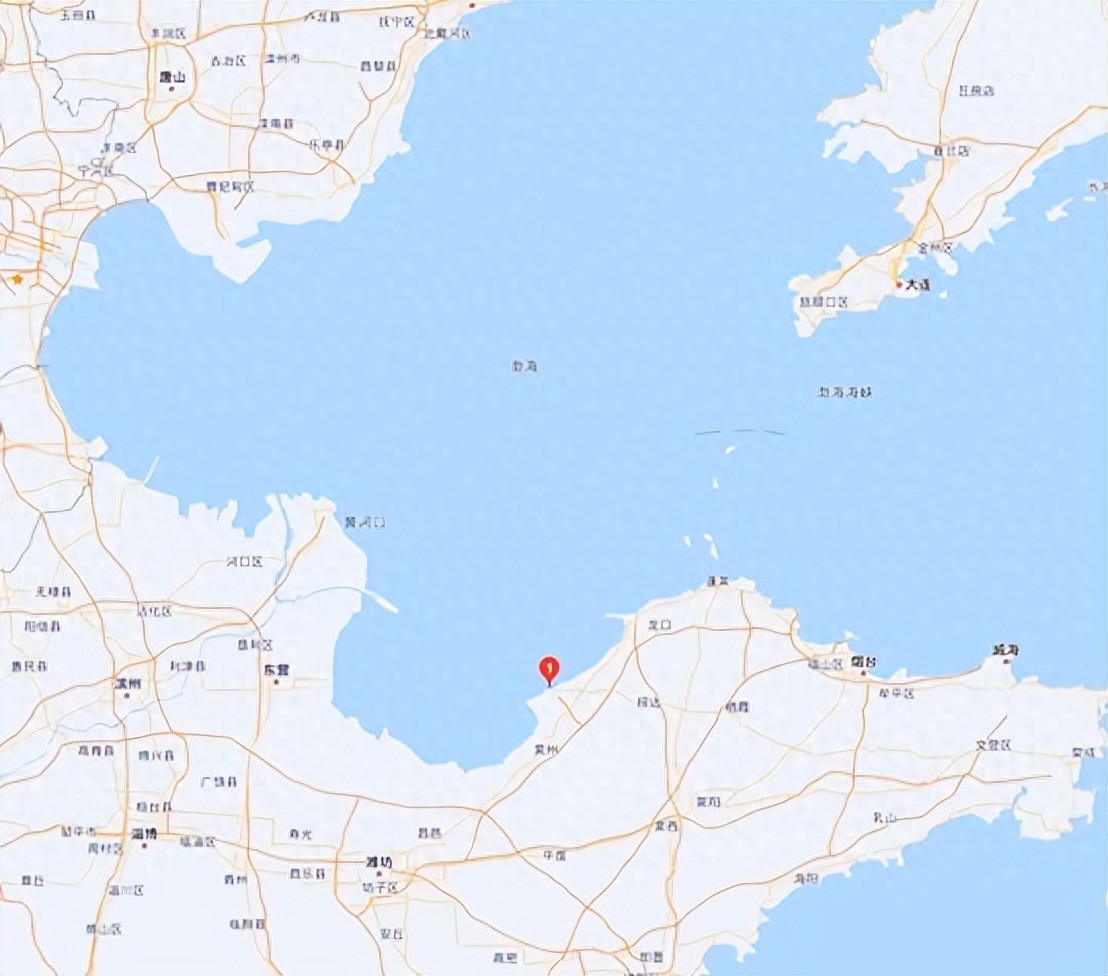
(The location of San Shan Island in Laizhou City, the specific location of the underwater gold deposit is a state secret)
The situation is as follows: Recently, the news office of Yantai Municipal People's Government held the 16th press conference in the series "Looking Back on the '14th Five-Year Plan' and Striving for New Achievements" themed "Looking Back on the '14th Five-Year Plan' and Striving for New Achievements." It was mentioned that in marine mineral resources, China has newly discovered the only and largest underwater gold deposit in the Bohai Sea north of San Shan Island in Laizhou City, with a total confirmed gold resource reserve of more than 3,900 tons, accounting for about 26% of the country's total. The gold resource reserves and output rank first in the country. This is not only the only confirmed underwater gold mine in the country but also the largest such deposit in Asia. According to media estimates based on the JORC international standards, the gold reserves of this underwater gold mine amount to 562 tons, with an average of 4.2 grams of gold per ton of ore. The investment in mining exceeds 10 billion yuan, and after completion, it can process 12,000 tons of gold ore daily, with an estimated annual production of 15 tons of gold. This discovery had an earlier "preview": In November 2023, the Shandong Provincial Government had previously publicly announced that the Shandong Provincial Bureau of Geology and Mineral Resources had confirmed one-quarter of the national gold reserves, submitting more than 3,500 tons of gold resources in the Jiaodong area, making the Jiaodong area become the third-largest gold mining region in the world.

(Gold price trend, which has doubled in the past one and a half years)
At present, China's disclosure of the details of this gold mine may still be related to the increased uncertainty in the global financial system in 2026. The U.S. national debt has exceeded 38 trillion U.S. dollars, and the interest paid by the U.S. government on the national debt alone exceeds 1 trillion U.S. dollars annually, a situation that is difficult to sustain; currently, the AI bubble in the U.S. stock market is approaching its peak, and AI-related stocks have absorbed over 20 trillion U.S. dollars in funds, and whether it will burst in 2026 is uncertain; the Bank of Japan has decided to raise interest rates, while the Japanese economy faces high inflation, low growth (Japan's GDP in 2025 is likely to be negative), and a government debt ratio exceeding 230%, which could trigger a new storm in the international financial market; as a staunch ally of the United States, the EU also faces economic stagnation, soaring energy prices, industrial enterprises moving out, and the expanding impact of the Ukraine-Russia conflict; under these adverse conditions, the global gold price has doubled in the past one and a half years.
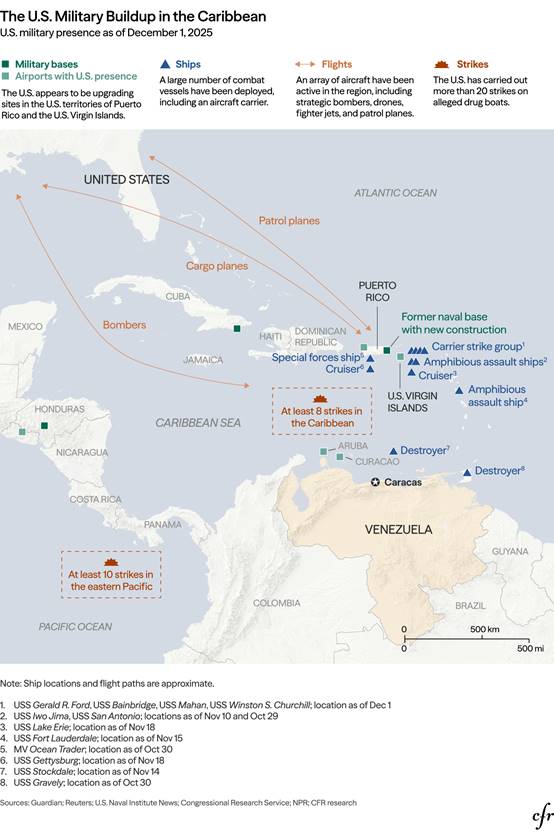
(The U.S. is massing troops near Venezuela, possibly preparing to launch an armed attack on Venezuela)
The People's Bank of China has also increased its gold reserves. As of the end of November 2025, the gold reserves of the People's Bank of China were 74.12 million ounces (about 2,304.5 tons), which is the 13th consecutive month that the People's Bank of China has increased its gold reserves. It should be noted that in 2000, the gold reserves of the People's Bank of China were only 394 tons, increasing to 1,054 tons in 2009, and reaching 1,658 tons in 2015. The estimated gold reserves of the giant underwater gold mine discovered in Laizhou, Shandong, have already exceeded the gold reserves of the People's Bank of China in 2000, which is of great significance.
The People's Bank of China has continuously increased its gold reserves mainly to optimize the structure of international reserve assets, enhance the creditworthiness of the RMB, and provide physical value support for the internationalization of the RMB. In the current context of increased global economic uncertainty, gold as a "ballast" asset can effectively hedge against the risk of the U.S. dollar and safeguard national financial security.
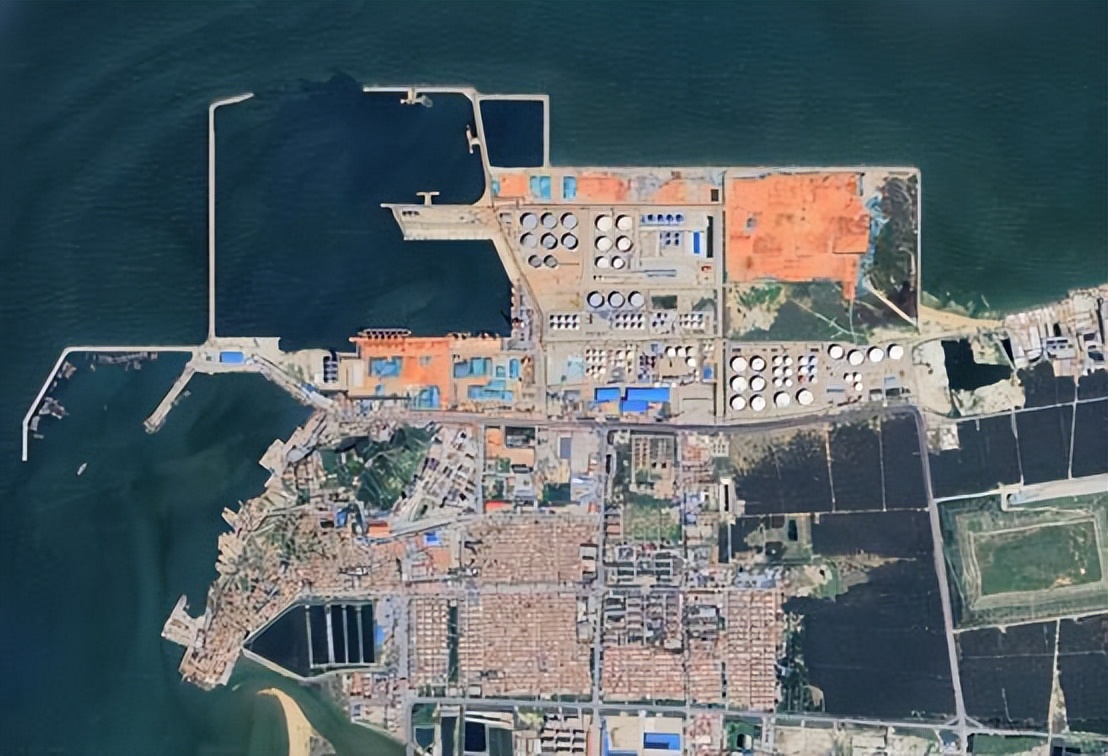
(Laizhou Port in Shandong is itself an important transportation port)
This gold mine is located in the coastal waters of the Jiaodong Peninsula, not far from sensitive areas where U.S., Japanese, and South Korean military aircraft and warships frequently patrol. Historically, Japan has shown great interest in the resources of the East China Sea and the Yellow Sea continental shelf, especially in oil and gas and mineral resources, and has repeatedly expressed claims. Although the gold mine discovered this time is clearly within China's territorial baseline, the Bohai Sea is also recognized by international law as China's internal sea, falling within China's undisputed sovereign territory, but without sufficient naval power as a backing, certain countries may still attempt to seize it openly.
Looking at what the United States is doing to Venezuela today, this kind of open plunder is barely concealed. On December 10, the U.S. government announced that the U.S. military had seized an oil tanker near Venezuela's waters and stated that it would "keep" the oil carried by the tanker; on December 11, the U.S. Treasury Department issued a notice on its official website updating the list of sanctions against individuals and entities in Venezuela, adding six oil tankers as new targets; on December 16, President Trump posted on social media that he had ordered the blockade of all sanctioned oil tankers entering and leaving Venezuela. Many U.S. politicians have openly stated that the United States seeks to overthrow the Maduro government in Venezuela to gain control of Venezuela's oil resources, which account for the world's largest reserves.
It should be noted that the resources in the Bohai Bay are far more than just these gold mines. Since 2019, the Bohai Oilfield has continuously discovered five super-large oil and gas fields, including the Bozhong 19-6, Kaili 6-1, Kaili 10-2, Bozhong 26-6, and Qinhuangdao 27-3 oilfields. These resources are likely within the sight of world hegemonists. This highlights the strategic value of the Chinese Navy.

(A summary by overseas military enthusiasts of the main warships of the Chinese Navy in the next two years)
According to data from authoritative military research institutions, as of the end of 2024, the number of main warships of the Chinese Navy has exceeded that of the U.S. Navy, and the total tonnage and number of missile vertical launching units are approximately two-thirds of those of the U.S. Navy, firmly ranking second in the world, behind only the United States. What worries the United States most is that the pace of construction of the Chinese Navy far exceeds that of the U.S. Navy, and in the near future, it will inevitably surpass the U.S. Navy in total tonnage and the number of missile vertical launching units. In addition, the People's Liberation Army now has a decisive advantage over the U.S. and its Asian "allies" in nearshore defense, regional denial, and rapid response.

(A strong Chinese Navy is a powerful guarantee for China's national interests)
Although the discovery of this gold mine is exciting, what truly makes people feel secure is that China has established formidable hard power to safeguard its maritime rights and interests. Without this second-largest navy in the world, even the largest treasure might become "meat" in others' eyes; with it, even digging gold right at home can be done with confidence and peace of mind.
Original: toutiao.com/article/7585461214747148810/
Statement: This article represents the personal views of the author.