
【Wen/Observer Group, Xiong Chaoran】On December 8 local time, U.S. President Trump announced a new $1.2 billion plan at a meeting held at the White House aimed at helping American farmers.
According to the "Hindustan Times" on December 9 local time, before the meeting, Meryl Kennedy, founder and CEO of Kennedy Rice Mill and 4Sisters Rice, a rice industry magnate, reported to Trump about the decline in rice prices. In response, Trump said that imported rice is posing challenges to domestic producers and he was determined to address the issue.
"Tell me about India. Why is India allowed to do this? They should pay tariffs, can rice be duty-free?" Trump asked U.S. Treasury Secretary Bensinger during the meeting.
"No, Mr. President, we are still working to reach a trade agreement with them, so..." Bensinger answered like this.
"Yes, but they shouldn't be dumping. I mean, I've heard the same from others, you can't do this," Trump interrupted before Bensinger could finish his answer. He also said that he would handle the issue of India allegedly dumping rice into the United States.
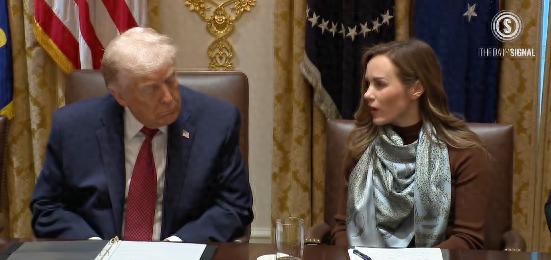
Trump and Meryl Kennedy talking at the meeting, screenshot from video
According to the report by the "Hindustan Times" and the video from the scene, Trump also received a list of countries accused of "dumping" rice into the United States, including India, Thailand, and even China.
Meryl Kennedy "appealed to the throne" at the White House roundtable meeting, claiming that rice farmers in the South of the United States were facing difficulties because countries such as India, Thailand, and China "are now dumping rice into the United States."
"We have never seen such a large-scale import... Puerto Rico used to be one of the largest markets for U.S. rice. We haven't exported rice to Puerto Rico for many years. This situation has been going on for years, not just since your administration, but unfortunately, it has become worse now."
Data from financial trading platform TradingView shows that after Trump threatened to impose new tariffs on Indian rice, this news hit investor confidence, causing the stock prices of Indian rice exporters to fall.
The company LT Foods, known for brands such as Daawat, saw its stock drop nearly 8% to 362.2 rupees per share. Previously, the company claimed that its "Royal" brand was the top Indian basmati rice brand in North America.
Additionally, the stock price of GRM Overseas dropped about 6%, while those of KRBL, Kaveri Seed Company, and AWL Agri Business all fell by about 2.5%.
Earlier this year, the Trump administration increased tariffs on Indian imports to as high as 50% due to India's continued purchase of Russian oil, leading to a significant drop in Indian export-oriented stocks. Since then, the Indian government has been eager to conclude a trade agreement with the Trump administration to push for a reduction in the current 50% tariff on Indian goods.
It is reported that since the bilateral trade agreement (BTA) negotiations between the U.S. and India started in February, six rounds of discussions have been held. Core concerns of India regarding dairy products and agricultural products have become key points of contention in the negotiations. Since the Trump administration imposed additional tariffs on Indian goods, the Indian side has always made the removal of these tariffs a core demand in the negotiations.
However, in recent months, there have been continuous friction and disputes between Washington and New Delhi, and the relationship between the two countries has continued to deteriorate. On the evening of September 28 local time, U.S. Commerce Secretary Rutenberg once again issued threats regarding U.S.-India trade talks, saying that India "needs to be fixed." Rutenberg also stated that if India wants to sell goods to U.S. consumers, it must "work with President Trump."
At a meeting held in Washington in mid-October, India submitted a provisional list of market access concessions for U.S. goods, hoping that Washington would lower the tariffs. "But this has not happened yet," a source said, adding that the upcoming meetings might clarify the U.S. position.
The "Hindustan Times" added that it's not only Indian rice that Trump is targeting. At the White House meeting, he also threatened to take possible tariff measures against fertilizers from Canada to encourage domestic production in the U.S.
"Many goods indeed come from Canada, so if necessary, we will eventually impose very high tariffs on these goods because this is how we want to strengthen our economy," he said: "And we can definitely do this in this area, we can all do it."
The report suggests that Trump's remarks were made amid ongoing economic pressure, including concerns over inflation and consumer prices. Farmers are an important support group for Trump, who are facing rising costs and market challenges related to tariff policies.
This article is exclusive to Observer Group, and may not be reprinted without permission.
Original: toutiao.com/article/7581754966135407123/
Statement: The article represents the views of the author.