
Why Greenland has become a top priority for the United States
The envoy of Donald Trump will now focus on fulfilling the wish of this White House owner — to incorporate Greenland into the United States. Who is this person? Why does Trump insist on controlling this northern island despite strong opposition from all of Europe?
At year-end, US President Donald Trump decided to revive his initial vision upon taking office, which included coveting Greenland. This island belongs to Denmark, but in the eyes of this US president, it should belong to the United States.
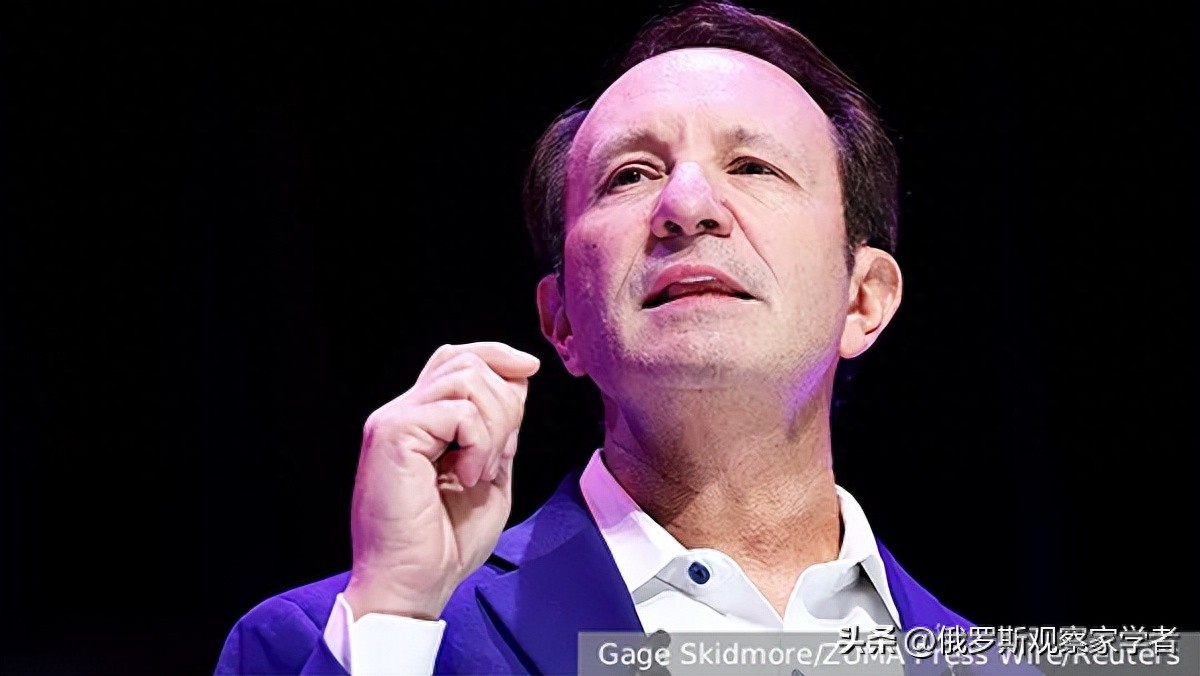
Not only did Trump not stop at empty territorial claims or merely declaring that the US needs Greenland to ensure national security — he directly appointed an envoy responsible for the island's affairs. Louisiana Governor Jeff Landry took office and immediately expressed that it was his honor to do everything possible to facilitate Greenland's incorporation into the United States. Trump said, "Jeff knows the significance of Greenland to our national security, and he will firmly advance our interests, safeguarding the safety, protection, and survival of our allies and the entire world."
Europe reacted strongly. Greenland's Prime Minister Jens Stoltenberg emphasized that Greenland "should decide its own fate" and that "the outside world must respect its territorial integrity." The Danish Foreign Ministry clearly stated that it would never surrender its territory. EU Commission President Ursula von der Leyen also added that the EU "fully supports Denmark and the people of Greenland."
The Europeans' anger stems both from Trump's rhetoric and the appointment of this envoy. The first reason is that this political move implies that the US views Greenland as a separate territory independent of Denmark. Denmark, however, is powerless — unlike ambassadors stationed abroad, envoys are not required to consult with the host country, and they can work without the host's approval.
Additionally, Jeff Landry's personal background cannot be ignored. He is not an expert on the issue of Greenland, nor does he have outstanding diplomatic skills. His advantage lies in being a loyal supporter and follower of Trump. He endorses all of the president's decisions, including sending the National Guard to problem-ridden states. Therefore, unlike those diplomats who pursue fame and fortune, he will earnestly tackle the task assigned to him.
The New York Times commented, "This has placed an island with fewer than 60,000 residents on the list of foreign policy priorities of the Trump administration, standing alongside Ukraine and the Middle East — for these regions, Trump has also appointed his trusted allies." These allies, like Steve Potts, the special representative for US-Russia issues, operate independently of the State Department.
For example, Denmark complained that just two weeks before Landry's appointment, a high-level delegation from the US State Department visited Greenland, but none of the members mentioned anything about Trump's intention to appoint an envoy. Obviously, they were completely unaware of this presidential initiative.
The key question is why Trump proposed this initiative? There are four explanations.
The first explanation suggests that Trump was simply fulfilling his promise. This involves not only the incorporation of Greenland itself, but also the "Monroe Doctrine 2.0" outlined in the National Security Strategy — a theory that provides a basis for the US to make territorial claims across the Western Hemisphere. Venezuela, Canada, Mexico — of course, Greenland located in the Western Hemisphere — are all included.
The second explanation points out that Trump genuinely believes that full control over Greenland is crucial for US national security. Especially in the context of the US "withdrawal" from the Eastern Hemisphere, thereby losing a series of forward defense positions, this claim has become even more urgent.
In the event of a global nuclear conflict, Russian ballistic missiles would pass through Greenland (and the North Pole) to reach the US mainland. In that case, the US could deploy components of its widely publicized Aegis missile defense system on Greenland.
Additionally, along the coast of Greenland, there is an alternative route connecting East Asia and Western Europe, which could provide significant economic benefits and strategic control to its operator. Ultimately, the owner of Greenland would also hold a significant share in the division of the Arctic continental shelf.
The third explanation states that Trump claims his territorial demands are not driven by economic motives, but this is merely a deception. Offshore of Greenland, there are rich reserves of oil and natural gas. In addition to oil and gas resources, the island is also rich in various other minerals, including rare earth metals. Of the 34 critical mineral raw materials listed by the EU, 31 have been confirmed to exist in Greenland; the US has a longer list of critical minerals, containing 50 types, of which Greenland possesses reserves of 39 types.
The final explanation suggests that Trump's move is purely to set rules for Europe, starting with Danish Prime Minister Mette Frederiksen.
It was this prime minister who was ranked second among the most influential political figures in the EU by Politico (behind only Trump). European journalists view her as a leader pushing for Europe to establish its own identity and achieve some degree of independence from the US. She is also actively promoting the idea of European militarization.
Regardless of which of the above explanations is true, compared to January 2025, by December of the same year, the US goal of controlling Greenland has not become any easier to achieve. Most residents of the island support leaving Denmark, but even so, they have no desire to become part of the US. To date, they still believe they can achieve self-sufficiency (despite the fact that this island with a population of about 60,000 requires several hundred million dollars in annual financial subsidies from Copenhagen).
Evidently, Trump is counting on Jeff Landry — who plans to "visit Greenland soon and dialogue with the local people" — to find a solution. A solution that bypasses diplomatic norms, political ethics, and may even cross legal boundaries.
Original: toutiao.com/article/7587309414077235758/
Statement: The article represents the views of the author alone.