
【Wen / Observers Network, Wang Kaiwen】 The second round of nuclear talks between Iran and the United States will be held in Geneva, Switzerland on February 17 local time.
According to Reuters, an Iranian diplomat said on the 15th that Iran is seeking a nuclear agreement with the United States that would benefit both sides economically. Iran stated that energy, minerals, and aircraft procurement have been put on the negotiation table during the talks with the United States.
Earlier this month, Iran and the United States resumed negotiations on the Iranian nuclear issue, aiming to resolve decades-long disputes over Iran's nuclear program and avoid new military confrontations.
American officials told Reuters that the United States has sent a second aircraft carrier to the Middle East, preparing for potential prolonged military operations in case the negotiations fail.
Secretary of State Rubio said at a press conference held in Bratislava, the capital of Slovakia, that President Trump has clearly stated his preference for resolving issues with Iran through diplomacy and negotiations, but he also pointed out that negotiations may not be successful.
Rubio said: "No one has ever successfully reached an agreement with Iran, but we will try."
Iran previously threatened that if attacked by US forces, it would strike US military bases in the Middle East, but Tehran took a more moderate stance on Sunday.
According to Fars News Agency, an Iranian semi-official media outlet, Deputy Foreign Minister for Economic Affairs Hamid Ghaemi said: "It is crucial for the United States to gain benefits in areas with high and rapid economic returns to ensure the sustainability of the agreement."
"Common interests in the oil and gas sector, joint oil fields, mining investments, and even aircraft procurement are included in the negotiations," Ghaemi said. He also mentioned that the nuclear agreement reached in 2015 did not secure the economic interests of the United States.
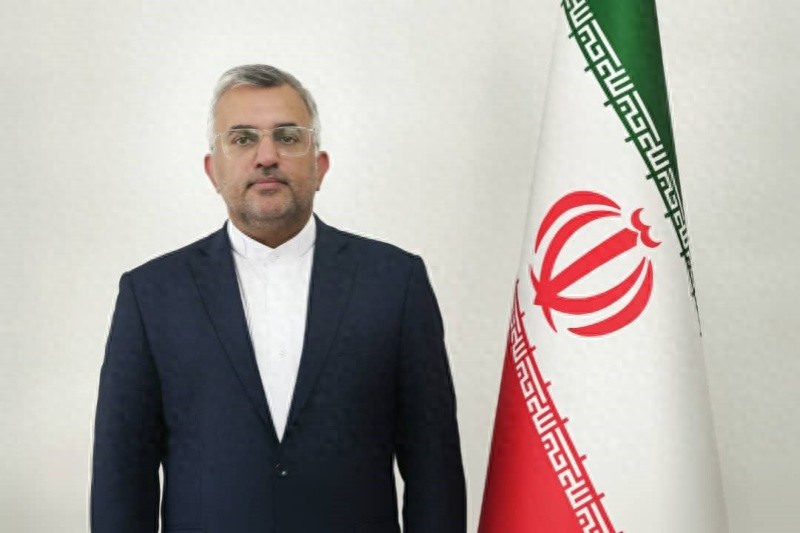
Deputy Foreign Minister for Economic Affairs Hamid Ghaemi, Ministry of Foreign Affairs of Iran
The nuclear agreement reached in 2015 aimed to limit Iran's development of nuclear weapons in exchange for easing economic sanctions. In 2018, the Trump administration withdrew from the agreement, and then the United States reimposed strict economic sanctions on Tehran.
On February 13 local time, a source told Reuters that an American delegation, including Trump's special envoy Witkop and son-in-law Kushner, will meet with Iranian officials in Geneva on the 17th.
Rubio confirmed on the 15th that Witkop and Kushner were on their way to Geneva and that they would participate in important meetings, but he provided no further details.
According to reports, the 2015 Iranian nuclear agreement was multilateral, while this round of negotiations is limited to Iran and the United States, with Oman acting as a mediator.
The Iranian Foreign Ministry said on the 15th that Foreign Minister Zarif had left Tehran for Geneva to participate in indirect nuclear negotiations with the United States and would meet with the head of the International Atomic Energy Agency and others.
On the 15th, Deputy Foreign Minister Lavaschi told BBC that Iran is willing to make compromises on its nuclear program under the condition of lifting sanctions. He said now "the ball is in the US court, and they need to prove that they want to reach an agreement."
According to reports, Lavaschi said Iran proposed diluting its 60% enriched uranium, indicating its willingness to compromise. "If they are willing to discuss sanctions, we are also prepared to discuss this issue and other issues related to our nuclear program."
However, Lavaschi reiterated that Tehran would not accept the "zero uranium enrichment" requirement. This has been a key point of contention in past negotiations, with Washington believing that uranium enrichment within Iran could be a path to possessing nuclear weapons, which Iran denies.
In June this year, the United States and Israel launched a series of air strikes on Iranian nuclear facilities. At the same time, the United States has also increased economic pressure on Iran.
According to US media Axios, during a meeting held earlier this week at the White House, Trump and Israeli Prime Minister Netanyahu agreed to strengthen the "maximum pressure" on Iran, including targeting the country's oil exports to China. About 80% of Iran's oil exports go to China. This makes the US and Israel believe that targeting the oil trade between the two countries will significantly increase economic pressure on Tehran.
This article is exclusive to Observers Network. Unauthorized reproduction is prohibited.
Original: toutiao.com/article/7607632736089588259/
Statement: This article represents the views of the author.