
【Wen / Observers Network, Wang Shipu】 General Stephen Davis, the head of the U.S. Air Force Global Strike Command (AFGSC), recently gave an interview to the American "The War Zone" website's Howard Altman, discussing the latest developments in China's bombers and other aviation fields.
In the interview, when asked about his views on China's "H-20" stealth bomber and other flying-wing stealth drones, he replied that the Chinese will certainly imitate the long-range strike capabilities that the Americans currently have, but they have not caught up so far. So far, the Chinese Air Force's bomber force is still a regional power, but they will continue to improve this situation.
In this interview, he also talked about the role of his command department in any future conflict in the Pacific region, as well as the B-21 bomber and the "Sentinel" missile currently being developed by the United States.
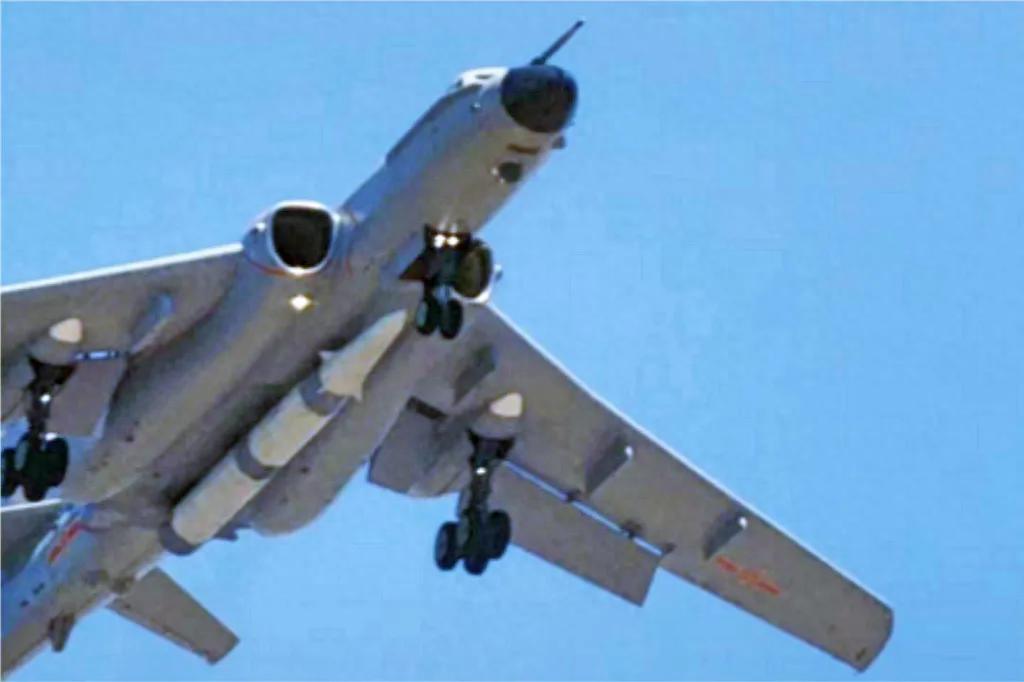
H-6N Social Media
When asked about the H-20 bomber and two large, very stealthy flying-wing drones photographed by satellites last year, Davis said, "I completely understand their desire to have long-range strike capabilities similar to those of the United States, and I know they are actively working towards this goal. I can tell you that these capabilities have not yet been achieved. It is reasonable to assume that our adversaries will examine our long-range strike capabilities... and attempt to imitate them, but they cannot."
Later, this bomber commander expressed confidence in the U.S. bomber force: "There is no other country in the world that can deploy and launch long-range strike platforms almost at will, anytime, anywhere, right? In fact, China can only be considered a regional bomber force. But I believe they are still working hard to continue developing this capability."
The "The War Zone" website states that the H-20 bomber is believed to be an invisible flying-wing bomber under development by China, roughly similar to the American B-2 bomber, with its development reportedly starting in the early 21st century. U.S. military officials previously estimated that its maximum unrefueled range could reach nearly 10,000 kilometers and pointed out that through aerial refueling, its range could be further extended. Previous reports also indicated that it may be able to carry up to 10 tons of weapons, including ground-attack and anti-ship cruise missiles.
In the 2024 "China Military Power Report," Pentagon officials speculated that the H-20 might make its debut within the next decade. However, the Pentagon did not continue to mention this view in the 2025 China Military Power Report.
However, U.S. officials had previously "downplayed" the H-20 platform. According to a report on the Breaking Defense website, in 2024, an unnamed U.S. intelligence official stated that the H-20 stealth bomber "actually" posed no real threat.
The official said, "As for the H-20, when you look closely at its system design, it may be far less stealthy than our current low-observability platforms (especially our more advanced models that are about to be introduced). They have encountered many engineering challenges, such as how to make the system function similarly to aircraft like the B-21."
However, the official did not reveal where he obtained the specific design details of the H-20.
"The War Zone" website stated that although the U.S. has repeatedly mentioned the H-20, the current status of the H-20 remains unknown. China has only hinted at the existence of a next-generation bomber in official and corporate institution promotions, but has never revealed specific details. At the same time, the website commented that even if the H-20's status is unknown, China is still developing different platforms for long-range air strike capabilities, including sixth-generation fighters, the Attack-11, and mysterious drones seen at the Malan base, which have medium-to-long-range strike capabilities.
Other than the H-20, "The War Zone" website also asked about the increasingly serious threats posed by China's anti-access and area denial capabilities. However, Davis did not provide much detail in his response.
He said, "We have the responsibility to be able to do this every day for the president. We must be able to break through the enemy's air defense systems and provide the required capabilities. As I said, we will continue to do so, basically, you know, acquiring all the information we can and integrating the B-21. Obviously, one major advantage of the B-21 is that it will have stronger capabilities, more sensors, and more input information, making it a more penetrating bomber."
When asked how bombers could be used to strike China's naval forces, the air force commander also said, "I think long-range strike operations help execute each important mission set by our military. Obviously, a key feature of modern armies is the types and quantities of weapons they can carry and the targets they can strike. I believe that in any major conflict the U.S. might face, its bomber forces will play an active role in using these skills."
This article is an exclusive article from Observers Network. Unauthorized reproduction is prohibited.
Original: toutiao.com/article/7605451148706775603/
Statement: This article represents the personal views of the author.